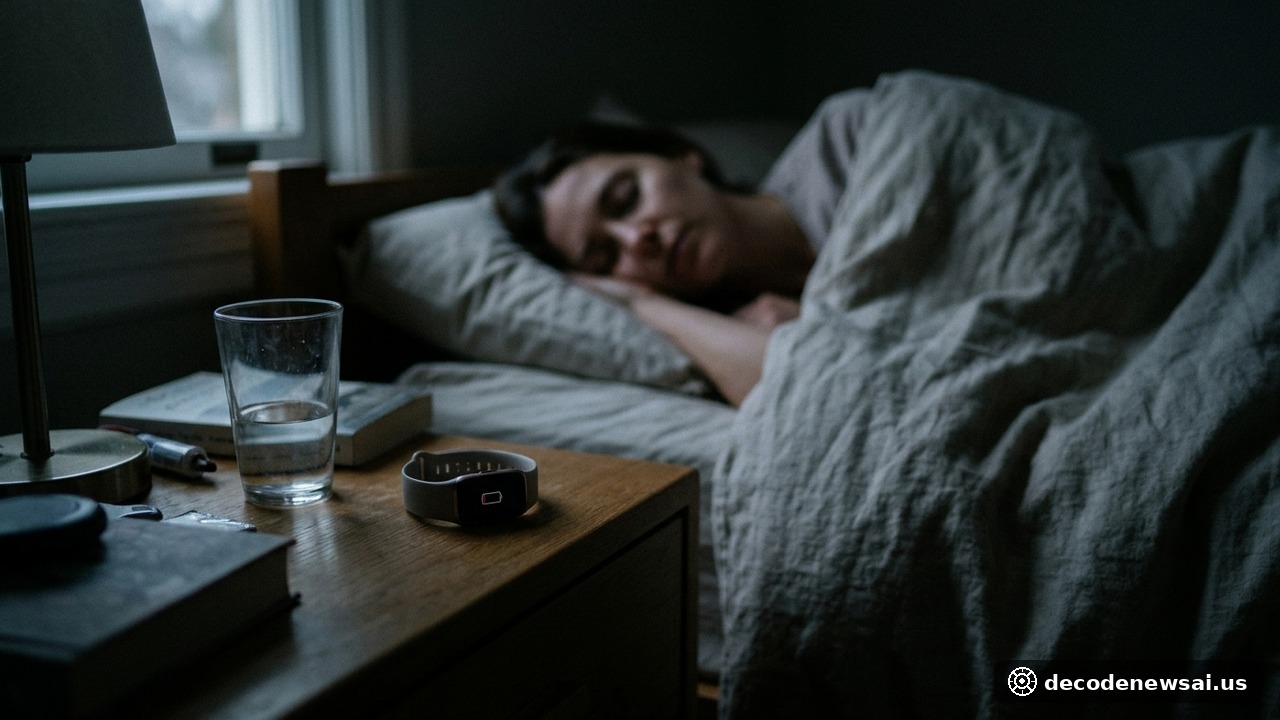
How well you sleep may come down to how much you dream. A large-scale study of nearly 96,000 adults found that more rapid eye movement (REM) sleep was associated with lower risks of 83 diseases — including 80% lower risk of Parkinson's disease and 46% lower risk of dementia. The findings were published Sept. 17 in the journal PLOS Medicine.
More REM sleep, lower risk across 83 diseases
Deep sleep pulls its own weight: seven conditions
Deep sleep showed a narrower but real benefit: greater deep sleep was linked to lower risks of seven conditions — type 2 diabetes, major depressive disorder, anxiety, anemia, arthritis, Parkinson's disease, and sleep apnea. Total sleep duration also mattered in a non-linear way: six to eight hours per night was the "sweet spot" associated with the lowest risk for 69 diseases, while people sleeping fewer than five hours faced elevated risk across 37 conditions.
Irregular, broken sleep carries its own risks
Beyond sleep stages, regularity mattered. Greater night-to-night sleep irregularity and more wakefulness during the night were associated with higher risks of several conditions, including anxiety and substance use disorders. In other words, fragmented and erratic sleep are independent warning signals.
Observational only: association, not causation
One caveat: this was an observational study. It shows that sleep patterns are connected to disease risk, but it cannot prove that sleep directly causes or prevents disease. Even so, the authors say the message is practical enough: "Maintaining a sleep duration of 6–8 hours can effectively reduce the risk of multiple diseases, providing new insights for health promotion and preventive practice."
What's next: sleep trackers as early warning tools
The study's other significance is methodological: sleep-stage data from ordinary smartwatches and fitness bands is already good enough to support disease-risk prediction. The researchers recommend 6–8 hours of regular sleep as a health safeguard for middle-aged and older adults — and as sleep trackers become ubiquitous, using their data for early health warnings could become a realistic preventive tool.