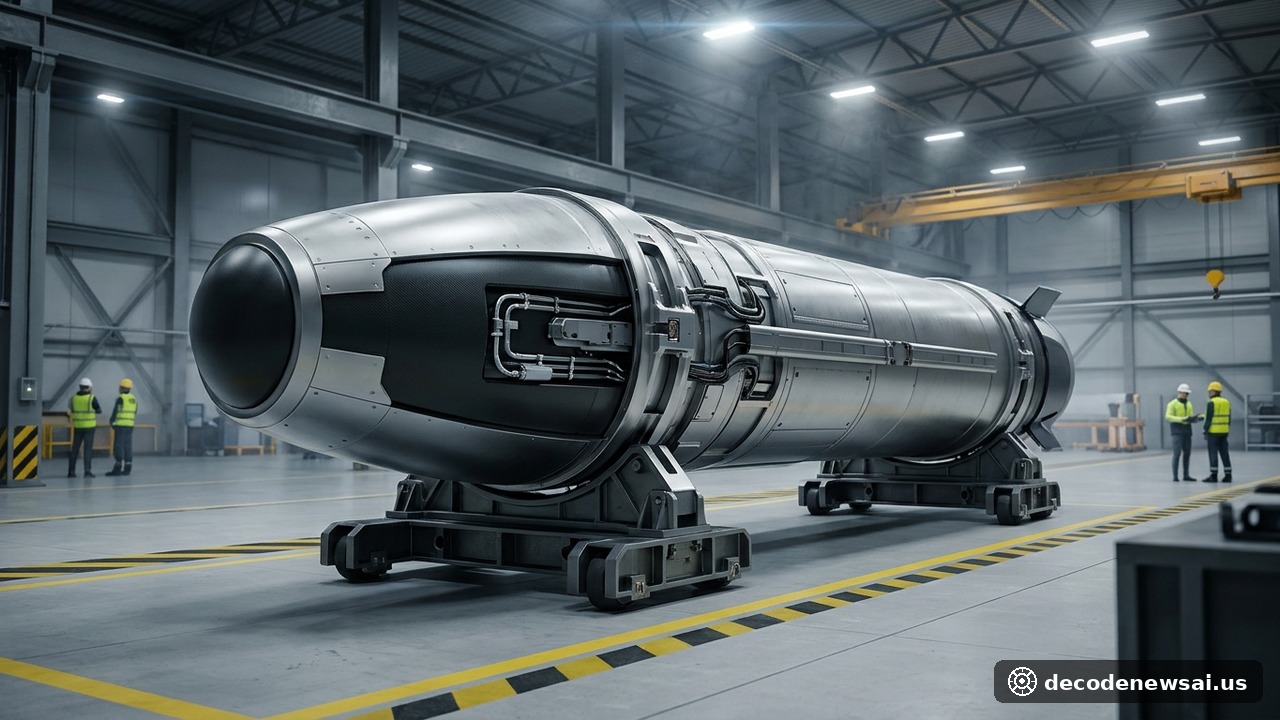
Lockheed Martin on Friday (October 9) unveiled PAC-3 Edge, a next-generation missile interceptor designed to defeat hypersonic and other advanced aerial threats. The interceptor is the company's bid for the U.S. Army's Future Interceptor program — the next evolution of the Patriot system's PAC-3 missile family.
Built for hypersonic threats, with longer reach
Tim Cahill, president of Lockheed's missiles and fire control unit, said PAC-3 Edge flies farther and intercepts at higher altitudes than the current PAC-3 MSE, with a more sensitive seeker and greater maneuverability to engage targets "trying to hide." The missile is aimed at what he described as the next generation of threats the Pentagon expects from U.S. adversaries.
Technically, the interceptor pairs a new Lockheed-built seeker — designed by the company's Strigo Product Center — with a multi-pulse solid rocket motor supplied by Northrop Grumman that delivers precision thrust throughout flight. Upgraded flight controls round out the package for improved performance at range and altitude.
Two bidders remain; Lockheed has advanced
Cahill said the Army selected Lockheed Martin as one of two companies to advance to the next stage of the Future Interceptor program. He did not identify the other bidder, and the Army did not respond to a request for comment. Lockheed plans to display a full-scale model of PAC-3 Edge on Monday at the Association of the U.S. Army (AUSA) conference in Washington.
Priced like the current missile, testing in 2027
Hundreds of millions of company cash, $800M for the seeker
To win the program, Lockheed intends to invest hundreds of millions of dollars of its own money in the missile alone, Cahill said, adding that the company has already put somewhere between $50 million and $100 million into the effort. The new seeker alone is slated for about $800 million in investment, with several hundred million dollars spent so far — technology Cahill said could be reused across other offensive and defensive systems.
Strained stockpiles are the driving force
For the Army, PAC-3 Edge is more than a new missile — it is a test of whether U.S. air defenses can keep pace with the spread of hypersonic weapons over the next decade. The next things to watch are the Army's final choice between the two competitors and whether testing stays on track for 2027.