Roman's Main Camera Beats Its Own Blueprint by Nearly 30 Percent
A mirror nudged by a hair's width, images sharpen nearly 30 percent
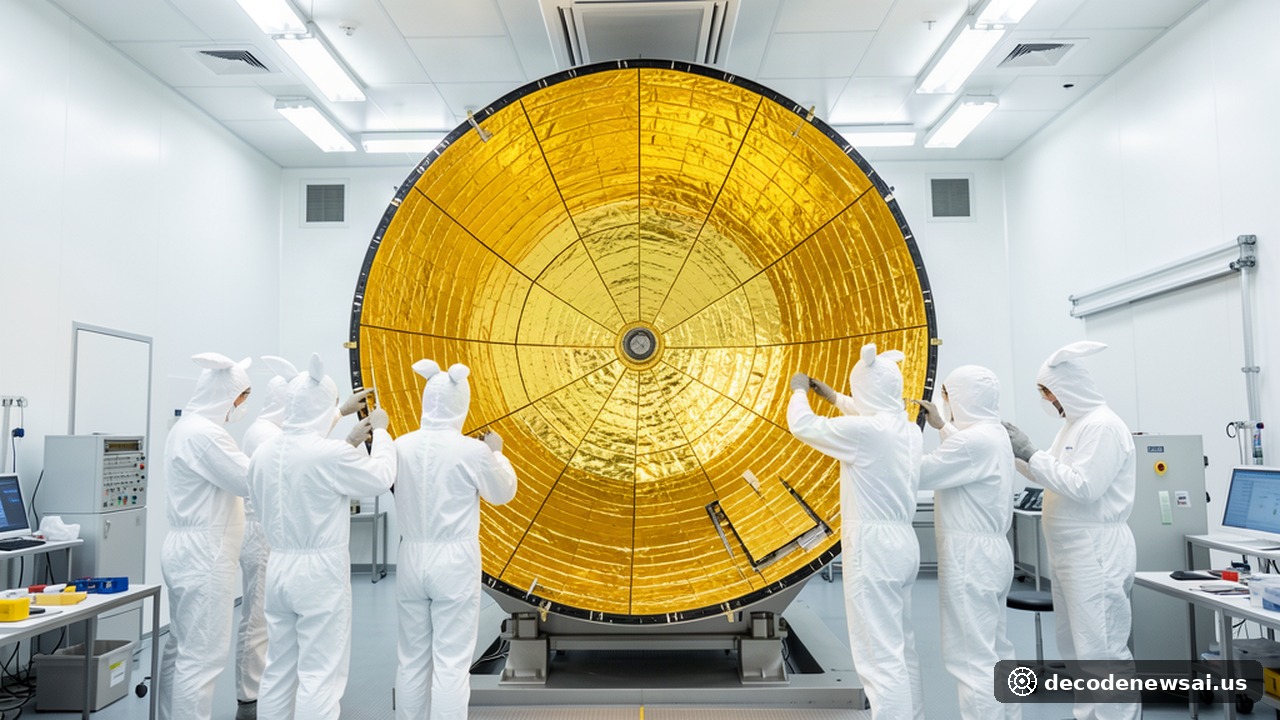
NASA's Nancy Grace Roman Space Telescope has come out of its first round of in-space focusing with better vision than its own engineers modelled. After a series of alignment and focus adjustments, the Wide Field Instrument (WFI), the observatory's main camera, is performing nearly 30 percent better than predicted, the agency said on 14 October. ScienceDaily, Eastern Herald, Starlust, Newsbytes and SSBCrack were among the outlets that reported the result.
Wavefront error falls from 90 nanometres to 63
The yardstick is root-mean-square wavefront error. Before launch, the mission set an image-quality requirement of about 90 nanometres RMS, meaning the optics may deviate from a perfect wavefront by roughly one-thousandth the width of a human hair. Measured after the corrections, the error is just 63 nanometres RMS. A smaller number means sharper pictures, with fainter structure resolved in the survey images Roman is built to take.
NASA credits ground work, not luck
Matthew Bolcar, Roman's optical systems lead at NASA's Goddard Space Flight Center, said the telescope performed excellently even before engineers began adjusting the mirrors and other optics, thanks to preparatory work done on the ground before launch. Testing and modelling at Goddard and by contractors L3Harris and BAE left only small corrections to make, he said. Dave Hickey, a WFI systems engineer at Goddard, called the outcome both exciting and a huge relief, noting that the mission's main goals, including the study of dark matter and dark energy, would not be possible without the instrument.
A penny on the tip of the Empire State Building
How small was the fix? Senior optical engineer Alden Jurling said the team moved the secondary mirror by about one-sixteenth of the diameter of a human hair. Scaled up to the height of the Empire State Building, he said, the change is a little less than you would get by stacking a single U.S. penny on the tower's tip.
All 18 detectors are awake
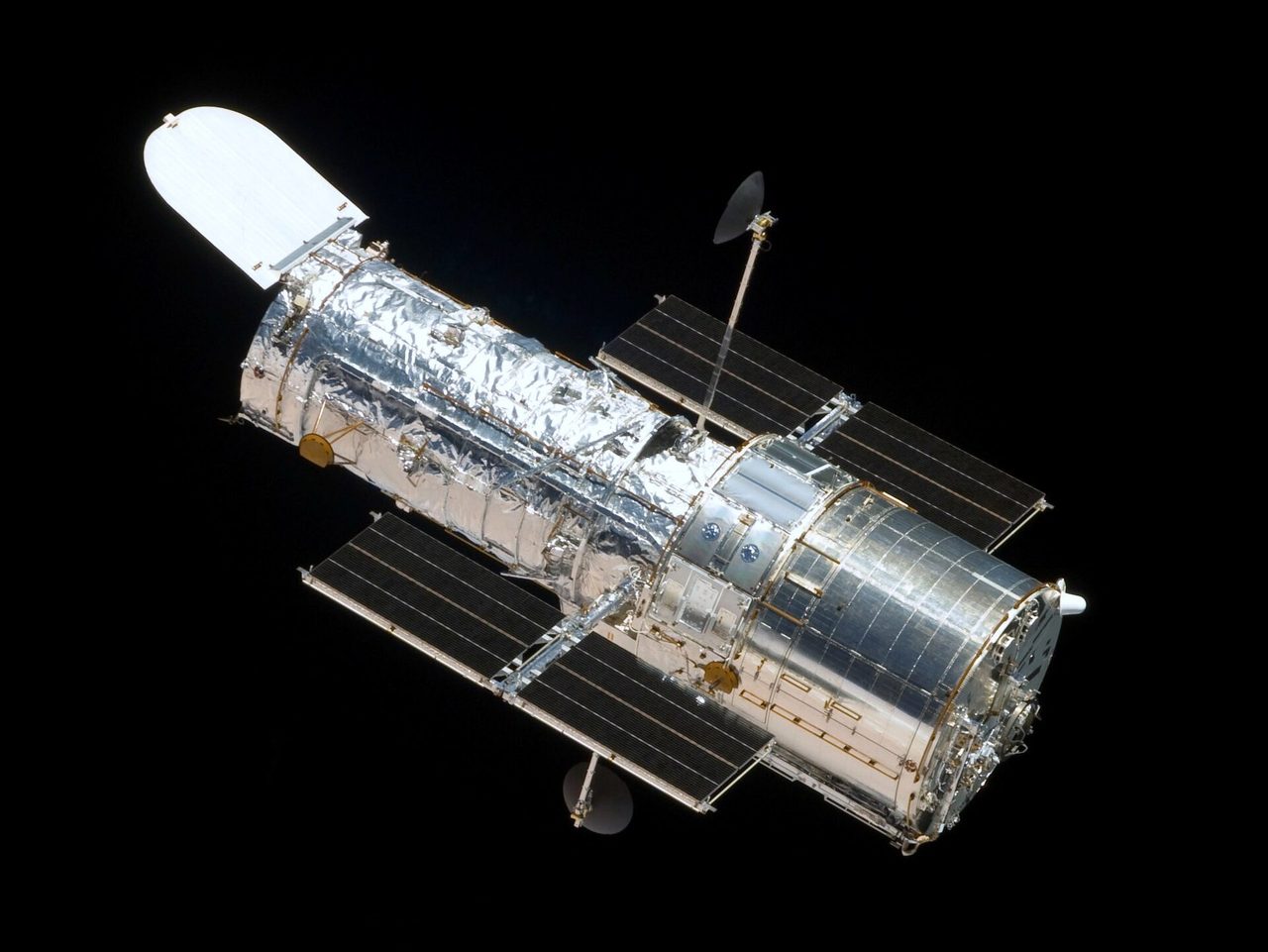
Roman launched on 30 August 2026 at 7:26 a.m. EDT on a SpaceX Falcon Heavy from Kennedy Space Center, a mission costing about $4.3 billion with a 2.4-metre mirror, the same aperture as Hubble's. Its main camera is a 300-megapixel infrared instrument assembled from 18 detectors. The detectors were switched on 11 September; the first engineering image, released on 15 September, showed stars as out-of-focus green rings, an expected starting point for aligning the optics.
The coronagraph is back in focus
The second instrument, the Coronagraph Instrument, has also passed its initial checkout. Its images had been slightly out of focus, and the team has corrected that; it now meets expected performance metrics. On 22 September it captured real starlight for the first time, becoming the first observatory in orbit to test an active, shape-changing mirror system for suppressing starlight, and it returned a sharper observation on 27 September.
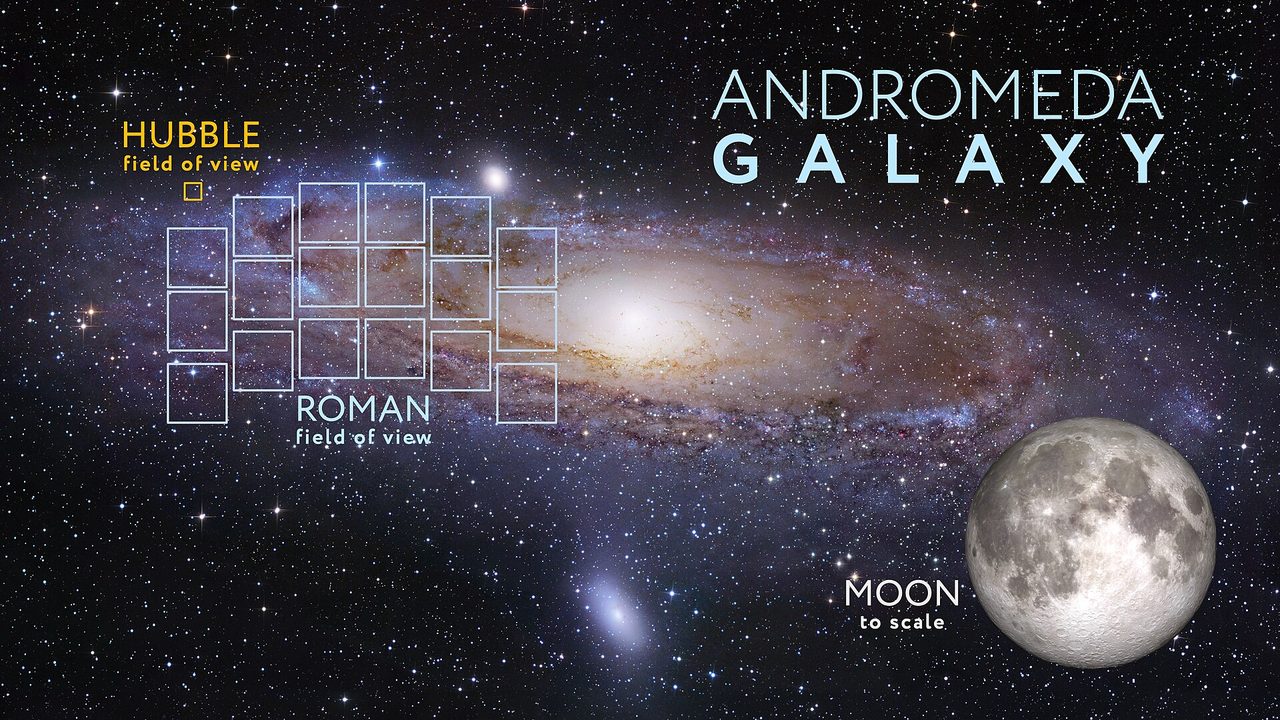
Wide, not deep: how Roman differs from Hubble and Webb
Dark energy and exoplanets are the targets
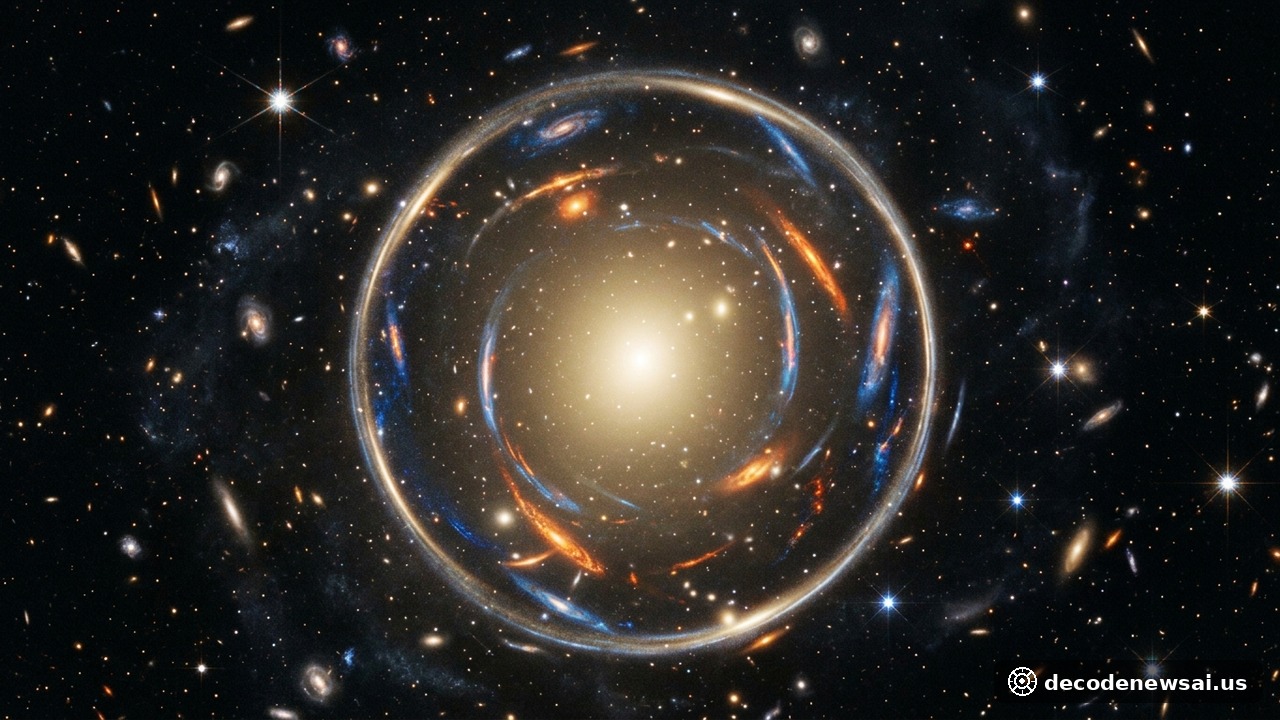
The mission's two main scientific aims are dark energy, dark matter and the growth of cosmic structure, and exoplanets. Over its five-year primary mission the Wide Field Instrument is expected to measure light from about 1 billion galaxies, while a microlensing survey of the Milky Way's bulge should turn up more than 1,000 planets; an earlier NASA estimate suggested the mission could uncover about 100,000 previously unknown worlds.
1.4 terabytes a day, open to everyone
Roman will send roughly 1.4 terabytes of data to Earth every day. Researchers at the University of California, Berkeley, who helped shape the mission, say those data will be open to astronomers and citizen scientists alike. For scale, New Scientist notes that Hubble observed only about 0.1 percent of the sky over more than three decades, while Roman is expected to cover about 12 percent during its five-year primary mission.
L2 in December, first science images in early 2027
Roman is cruising toward the Sun-Earth L2 point about 1.5 million kilometres from Earth, the same neighbourhood as the Webb telescope, and is expected to arrive in early December. Calibration will continue after that, and NASA plans to release the first science images in early 2027. With careful fuel management, the five-year primary mission could stretch to about 22 years.