A Single Marsquake Shows the Solar System's Largest Canyon Is Still Moving
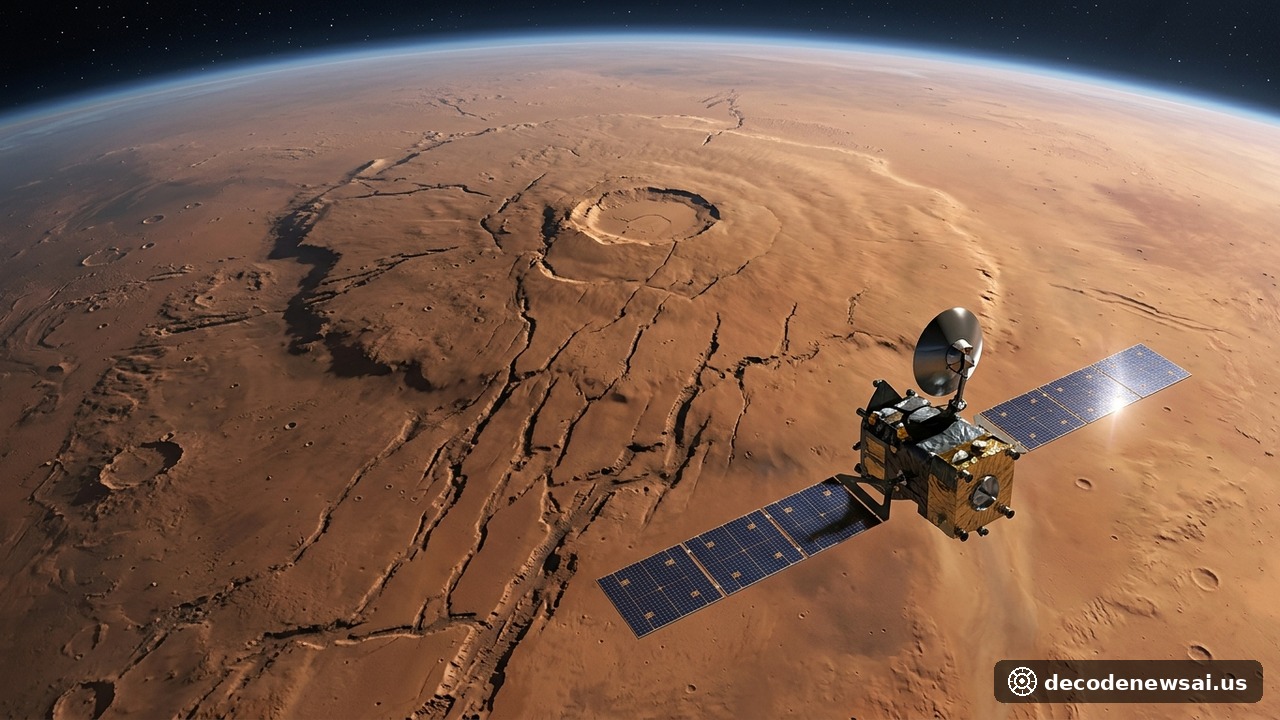
Valles Marineris is the largest canyon system in the solar system, stretching nearly 3,900 kilometres across Mars, reaching up to 600 kilometres wide and more than 9 kilometres deep. That makes it nearly nine times longer, more than 20 times wider and about five times deeper than the Grand Canyon at their respective maximum dimensions. New research finds that this vast structure, formed billions of years ago, is still tectonically active and shaping Mars today.
Rupture at 20 to 40 kilometres depth moved sideways
The best explanation is a strike-slip marsquake, in which blocks of crust move horizontally past one another along a steep, deeply rooted fault. The rupture occurred roughly 20 to 40 kilometres beneath the surface of western Valles Marineris, or about 12 to 25 miles deep. Seismic waves indicate sideways sliding well below the surface, while geology seen from orbit shows a region crossed by long-lived fault systems. The authors say several completely different lines of evidence point in the same direction.
Columbia and Imperial team ties quake to reactivated faults
Cooling, Tharsis loading and erosion keep stressing the crust
The inferred stress orientation is consistent with reactivation of pre-existing fault systems under a present-day stress field shaped primarily by long-term planetary cooling, regional Tharsis-related loading, and surface erosion-related local unloading. In other words, faults established during the formation and early evolution of Valles Marineris billions of years ago can remain weak enough to rupture under current stresses. The finding suggests ancient tectonic fabric can localise present-day seismic failure.
Stagnant-lid planets can still deform and quake today
More quakes needed to map how much of the canyon moves
One western-hemisphere quake cannot by itself show how much of the system is active. The next step is to test the inference with more events, denser orbital mapping of reactivated faults, landslides and syn-tectonic deposits, and comparison with the other two tectonic provinces sampled by InSight. If the inherited faults are as weak as this event implies, similar ruptures should recur, and continued monitoring can establish the rate and distribution of present-day activity.