Becerra defeats Hilton to succeed Newsom
Becerra’s victory keeps the governor’s office in Democratic hands and makes him the first Latino elected governor of California in more than a century and a half. His parents have Mexican immigrant roots. In his election-night speech, he recalled that they arrived in California with $12 and connected his campaign to the ability of working families to afford a home. Hilton conceded the race but said he would continue a political movement opposing long-term Democratic control of the state.
Becerra is likely to continue some Newsom policies with a more cautious style
Becerra avoided making sweeping policy promises on the scale of Newsom’s earlier agenda. Instead, he emphasized effective government and prioritizing working families. He supports efforts to speed up housing approvals and expand mortgage assistance. He generally supports California’s clean-energy transition but also wants to find ways to lower gasoline prices and household energy costs. CalMatters reported that Becerra is likely to continue much of Newsom’s direction on housing and climate policy, while favoring incremental changes over ambitious programs that may be difficult to deliver. California faces persistent challenges involving housing affordability, homelessness, wildfire insurance, the state budget and energy prices. State revenue is highly sensitive to stock-market performance and the fortunes of the artificial-intelligence industry, leaving the budget vulnerable to an economic slowdown. Becerra has said he will focus on household affordability and continue challenging Trump administration policies on immigration and the environment through legal action. His room to act will depend on the state legislature, budget negotiations and the federal government’s response.
Proposition 39 would have required identification when voting
Proposition 39 was a proposed state constitutional amendment that would have required voters to present government-issued identification at polling places. Mail voters would have needed to write the last four digits of a government ID number matching the number designated during registration on their ballot envelope. The measure also would have required state and local election officials to make best efforts to verify the citizenship status of registered voters and publish annual county-level reports on the percentage of voters whose status had been verified. California’s current system generally establishes voter identity through registration records and signature checks. Mail ballots are checked against the signature on the voter’s registration record before they are counted. The California Secretary of State’s official voter guide said Proposition 39 would invalidate mail ballots that lacked the required number or contained a mismatch, while adding a government-ID requirement for in-person voting. The state Legislative Analyst’s Office estimated that implementing the new requirements could cost state and local governments tens of millions to low hundreds of millions of dollars annually. The actual cost would depend on decisions by the Legislature, state agencies and local election officials.
Supporters and opponents disputed election security and voting access
Supporters argued that voter ID requirements would increase public confidence in elections and reduce the risk of fraud. Opponents said California already had registration and signature-verification systems, and that voting by noncitizens in state and federal elections was already illegal. They warned that additional ID requirements could make voting harder for eligible citizens who lack the required documents, particularly low-income voters, people with disabilities and voters of color. Opponents also argued that the new procedures would increase administrative costs and complicate ballot processing. The San Francisco Chronicle reported that Trump supported the measure and that Republican lawmakers and conservative groups helped fund the campaign. Democrats, voting-rights organizations and civil-rights groups opposed it. KQED’s early results showed a clear lead for the no campaign, and the AP called the measure defeated. The result indicates that California voters rejected adding stricter identification requirements to the existing system, but it does not mean that every voter opposes stronger election security.
Other results still required counting and certification
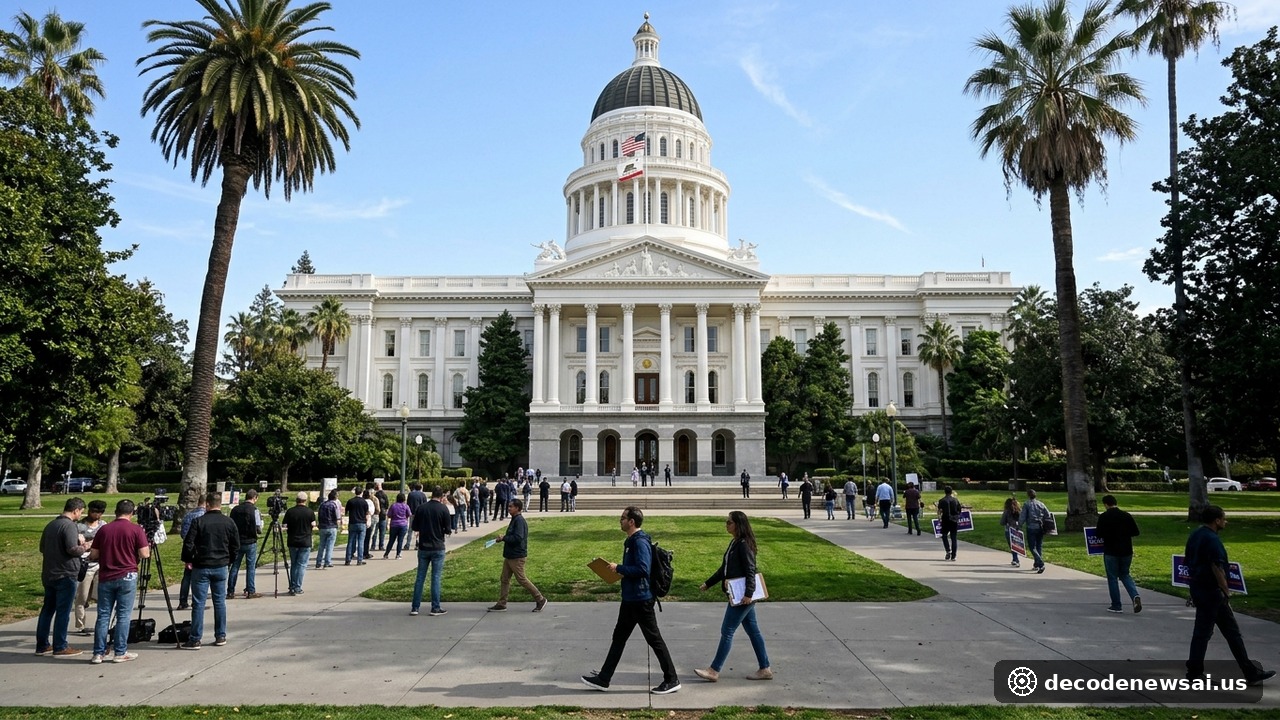
The Associated Press has called the governor’s race for Becerra, but state officials must still complete the remaining count and certification process. The early rejection of Proposition 39 was also based on a media call, not the Secretary of State’s final certification. Other statewide propositions and local races remained outstanding, and some results could shift as mail and provisional ballots were processed. For California, Becerra’s election means Democrats will continue to control the governor’s office, but housing, healthcare, energy, taxes and legal disputes with the federal government will remain major policy challenges. The defeat of Proposition 39 shows that voters chose to retain the existing voting system rather than add new government-ID requirements. Both results reflect voters’ views about state governance and democratic procedures, but the practical policy consequences will depend on final certification and the actions of the incoming administration.