Fan Uses DLSS 5 to Turn GTA 6 Trailer Footage Into 90 FPS Video, but PC Release Remains Undated
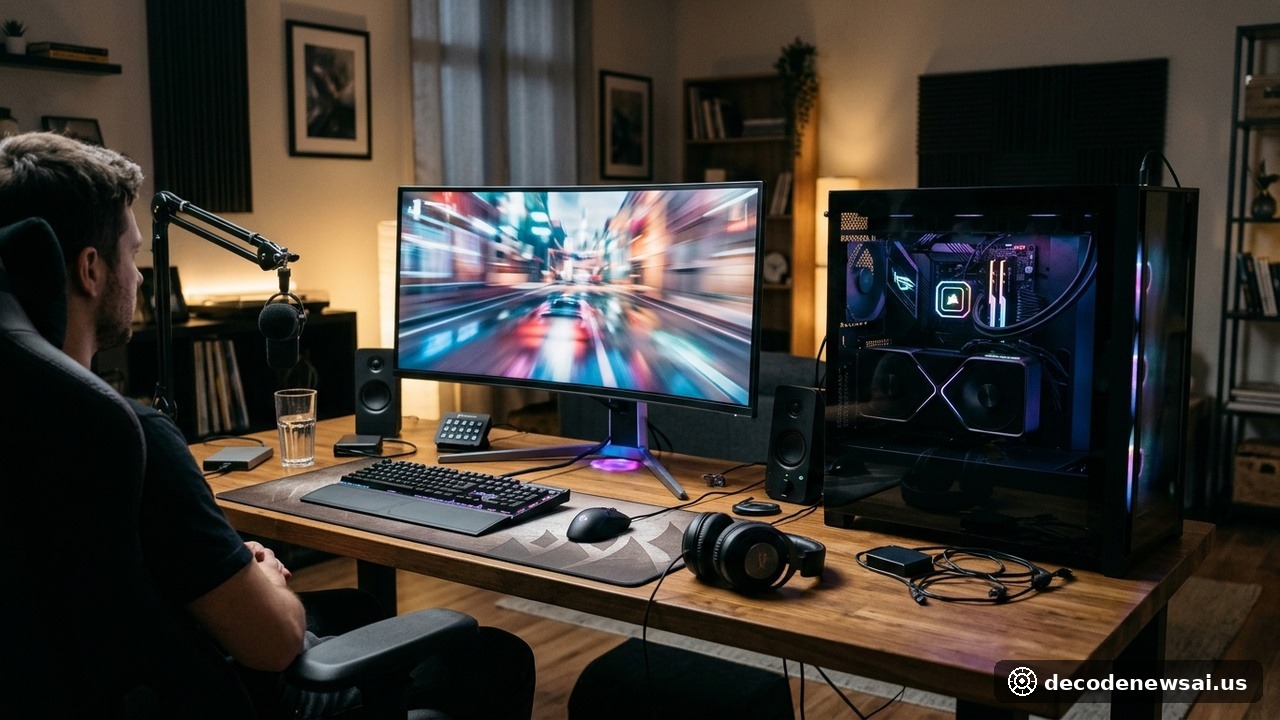
Grand Theft Auto VI still has no announced PC release date, but one fan has experimented with NVIDIA DLSS 5 and Multi Frame Generation to process footage from Rockstar’s existing trailer and produce a 90-frames-per-second output. Wccftech reported on November 4 that the test used a GeForce RTX 4080, Veyra 2.1.1 software and an unofficial MFG Unlock tool to demonstrate how the game’s footage might look after advanced image processing.
The experiment is not GTA 6 running natively on a PC, and it is not an official feature announced by NVIDIA or Rockstar. It processes a prerecorded video rather than frames rendered in real time by the game engine. The result illustrates the potential of AI-assisted image processing, but it does not prove that the eventual PC version will support DLSS 5 or achieve the same frame rate.
A 30 FPS trailer is processed into a 90 FPS output
The experiment was shared by Reddit user RevolutionaryBus8208, who used the GTA VI Extended Look trailer as the source material. Veyra 2.1.1 can accept video files, capture-card input and Remote Play streams, then apply neural rendering, upscaling and frame generation. The creator also used MFG Unlock to experiment with Multi Frame Generation on an RTX 4080, producing a 90 FPS output from footage that originally ran at 30 FPS.
The described setup includes a PlayStation 5, a 4K HDR capture card or Remote Play, a PC with an RTX 4080 and a 4K 144Hz display. That arrangement allows a console video signal to be processed externally by a PC before being shown on a screen. But capturing, transmitting and processing the signal can add input latency, so the setup is not equivalent to playing a native PC version.
Environments look sharper, while faces and motion show artifacts
The processed footage appears to add sharpness and detail to buildings, lighting and distant scenery. Some scenes look more cinematic, but character faces can appear overly filtered or unnatural. Fast-moving objects also show ghosting and other visual artifacts.
Those limitations are partly caused by the source material. A prerecorded video does not contain the depth information, motion vectors, material data and lighting information available to a game engine while it is rendering a live scene. The AI system must infer what intermediate frames should look like from a flat video image, which can create mistakes around faces and moving objects.
Turning 30 FPS footage into a 90 FPS output also does not mean the game itself rendered 90 complete frames every second. The additional frames are generated from existing images. They can make playback appear smoother, but they may also introduce artifacts or delay. A native game implementation would need access to the engine’s data and a supported rendering pipeline to deliver a more consistent result.
NVIDIA and Rockstar have not announced official support
The demonstration was created by a player without involvement from NVIDIA or Rockstar. Neither company has announced that GTA 6 will support DLSS 5 or Multi Frame Generation. Rockstar has confirmed that the game will launch on November 19 for PlayStation 5 and Xbox Series X|S, but it has not announced a PC release date, PC system requirements or a list of supported graphics technologies.
Even if a PC version arrives later, it remains unknown whether it will support DLSS 5, which graphics cards would be compatible or what performance benefits frame generation could provide. A fan video processed to 90 FPS cannot establish that the finished game will run at the same resolution, image quality or frame rate.
The lack of a PC date is also important for interpreting the experiment. The current demonstration is a workaround built around console footage, not an early preview of a PC port. It does not show how the game will perform when running natively on a desktop graphics card.
What the experiment actually demonstrates
The test shows that external capture and AI image-processing tools can be used to convert console footage into a higher-frame-rate video. It also offers a glimpse of the visual changes that neural rendering and frame generation may produce. But the artificial-looking faces, motion ghosting and potential input latency highlight the difference between processing a prerecorded trailer and rendering an interactive game.
The confirmed facts are limited: a player used an RTX 4080 and third-party tools to process a 30 FPS GTA 6 trailer into a 90 FPS video; Rockstar has not announced a PC release date; and DLSS 5 support has not been confirmed. The actual image quality and performance of a PC edition will remain unknown until Rockstar releases more information and independent testing can be performed on the game itself.
Sources
- Wccftech: GTA 6 Still Has No PC Release Date, but an NVIDIA DLSS 5 and 90 FPS Multi-Frame Generation Experiment Shows How Realistic It Could Look
- Reddit / r/GTA6unmoderated: GTA VI Extended Look with DLSS 5 + FG x3 (30 -> 90 FPS)
- Digital Citizen: GTA 6 Fan Experiment Uses NVIDIA DLSS 5 and Frame Generation to Turn 30 FPS Trailer Into 90 FPS Footage
- GTAVIFRANCE: GTA 6 DLSS 5 test: a fan runs the trailer at 90 fps, unofficially
- DonanımHaber: GTA 6, DLSS 5'li videosu paylaşıldı: Nasıl görünüyor?