UK Supreme Court Hears Challenge to Palestine Action Ban, With Free-Speech Rights at Stake
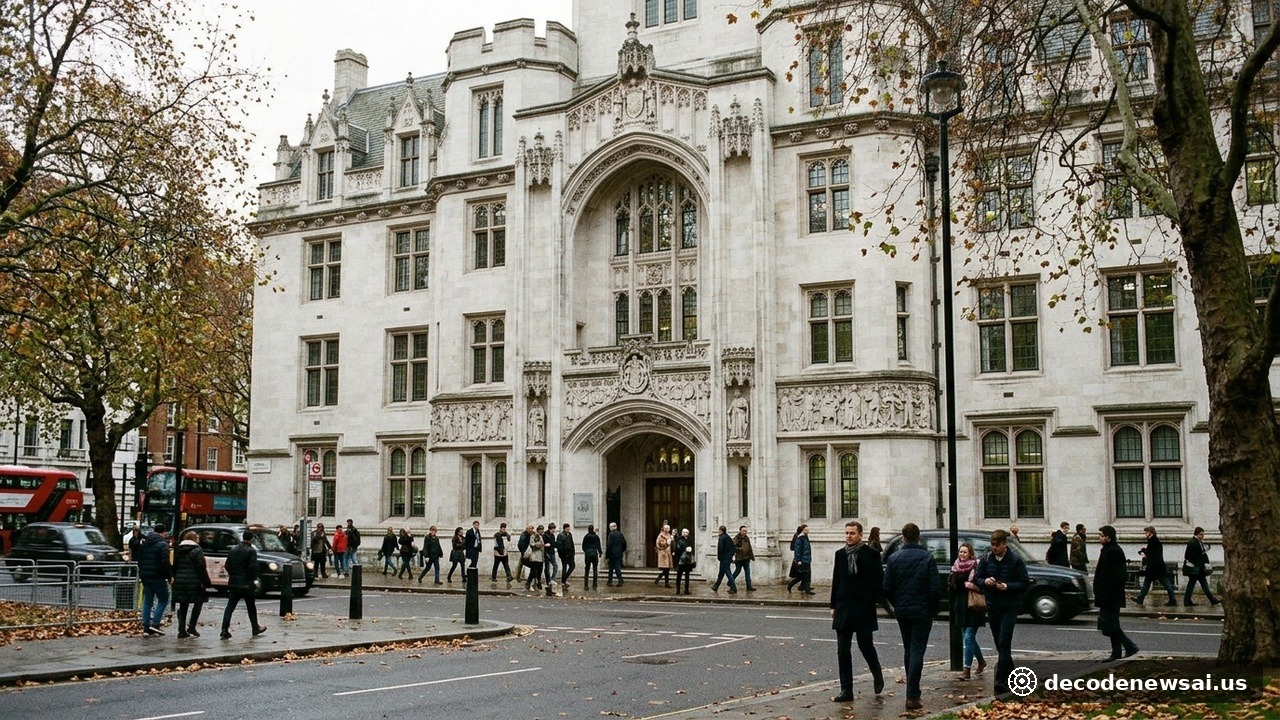
The United Kingdom’s Supreme Court began hearing an appeal on November 4 by Huda Ammori, a co-founder of Palestine Action, challenging the government’s decision to ban the group under terrorism legislation. The two-day hearing is examining whether the proscription is compatible with freedom of expression and assembly protected by the European Convention on Human Rights. The court has not yet issued a ruling.
The government added Palestine Action to the list of proscribed organizations under the Terrorism Act 2000 in 2025. The ban makes membership and certain forms of support or public expression of support criminal offenses. Ammori argues that the measure is too broad and imposes a disproportionate restriction on peaceful protest and political expression.
The Dispute Turns on How the Group’s Actions Are Classified
Palestine Action became known for direct-action protests targeting companies it says are connected to Israel’s arms industry and supply chain. The government argues that the group’s activities have included serious criminal damage and crossed the legal threshold for proscription. The Home Office has maintained that serious damage to property can fall within the statutory definition of terrorism and that the ban was necessary to protect national security and public safety.
Ammori’s lawyers have argued that only three of the group’s 385 actions over five years met the legal definition of terrorism. They say the government has treated property-damage campaigns as evidence that the organization itself should be classified as a terrorist group. The figure of three out of 385 is the appellant’s argument in court, not a factual finding made by the Supreme Court.
One incident cited in the dispute took place in 2024, when Palestine Action activists broke into a facility associated with Israeli defense contractor Elbit Systems in Britain. Government submissions said the incident caused about £1 million in damage and injured a police officer. Supporters of the group describe its campaign as protest against British companies involved in supplying weapons to Israel. The government says the nature and seriousness of the actions go beyond ordinary protest.
Earlier Court Rulings Reached Opposite Conclusions
The Home Office announced its decision to proscribe Palestine Action in June 2025. The order took effect on July 5, 2025, after approval by both Houses of Parliament.
In February 2026, the High Court in England and Wales ruled that the government’s decision was unlawful. It found that the Home Secretary had acted inconsistently with her own published policy and that the ban disproportionately interfered with rights protected by Articles 10 and 11 of the European Convention on Human Rights.
The government appealed. In June 2026, the Court of Appeal overturned the High Court ruling and held that the proscription decision was lawful. It concluded that the government had properly applied its policy and that the balance between national security and individual rights had been struck proportionately. The ban therefore remained in force.
The Supreme Court granted Ammori permission in July to appeal on the human-rights issue, but refused permission on a separate challenge concerning the interpretation of the Home Secretary’s policy. The central question now before the justices is whether proscription is compatible with freedom of expression and the rights to assembly and association.
Arrests After the Ban Have Intensified the Debate
The ban has had consequences beyond the organization itself. Under the Terrorism Act, membership of a proscribed organization and certain forms of support can carry a maximum sentence of 14 years in prison. Civil-liberties groups argue that the law can deter people from taking part in lawful demonstrations or expressing political views.
The Associated Press reported that police have arrested thousands of people in connection with alleged support for Palestine Action since the ban took effect. Reuters reported more than 3,600 arrests between July 2025 and June 2026, with the total rising after subsequent protests. The figures use different reporting cutoffs and should not be treated as identical snapshots of the same cumulative total.
Ammori’s side argues that the ban has created a chilling effect on public debate and peaceful protest. The government rejects the suggestion that the measure prohibits discussion of Palestine or ordinary political advocacy. It says the law addresses support for a specific proscribed organization and the conduct attributed to it.
Demonstrators gathered outside the Supreme Court as the hearing began in London. The Associated Press reported that police arrested more than two dozen supporters outside the building on Wednesday. Whether individual conduct amounted to a criminal offense will depend on the evidence and any subsequent legal proceedings.
Civil-Society Groups Have Joined the Case
The Supreme Court has allowed several organizations to intervene and present legal arguments. They include Amnesty International UK, Liberty, English PEN, PEN International, the Community Security Trust and the Jewish Leadership Council.
The interveners do not all approach the case from the same perspective. Civil-liberties organizations have raised concerns about freedom of expression, association and the effect of proscription on protest. The Community Security Trust and Jewish Leadership Council have been admitted to make submissions in a case that also concerns the protection of communities and the government’s response to antisemitism and security risks.
The hearing itself does not mean the court has decided to lift the ban. If Ammori wins, the legal basis for proscription and the handling of related arrests or prosecutions could be affected, depending on the court’s reasoning and order. If the government prevails, the existing ban will remain in place.
The Supreme Court’s official case page lists November 4 and 5 as the hearing dates and identifies the appeal as R (on the application of Ammori) v Secretary of State for the Home Department. The court has not announced when it will deliver judgment. Its decision will help define how far the British government can use counterterrorism powers against protest organizations, and where the law draws the line between national security and protected political expression.
Sources
- UK Supreme Court: R (on the application of Ammori) v Secretary of State for the Home Department
- Reuters: UK ban on Palestine Action is challenged at top court, some protesters arrested
- Al Jazeera: UK Supreme Court hears appeal against Palestine Action’s proscription
- PEN International: English PEN and PEN International to intervene in Supreme Court appeal on Palestine Action proscription
- 3 Verulam Buildings: Can Yeginsu acts for English PEN and PEN International as the Supreme Court hears the Palestine Action proscription appeal