What Are the Key Quantitative Metrics and Structural Outcomes of Amendment 3?
- Electorate Approval Margin in General Election: ~78% In Favor vs. ~22% Opposed
- Jurisdictional Footprint Mandated for Overhaul: All 159 Georgia Counties
- Legal Protection Status of Emergency Revenues: Constitutional Protection (No General Fund Sweeps)
- New Media Dispatch Capabilities Supported: Text Messaging, Scene Photos, Streaming Video
Under the preceding fiscal structure, emergency 911 surcharges collected on monthly landline, cellular, and prepaid telecommunications bills were deposited into the state's central treasury. During cyclical economic downturns or state budget crunches, lawmakers routinely swept hundreds of millions of dollars in unallocated emergency fees into the state's General Fund to balance fiscal gaps, depriving local Public Safety Answering Points (PSAPs) of essential technological capital. Amendment 3 permanently resolves this structural vulnerability by constitutionally ring-fencing all fee collections exclusively for capital investment, network upgrades, and operational support across local dispatch operations.
Civil emergency advocates emphasized that the constitutional ballot measure passed without enacting tax hikes or altering current consumer surcharge rates. By restricting the expenditure of existing revenues to verifiable next-generation hardware and software procurement, the initiative achieved broad cross-spectrum endorsements from rural conservative county commissioners and urban metropolitan municipal leaders alike.
How Will Next-Generation 911 Infrastructure Accelerate Emergency Field Triage?
Legacy emergency communication architectures across North America remain tethered to half-century-old analog telephony routing protocols that constrain emergency communications strictly to verbal audio dialogue.
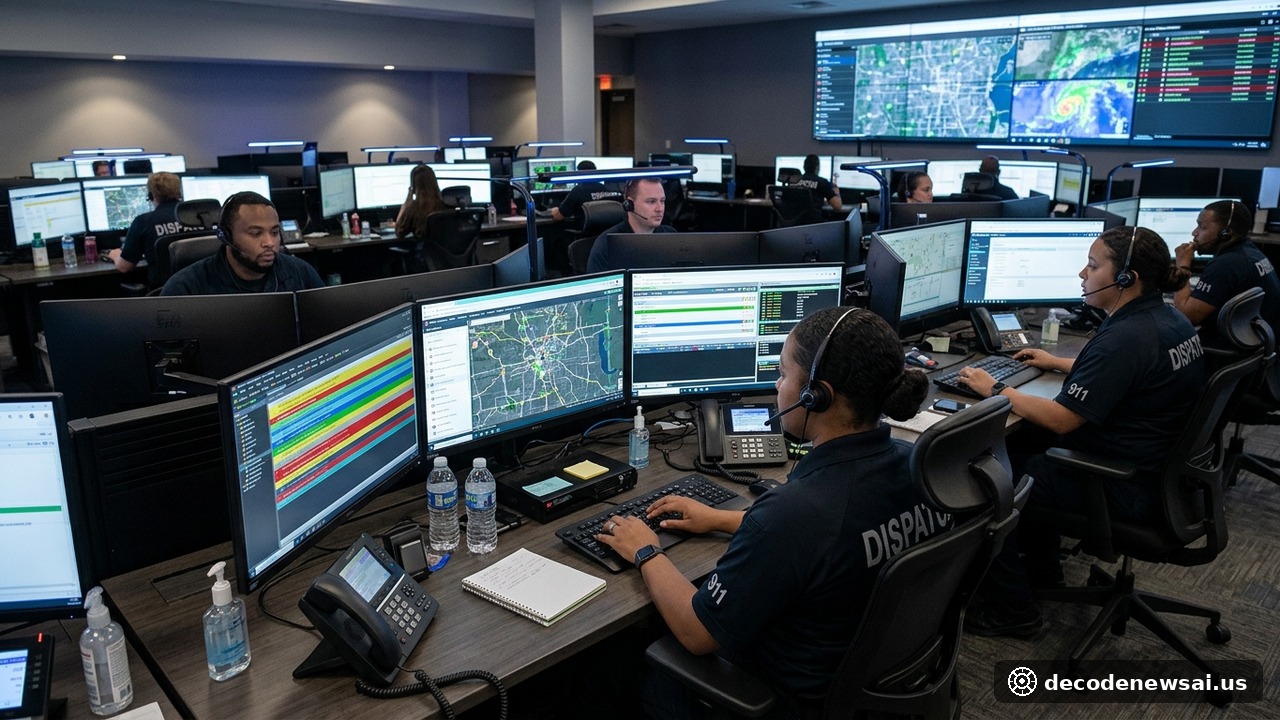
The deployment of Next Generation 911 (NG911) internet protocol networks fundamentally modernizes incident reporting. When motorists witness severe traffic collisions along remote interstates or confront structural fires, dispatch telecommunicators will be capable of receiving high-definition video streams and crash telemetry directly from onboard automotive sensors. In mountainous northern counties such as Dade and Walker, receiving immediate visual confirmation of vehicle rollover dynamics allows trauma flight surgeons to mobilize specialized aeromedical rescue helicopters minutes before ground crews navigate difficult mountain passes.
What Lessons Does Georgia's Fiscal Strategy Offer for National Infrastructure Reform?
Georgia's resounding constitutional victory illustrates an innovative legislative template for addressing chronically deferred civic infrastructure nationwide.
Across the United States, municipal emergency communication departments face critical shortages of certified dispatchers and obsolete routing switches that struggle to interface with modern smartphone technologies. By sidestepping tax increases in favor of constitutional revenue dedication, Georgia demonstrated that public safety initiatives can command overwhelming democratic supermajorities even in fiercely polarized electoral environments. The Association of Public-Safety Communications Officials (APCO) highlighted the Georgia amendment as a model for states seeking to modernize critical civic lifelines without succumbing to legislative appropriations gridlock.
Emergency medicine physicians and municipal fire chiefs across Georgia commended the constitutional victory as a transformative milestone for frontline emergency response. Under legacy dispatch paradigms, first responders navigating multi-car interstate pileups routinely arrived on scene with incomplete operational intelligence, unaware of hazardous material spills or entrapped passengers until physical arrival.
With Next Generation 911 infrastructure in place, commercial fleet telematics will automatically transmit vehicle crash velocity, rollover orientation, and seatbelt utilization directly to county dispatch computer-aided dispatch (CAD) terminals. Furthermore, integrating secure broadband connectivity allows telecommunicators to bridge live emergency video feeds directly to responding trauma surgeons, ensuring that critical medical interventions are pre-staged before the ambulance reaches the hospital bay.