What Are the Key Quantitative Trade Figures and Sectoral Exposure Metrics in US-Canada Talks?
- Ontario Manufacturing Support Plan Countering Trade Friction: $8.7 Billion CAD (~$6.2 Billion USD Committed)
According to extensive coverage by CTV News and The Canadian Press, the cross-border trade skirmish had reached critical boiling points following Washington's imposition of 50% duties on approximately $20 billion in Canadian shipments. Prime Minister Mark Carney's administration retaliated dollar-for-dollar with equivalent countermeasures on American consumer goods, triggering a 10% decline in Canadian automotive exports to the U.S. alongside an alarming 20% drop in American manufactured goods entering Canadian distribution hubs. The escalating tariff escalation severely exacerbated cost-of-living anxieties across both nations, intensifying pressure on bilateral leadership to execute a face-saving diplomatic resolution.
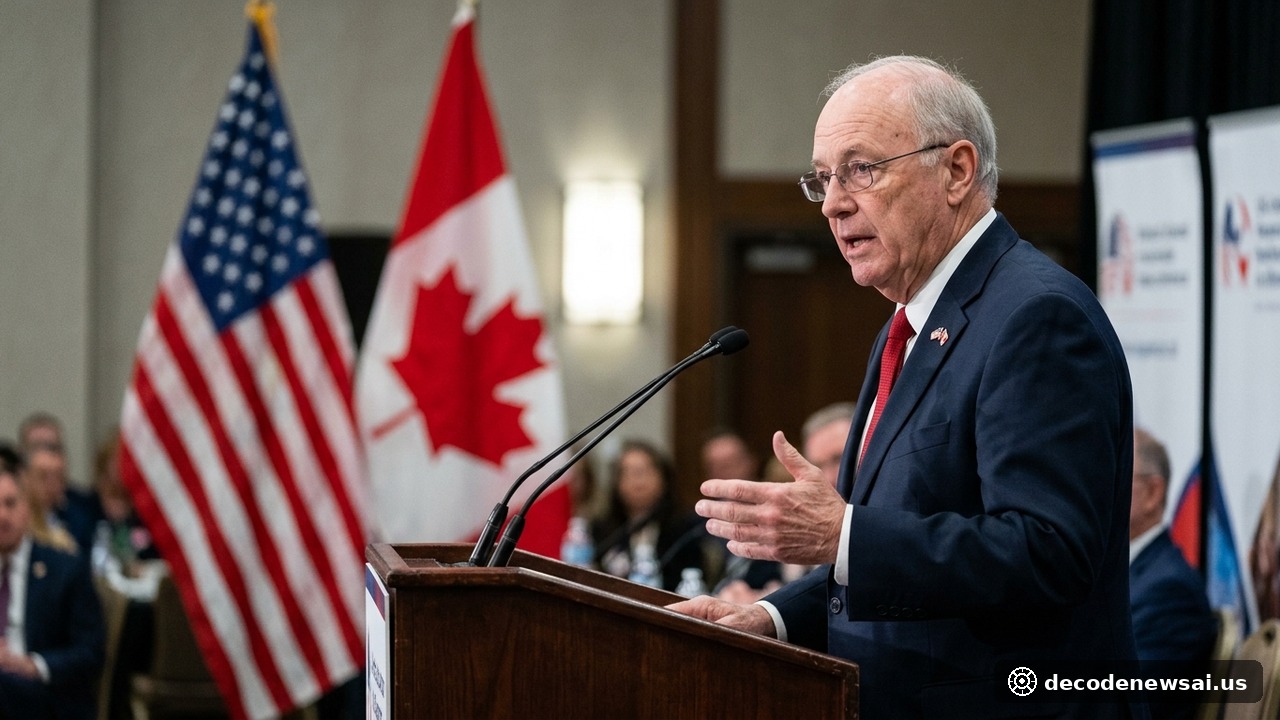
Ambassador Hoekstra acknowledged the extreme friction generated by the trade spat, which prompted a Canadian petition bearing over 275,000 citizen signatures calling for his diplomatic recall following contentious public exchanges regarding cross-border supply chains.
How Do Critical Potash Demands and Integrated Automotive Manufacturing Enforce Compromise?
Despite political rancor, immutable economic supply realities have forced the White House toward pragmatic compromise. In his remarks, Hoekstra conceded that the United States possesses virtually no alternative sources for potash, an indispensable component of agricultural fertilizers.
With Canada supplying more than 80% of all American potash imports and the only alternate global producers being heavily sanctioned state syndicates in Russia and Belarus, protracted tariffs directly imperil agricultural yields across the American grain belt. Simultaneously, the decades-old just-in-time automotive assembly matrix connecting Ontario parts manufacturers with Michigan assembly complexes faces paralyzing cost inefficiencies under punitive trade regimes. Hoekstra affirmed that Ottawa has made a compelling, data-backed presentation establishing that Canadian labor, environmental, and pay equity standards strictly align with the highest provisions of the United States-Mexico-Canada Agreement (CUSMA), paving the way for targeted tariff relief.
What Are the Far-Reaching Geopolitical Repercussions for North American Economic Integration?
Ambassador Hoekstra's forward-looking declarations illustrate that following devastating midterm congressional defeats, the executive branch is prioritizing regional manufacturing stability over broad economic brinkmanship.
For Prime Minister Mark Carney, securing a formal dismantling of punitive tariffs without compromising Canadian sovereign regulatory sovereignty represents a monumental economic triumph that stabilizes domestic employment across Ontario's industrial corridor. Nevertheless, the protracted trade dispute has permanently altered Canadian strategic doctrine. Moving forward, Canada will accelerate capital investments designed to diversify export channels to European and Indo-Pacific partners, ensuring that North American trade architecture transitions from passive codependence to structured, resilient economic multipolarity.