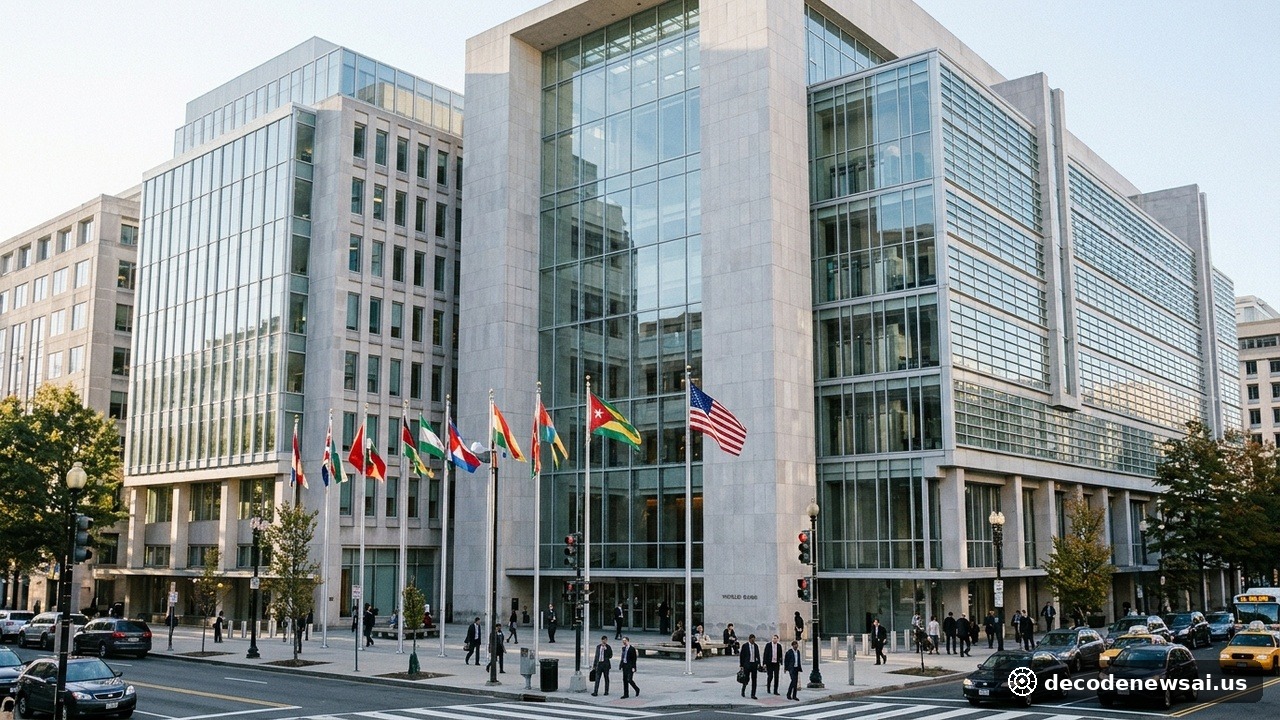
External debt owed by low- and middle-income countries rose 5.5% in 2025 to a record $9.4 trillion, according to the World Bank’s International Debt Report 2026, released on November 5. The increase was the fastest since 2021. The report describes a difficult combination for developing economies: access to international finance has improved as private creditors return and bond markets reopen, but the cost of borrowing remains high, particularly for the poorest countries.
The headline debt total is not simply a measure of new government spending. It includes external borrowing across low- and middle-income economies, and its change reflects new lending, repayments, bond issuance and currency movements. The World Bank warns that rising debt-service costs can leave governments with fewer resources for investment in infrastructure, education, health and jobs.
Private Creditors Return as Borrowing Expands
Private financing was a major driver of the increase. The World Bank said public-entity bond issuance rose nearly 35% to $251 billion in 2025, the highest level in five years. International bond markets reopened to many developing-country borrowers after a period of tighter financial conditions and investor caution. That return allowed governments to raise funds and refinance obligations, but it did not necessarily reduce the total amount of debt outstanding.
Some governments issued new bonds to buy back or repay maturing debt. Such transactions can smooth repayment schedules, but the World Bank said they often leave debt stocks largely unchanged and can involve higher interest rates. Access to capital markets therefore does not automatically mean that financing has become affordable or that borrowing will translate into new public investment.
Debt growth was also uneven. External debt among countries eligible for concessional financing from the World Bank’s International Development Association, or IDA, increased 8.1% to $1.3 trillion. That was faster than the overall increase across low- and middle-income countries. The report highlights how the return of private lending can coexist with more difficult financing conditions for the countries with the least fiscal room.
The Poorest Borrowers Face the Highest Rates
The cost of new borrowing is one of the report’s central concerns. IDA-eligible countries paid an average 8.2% on new commitments from private creditors in 2025, the highest rate since 1989. Their average rate on new bonds was 9.4%. By comparison, countries eligible only for non-concessional lending from the World Bank’s International Bank for Reconstruction and Development paid an average 5.5% on new bonds, down from 5.8% the previous year.
The difference matters because higher interest costs absorb public resources that might otherwise support development priorities. Low- and middle-income countries paid $1.4 trillion in principal and interest in 2025, the fifth consecutive annual increase. Payments to bondholders reached $363 billion. Over the period from 2022 through 2025, developing countries paid $436 billion more in debt service than they received in new financing.
Those totals show why a reopening of bond markets should not be treated as an uncomplicated recovery. Governments may regain access to investors while facing borrowing costs that make future repayments harder. The World Bank said the poorest borrowers were paying particularly high rates, while the cost of servicing existing obligations continued to rise.
Currency Movements Also Lifted Reported Debt
The increase in debt stocks was not caused entirely by additional borrowing. The World Bank estimated that more than a quarter of the $303 billion increase in public and publicly guaranteed debt reflected the weaker U.S. dollar. When debt denominated in other currencies is converted into dollars, its reported dollar value can rise even if the borrower has not taken on an equivalent amount of new debt.
For some of the largest concessional borrowers, the currency effect outweighed the principal they repaid during 2025. Their reported debt balances therefore increased despite continued debt servicing. This distinction is important when interpreting country-level debt figures: a higher reported balance can reflect exchange-rate changes as well as new loans or unpaid obligations.
The report calls for stronger debt transparency and better data on borrowing arrangements. The World Bank said new creditors, financing instruments, guarantees and other arrangements can make it harder to understand a country’s full exposure. More complete information can help governments, lenders and the public assess repayment risks and compare the terms of different forms of financing.
Market Access Does Not Resolve the Debt Burden
World Bank Chief Statistician Haishan Fu said low- and middle-income countries are borrowing more and paying more, leaving less in many cases for long-term development. The report also warns that countries with heavier debt burdens are more vulnerable to external shocks. When debt service takes up a larger share of public resources, governments have less flexibility to respond to economic disruption or maintain investment.
Demand for international bond financing remained strong into 2026. By mid-August, more than 10 countries had already exceeded their full-year 2025 issuance, while several others had returned to international markets. That evidence points to continued access to financing, but it does not establish that the new borrowing is sustainable.
The policy challenge is therefore not simply to reopen capital markets. Governments and lenders must also consider the price of financing, the schedule of repayments, the transparency of debt contracts and whether borrowed funds support productive investment. The World Bank’s figures show that access to money and the ability to afford it are different questions. For many of the poorest borrowers, the second question is becoming more urgent.