Presidential Resignation and Unanimous Impeachment Vote
On November 5, 2026, Paraguay was plunged into profound constitutional turmoil as President Santiago Peña announced his resignation from office following the sudden insolvency and regulatory seizure of major digital lender Ueno Bank. In a video address published to social platform X, Peña stated that he was stepping down in the interest of national stability, social peace, and the preservation of democratic institutions. While expressing remorse to the Paraguayan public for falling short of expectations, the former International Monetary Fund economist stopped short of accepting direct personal liability for the financial catastrophe that has frozen savings across the nation.
Within minutes of Peña's public broadcast, Paraguay's lower house of Congress, the Chamber of Deputies, delivered a swift political verdict, voting 78-0 unanimously to approve impeachment proceedings against the embattled leader and forward formal charges to the Senate. The political downfall was cemented when Horacio Cartes, the influential leader of the long-ruling Colorado Party and Peña's former political mentor, endorsed the impeachment push, declaring that the party would not condone the plundering of public funds, private deposits, and pensions. Congressional leaders announced that voting would proceed on Friday, November 6, regarding whether to formally accept Peña's resignation, an outcome that would enable Vice President Pedro Alliana to assume the presidency without awaiting a prolonged Senate impeachment trial.
Prosecutorial Action and Executive Detentions
Simultaneously, law enforcement agencies initiated aggressive legal proceedings to investigate potential systemic criminality surrounding the lender's demise. Paraguay's Attorney General Emiliano Rolón Fernández confirmed on November 5 that his office has ordered three comprehensive criminal investigations into the Ueno Bank disaster. The scope of these inquiries encompasses regulatory oversight failures, the emergency bank resolution process, and the high-level administrative decisions that authorized placing massive volumes of public funds into the private lender. Official statements confirmed that Peña, alongside several current and former administration officials, is directly subject to criminal examination.
In tandem with the prosecutorial directives, a presiding criminal court judge ordered preventive detention for six senior bank executives, including Ueno Bank founder Miguel Vázquez and bank President Juan Manuel Gustale, while placing two additional corporate directors under house arrest. Public prosecutors have formally charged 27 bank officers and commercial affiliates with criminal offenses centered on breach of trust and attempted fraud. Although legal counsel representing Gustale argued to domestic press that executive leadership relied on technical staff for individual loan appraisals, investigators are examining widespread irregularities involving insider credit allocations and preferential financial arrangements.
Regulatory Breakdown and Public Fund Exposure
The catastrophic collapse of Ueno Bank represents the unraveling of one of South America's most aggressively expanded fintech institutions. Having transitioned from an obscure credit firm to a licensed commercial bank within five years, Ueno claimed an expansive network of more than 70 physical branches and a customer base of 2.94 million account holders, representing approximately 60% of Paraguay's total adult population. However, the institution's meteoric ascent was underpinned by pervasive conflicts of interest. Peña maintained personal equity holdings in a corporate entity connected to Ueno until 2025. Following his presidential inauguration, Peña appointed Carlos Carvallo, the former chief of Ueno's corporate predecessor, to head the Central Bank of Paraguay, effectively placing the bank's former leader in charge of its primary regulatory overseer.
Shielded by close political alignment, government agencies funneled immense financial reserves into the lender. As of October 2026, Ueno held an estimated $800 million in public deposits, accounting for nearly one-quarter of its total balance sheet. This figure included roughly $380 million from Paraguay's state pension and health insurance fund (IPS), alongside substantial operational accounts belonging to operators of the country's binational hydroelectric dams. Central bank inspectors had uncovered hazardous lending practices as early as June, discovering that Ueno routinely extended massive uncollateralized loans to corporate entities linked to its owners while falsely booking standard operational expenditures as capital assets. Once regulators enforced accounting corrections, Ueno's solvency ratio plummeted to less than half the legally mandated threshold, compelling the central bank board to approve a resolution directive on November 2 and execute a regulatory seizure on November 3.
Systemic Fallout and Societal Backlash
The sudden shutdown of the country's primary consumer bank ignited nationwide financial paralysis and public fury. Following the regulatory takeover on November 3, Ueno's mobile software application, payment debit cards, and electronic transfer rails abruptly went dark, while physical branches shuttered their doors, leaving millions of citizens stripped of liquidity. Panic compounded on November 4 as frantic depositors attempted to open substitute accounts at competing commercial institutions, triggering server crashes across multiple private banking applications.
To arrest cascading panic across the financial system, Congress enacted emergency legislation establishing an expedited resolution protocol. The central bank guarantee fund pledged to initiate disbursements within five business days, commencing on November 5 with reimbursements for retail accounts with balances up to approximately $1,600. The fund provides statutory insurance coverage up to roughly $36,000 per depositor, a threshold regulators estimate will satisfy 97% of affected clients in full. Interim Central Bank President Pedro Acosta Bernal appealed for civic calm, assuring the public that the broader banking infrastructure remains solvent.
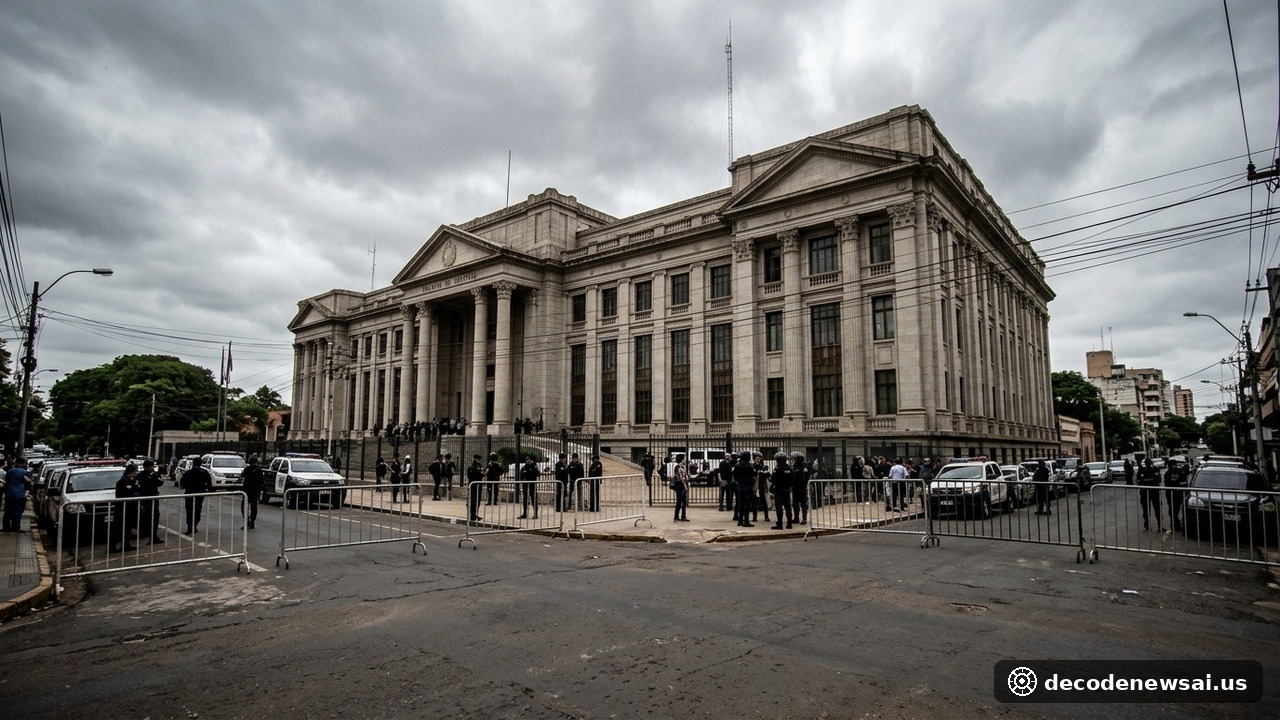
Despite regulatory assurances, widespread unrest has gripped the capital of Asunción. Thousands of demonstrators gathered outside the legislative palace to denounce political corruption, while uniformed Ueno Bank employees burned credit cards outside the Ministry of Labor to protest unpaid wages. Labor Ministry estimates indicate that the collapse has jeopardized approximately 7,000 direct and indirect jobs. Meanwhile, opposition lawmakers maintain that Peña must face full impeachment removal rather than voluntary resignation, seeking to strip him of the lifetime senatorial immunity that could shield him from impending criminal prosecution by the Attorney General.