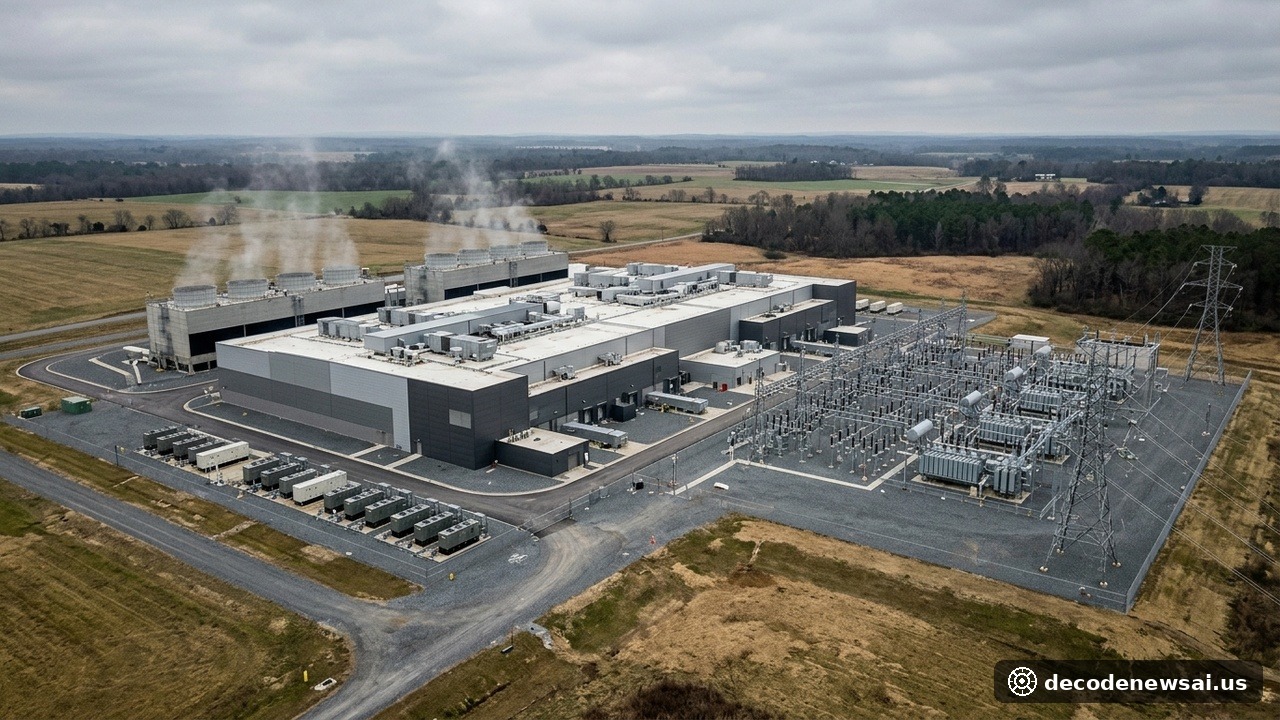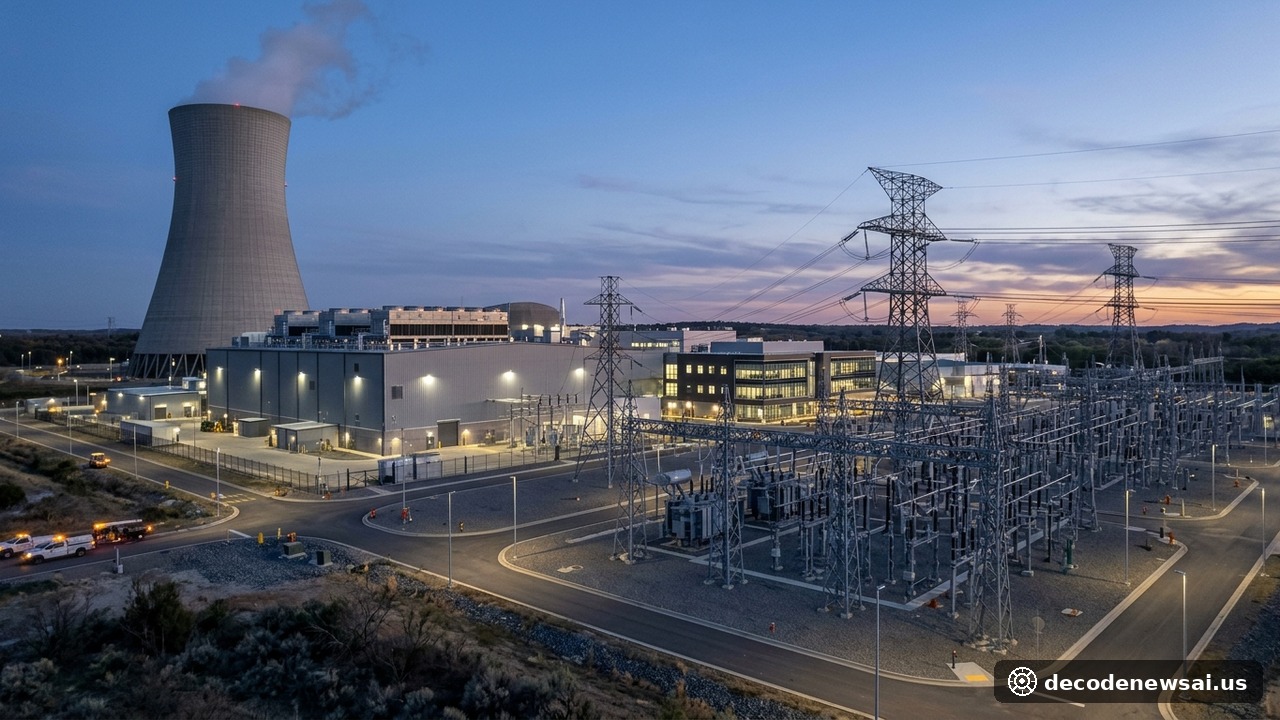
Industrial Info Resources and energy intelligence research consortiums published a comprehensive artificial intelligence infrastructure dossier in early November 2026, revealing that exponential electricity loads from frontier AI clusters have triggered an unprecedented revival in U.S. commercial nuclear power; annual capital commitments dedicated to nuclear data center construction and reactor restarts exceeded $20 billion in 2026—projected to approach $50 billion by 2029—with Microsoft, Amazon, Google, and Meta securing over 13 nuclear contracts totaling 9.8 gigawatts (GW) of carbon-free baseload capacity across the continental United States.
What Strategic Power Contracts Define Big Tech's 9.8 GW Nuclear Commitment?
- Combined Hyperscaler Nuclear Pipeline: Over 9.8 gigawatts (9,800 megawatts);Encompasses 13 announced nuclear projects
- Amazon Web Services Nuclear Buildout: 690 MW Susquehanna direct feed + SMRs;Direct nuclear colocation and X-energy equity
- Google Fleet Decarbonization Pacts: 890 MW reactor uprates + 2,700 MW base;500 MW SMR pipeline with Kairos Power
Why Does Physical Law Force Frontier AI Labs Away from Solar and Wind Toward Nuclear?
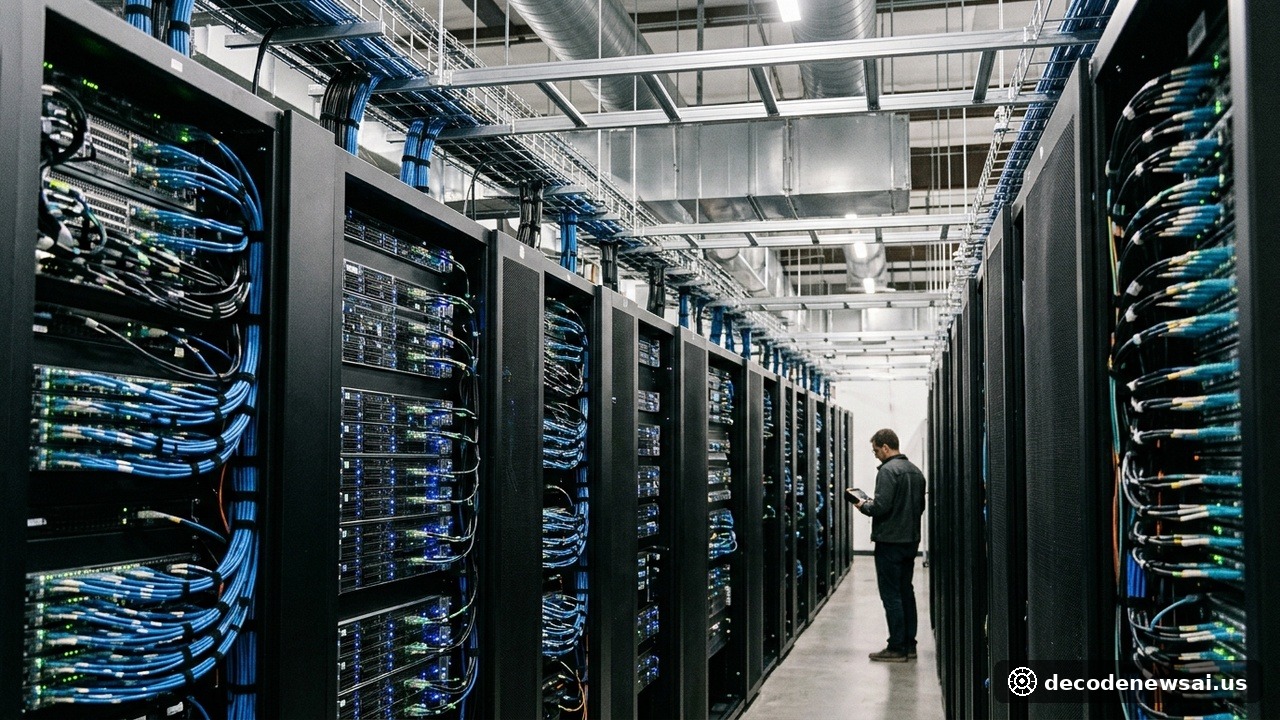
As frontier neural network training runs scale toward million-GPU clusters, data center engineering has collided with the physical distribution capacity of electrical utility grids.
How Does Big Tech's Nuclear Strategy Split Between Restarts and Small Modular Reactors?
Analysis synthesized by ROC Telecom illustrates that tech hyperscalers are executing a bifurcated procurement strategy to solve near-term capacity deficits while locking in decade-long power security.
To address immediate power shortages between 2026 and 2028, operators are underwrite complex multi-billion-dollar reactor restarts and thermodynamic uprates. Microsoft's landmark $16 billion agreement with Constellation Energy underwrites the complete refurbishment of Three Mile Island Unit 1—rebranded the Crane Clean Energy Center—bringing 835 megawatts back online. In parallel, hyperscalers are financing advanced fourth-generation Small Modular Reactors (SMRs) developed by Kairos Power and X-energy, establishing on-site microgrids scheduled for initial commercial synchronizations beginning in the early 2030s.
How Will Nuclear-Powered Compute Campuses Redefine National Grid Topology?
The convergence of nuclear generation and high-performance computing is altering the industrial geography of commercial real estate. Legacy site selection criteria prioritizing cheap land or municipal water access have been superseded by direct proximity to operable nuclear reactors.
Commercial real estate analysts report that data center campuses featuring dedicated behind-the-meter nuclear links command lease premiums of 15% to 25% over grid-constrained facilities waiting in multi-year utility interconnection queues. Although direct colocation has sparked regulatory disputes before the Federal Energy Regulatory Commission (FERC) regarding equitable grid transmission cost sharing, securing firm carbon-free gigawatts has become the ultimate strategic moat governing national competitiveness in advanced artificial intelligence.