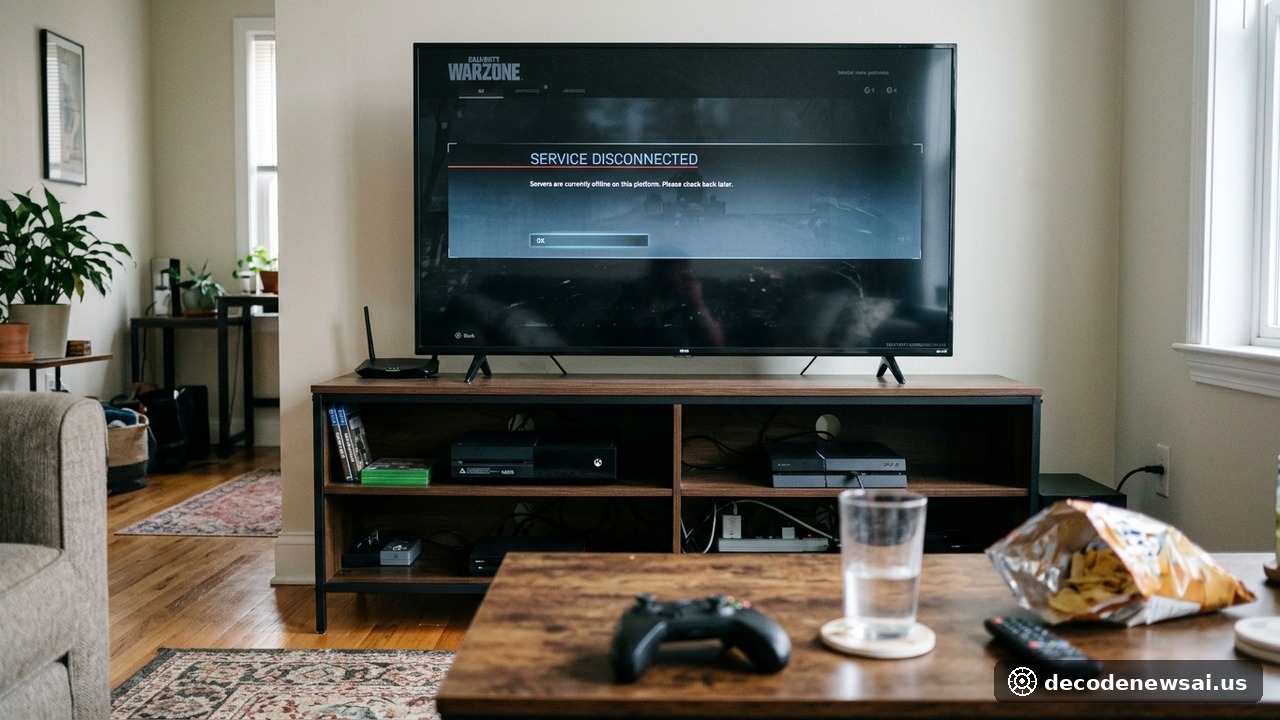
Activision Blizzard officially terminated online server support for its flagship free-to-play battle royale title, Call of Duty: Warzone, across legacy eighth-generation PlayStation 4 and Xbox One consoles on November 6, 2026. Timed to coincide with the global deployment of Call of Duty: Modern Warfare 4 Season 1, the platform sunsetting concludes over six years of continuous service on older hardware, shifting the franchise's engineering focus exclusively to PlayStation 5, Xbox Series X/S, and modern PC environments. Activision confirmed that player ranks, unlocked battle pass content, and purchased cosmetic inventories will carry over seamlessly to current-generation installations linked through the same Activision account, establishing a unified hardware architecture unencumbered by legacy technical constraints.
What Are the Operational Timelines and Technical Parameters in the Warzone Console Sunset?
- Digital Storefront Delisting and Microtransaction Deprecation Timeline: Delisted June 4, 2026 (In-Game Store Closed June 25)
- Virtual Asset Categories Fully Preserved Across Generation Upgrade: Player Progression, Weapon Blueprints, and COD Point Unlocks
- Technical Target Capabilities Unlocked by Next-Gen Exclusive Pipeline: Native Dynamic 4K, 120 FPS Modes, and Sub-Second Streaming
Addressing player communities during an official season launch briefing, Activision systems engineering leaders explained the structural necessity underpinning the hardware retirement: "The eighth console generation delivered an exceptional decade of interactive multiplayer innovation, establishing the foundational scale of the battle royale genre. However, as our development studios deploy modernized game mechanics—including large-scale destructible urban environments, advanced volumetric lighting pipelines, and high-fidelity physics calculations across Verdansk—the acute physical limitations of 5,400 RPM mechanical drives and constricted 8GB shared memory pools became insurmountable bottlenecks. To deliver an uncompromised competitive combat simulator for the next decade, our engineering roadmap mandated deprecating dual-generation branch maintenance and standardizing our engine pipeline around high-speed NVMe solid-state storage."
Competitive esports organizers and network engineers observed that eliminating older client builds significantly stabilizes tournament network infrastructure. Because legacy hardware architectures often struggled with packet de-jittering during chaotic endgame circles, standardizing competition exclusively on modern high-bandwidth hardware eliminates desynchronization disputes between players.
Furthermore, development leads confirmed that sunsetting legacy consoles reduces seasonal QA certification cycles by approximately three weeks, allowing engineering studios to deploy rapid anti-cheat heuristics and gameplay balance patches with unprecedented agility.
How Did Memory Bandwidth Bottlenecks and Legacy Branching Stifle Modern Engine Innovation?
For successive seasons, Call of Duty engine architects at Infinity Ward and Raven Software were forced to compromise environmental asset density, draw distances, and particle simulation fidelity to accommodate the processing budgets of base 2013-era home consoles.
With contemporary visual assets structured around dense nanite-class geometry meshes and global illumination shaders, reading massive multi-gigabyte open-world map segments across legacy SATA-II hard drive interfaces led to chronic texture pop-in, player collision desynchronization, and memory heap crashes during rapid vehicular traversal. Furthermore, maintaining network tick-rate parity across cross-generation multiplayer lobbies required game servers to throttle state packet dissemination to prevent desyncing older hardware, degrading hit registration responsiveness for the entire player pool. Severing legacy console support liberates developers to implement dedicated NVMe streaming architectures, compressing open-world map loading times from several minutes down to instant transitions.
What Strategic Precedents Does Frictionless Progression Transfer Establish for Live-Service Gaming?
Activision's definitive generational sunsetting of Warzone establishes an essential structural template for multi-platform live-service games (GaaS) operating across multi-decade corporate lifecycles.
Unlike legacy packaged retail titles that undergo abrupt commercial obsolescence upon hardware generational transitions, modern free-to-play ecosystems maintain millions of highly invested daily active users whose virtual wardrobes and competitive rankings represent substantial sunk emotional and financial investments. By orchestrating a phased deprecation roadmap—restricting new client downloads nearly six months in advance, sunsetting real-currency digital storefronts, and preserving digital inventories through central cloud profile authentication—Activision minimized community friction. Wall Street gaming equity analysts observe that while shedding legacy platforms temporarily trims marginal casual engagement metrics, eliminating redundant cross-generational QA testing and legacy bug patching significantly accelerates seasonal content delivery and elevates long-term player monetization across current-generation hardware.