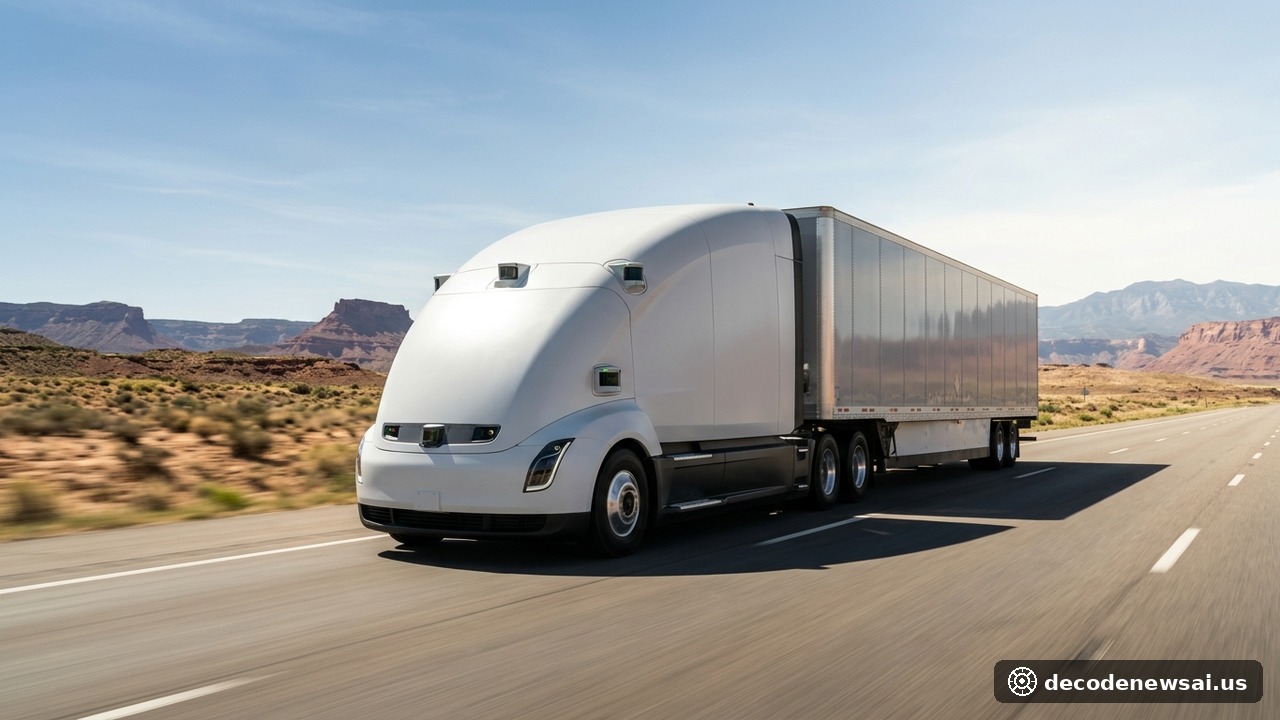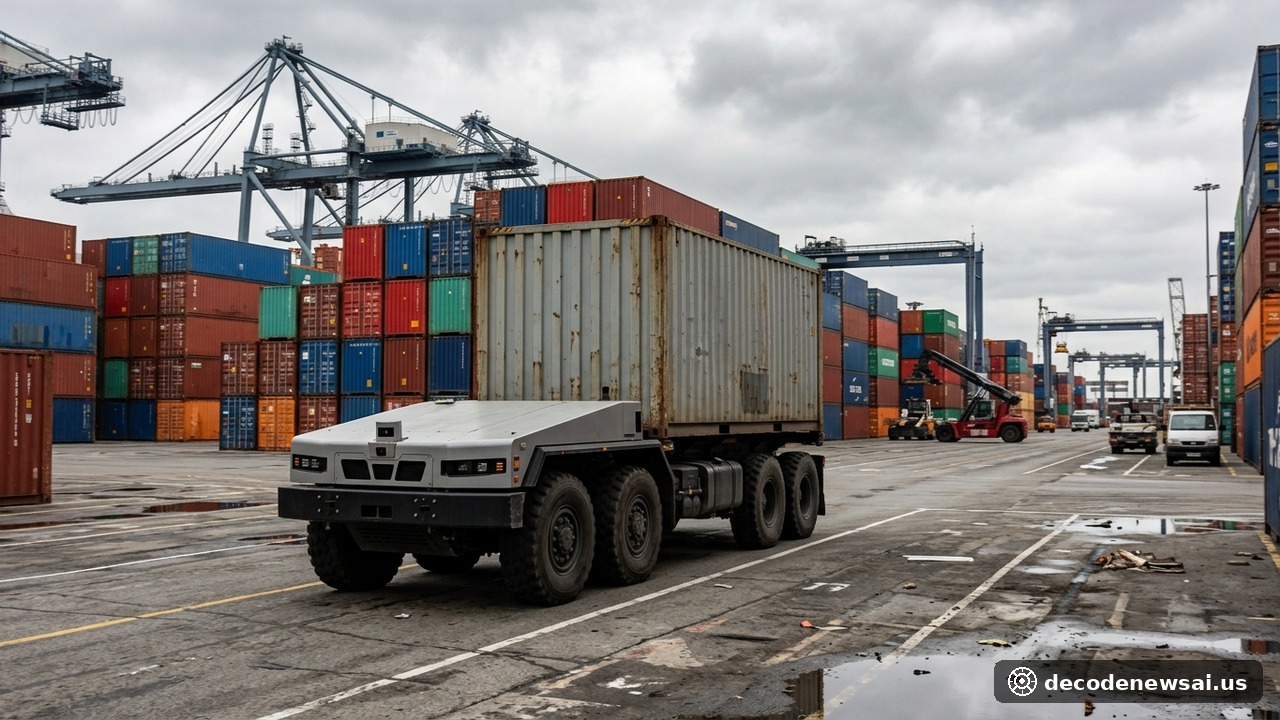
California-based autonomous electric heavy transport developer Humble Robotics Inc. formally announced the completion of an oversubscribed $51 million Series A equity financing round on November 6, 2026. The capital round was led by premier venture firm Obvious Ventures, with full participation from early-stage institutional backers Eclipse and Energy Impact Partners, bringing Humble's cumulative equity funding to $75 million since emerging from stealth in early 2026. Executive leadership confirmed that the capital proceeds will directly fund manufacturing scale-up and fleet validation for its flagship cabless, purpose-built electric hauler (Humble Hauler), prioritizing high-frequency container drayage across major North American intermodal seaports and localized distribution hubs. The operational rollout marks an architectural inflection point as commercial vehicle automation transitions away from retrofit diesel cabs toward ground-up electric chassis designed exclusively for unmanned operations.
Key Industrial and Financial Indicators: Humble Robotics Series A Deployment
- Lead Growth Venture & Institutional Investors: Led by Obvious Ventures; Eclipse Participating
- Initial Targeted Commercial Environment: Seaport Drayage & Intermodal Terminal Transfers
Why Does Eliminating the Physical Driver Cab Optimize Fleet Economics?
Throughout the initial decade of commercial truck automation, the dominant engineering paradigm focused on retrofitting legacy class-8 diesel tractors with exterior sensor pods, compute racks, and redundant drive-by-wire steering actuators. However, this hybrid approach incurred structural cost and operational inefficiencies. Preserving human cabs requires heavy glass windshields, steering columns, HVAC systems, and certified rollover impact structures that consume vehicle payload capacity and expand aerodynamic drag.
Founded by veteran autonomous engineering executives from Apple, Uber, and Waabi under Chief Executive Officer Eyal Cohen, Humble Robotics dismantled legacy commercial vehicle conventions. The Humble Hauler eliminates the operator cabin entirely, dedicating forward chassis volume to modular high-density lithium-ion battery packs and recessed solid-state LiDAR sensor enclosures. This low-profile aerodynamic profile reduces the vehicle's coefficient of aerodynamic drag by nearly 40% while shedding several tons of structural curb weight. The resulting efficiency gains expand heavy-payload battery range by over 30%, fundamentally lowering total cost of ownership (TCO) across fleet balance sheets.
Why Does Port Drayage Represent the Ideal Operational Proving Ground?
While long-haul interstate freight automation continues to navigate unpredictable weather phenomena, construction zones, and fragmented state-level liability codes, short-haul seaport drayage represents an immediate path toward commercial viability. Container transfers connecting marine berths, on-dock rail intermodals, and regional inland container yards follow tightly bounded, geographically fenced corridors with consistent operating speeds.
Concurrently, port drayage sectors confront structural driver turnover, severe congestion delays, and mandatory zero-emission emissions deadlines across California and the West Coast. Operating an end-to-end foundation model navigation stack, Humble haulers execute 24/7 continuous transport shifts without driver fatigue constraints. Pilot trials conducted across two major West Coast container terminals confirmed automated synchronization with terminal operating systems (TOS) and overhead gantry cranes, compressing gate-to-yard container dwell times by more than 25%.
Where Is Commercial Freight Automation Heading Into the Late 2020s?
Humble's successful $51 million capital raise signals an accelerating industry realignment toward application-specific commercial vehicle architectures. As commercial electrification gains momentum through volume rollouts of the Tesla Semi alongside zero-emission platforms from Daimler Truck and Volvo Group, industrial competition is centering on holistic operational autonomy.
Commercial transport analysts observe that the freight market is migrating toward vertically integrated operational platforms where vehicle design, low-power inference compute, and autonomous fleet orchestration operate as a unified system. By sidestepping the overhead of human cab production and securing beachheads within high-utilization port ecosystems, purpose-built autonomous developers like Humble Robotics are accelerating the timeline for commercial freight electrification worldwide.