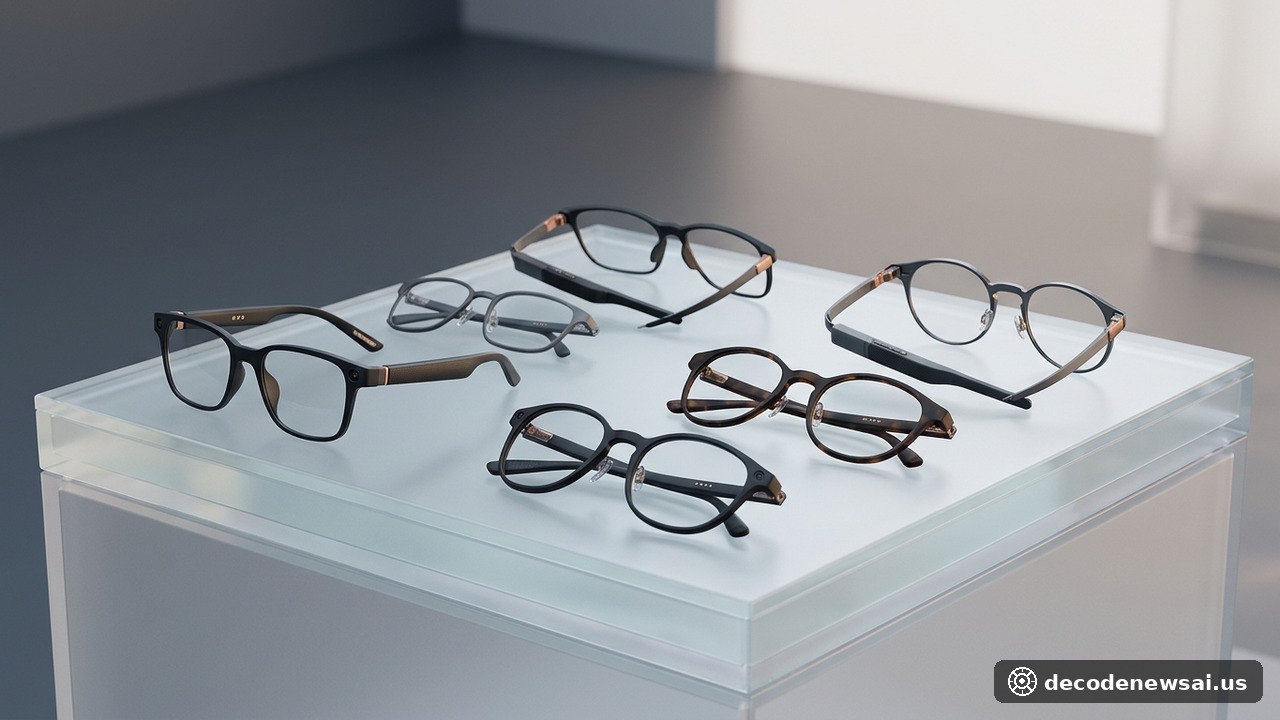
Key Market and Regulatory Indicators: Meta AI Smart Glasses Deployment
- Ray-Ban Meta Cumulative Worldwide Shipments: Exceeded 7.0 Million Units (Record Hardware Volume)
- Global Generative AI Smart Glasses Share: 69.2% Dominance (EssilorLuxottica Partnership)
- Camera-Free Hardware Project Code Name: Project "Luna" (Dedicated Audio & Environment AI)
- Proposed Jurisdictional Wearable Restrictions: Public Schools, Municipal Facilities, Locker Rooms
- Average Active Multimodal Voice Interactions: 14.2 Query Prompts per Active User Daily
How Did Form-Factor Aesthetics Establish Meta's Dominance in Wearables?
Throughout previous product cycles, augmented reality glasses and head-mounted displays struggled with commercial adoption, constrained by heavy optical wave-guides, conspicuous external battery packs, and socially awkward form factors that restricted hardware to industrial enterprise niches. Meta's strategic joint-venture with global eyewear conglomerate EssilorLuxottica fundamentally bypassed this adoption hurdle by prioritizing iconic optical design over bulky display hardware.
By concealing spatial audio speakers, beamforming microphone arrays, and miniaturized battery cells within traditional Ray-Ban Wayfarer frames weighing under 50 grams, the hardware achieved social acceptability. Concurrently, Meta integrated its frontier multimodal reasoning models into on-device firmware. Wearers query their surrounding environment via conversational voice commands—enabling instantaneous foreign text translation, visual landmark identification, and object recognition. This low-friction, natural interface sparked intense consumer demand across young demographics, generating rapid compound shipment growth throughout 2026.
Why Does a Camera-Free Hardware Model Resolve Regulatory Opposition?
Despite commercial momentum, the presence of forward-facing optical sensors in crowded public spaces ignited severe privacy backlash. Although Ray-Ban frames incorporate an external LED recording indicator, privacy advocates and regulatory authorities demonstrated that the light can be easily obscured with adhesive tape or nail polish, sparking public outrage regarding unauthorized photography in fitness facilities, transit hubs, and private commercial establishments.
Where Is the Consumer Artificial Intelligence Hardware Ecosystem Headed?
Meta's dual-track hardware strategy underscores the complex societal friction accompanying ambient artificial intelligence deployment. As competing hardware developers, including Apple, Google, and Samsung, prepare lightweight consumer smart eyewear portfolios for late 2027 debuts, the consumer electronics sector is recognizing that regulatory alignment and social etiquette represent paramount engineering constraints.
Consumer technology analysts project that ambient wearables will bifurcate into distinct commercial categories. Audio-centric, camera-free wearable assistants prioritizing privacy sovereignty will serve enterprise office environments and public urban transit, while high-tier augmented optical headsets equipped with verified hardware anti-tamper protections will cater to navigation, outdoor recreation, and immersive gaming. Balancing multimodal utility against institutional privacy safeguards will define the hardware winners of the post-smartphone era.