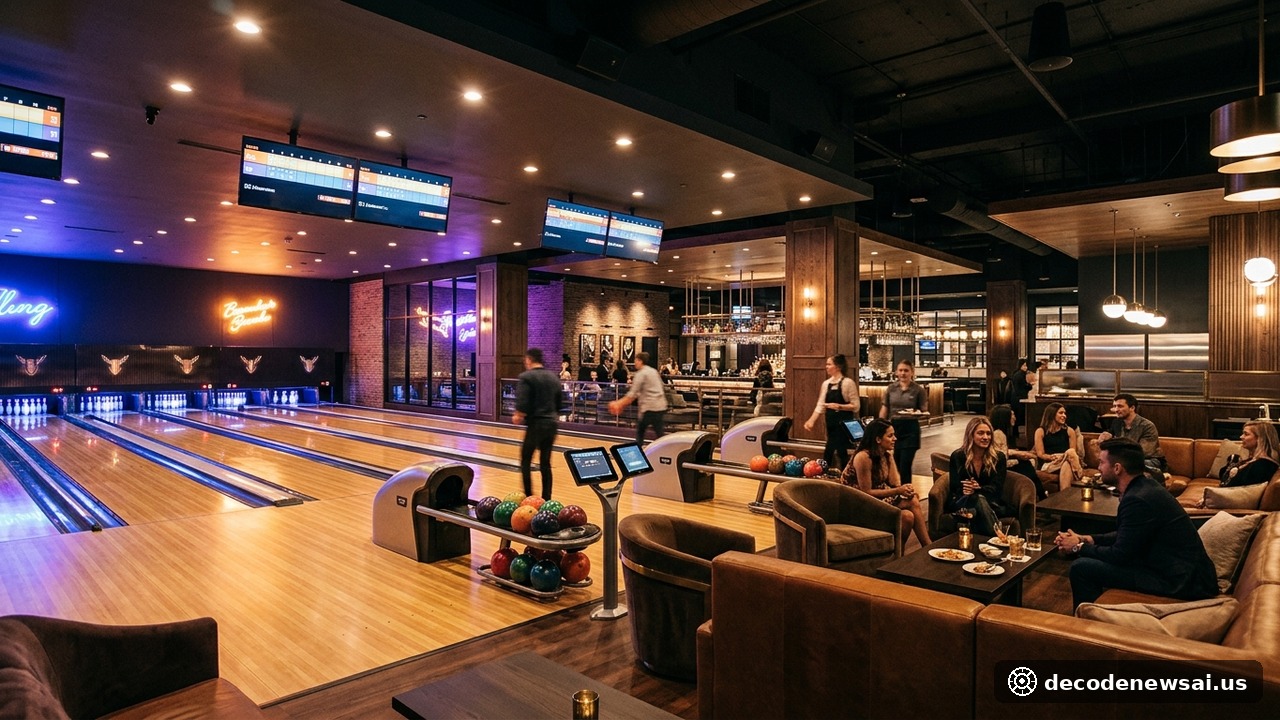
Premier experiential bowling and outdoor water park entertainment conglomerate Lucky Strike Entertainment Corporation (formerly Bowlero Corp, NYSE: LUCK, historically trading under NYSE: BOWL) officially reported its financial and operating results for the first quarter of fiscal 2027 (ended September 27, 2026) on November 5, 2026. Consolidated net revenue expanded 3.5% year over year to $302.64 million, surpassing Wall Street consensus expectations of $297.79 million. Adjusted EBITDA reached $72.1 million, holding essentially flat with the prior-year period. In a decisive strategic pivot to address $1.817 billion in long-term debt and mitigate rising interest expense under higher-for-longer borrowing rates, the board of directors officially suspended the company's quarterly cash dividend, preserving approximately $35 million in annual cash flow to execute a $100 million near-term debt reduction campaign.
What Are the Core Operational Metrics and Balance Sheet Figures in Lucky Strike's Q1 Release?
Tom Shannon, Founder, Chairman, and Chief Executive Officer of Lucky Strike Entertainment, outlined the rationale governing the capital reallocation during an executive conference call: "Our core experiential centers demonstrated encouraging underlying resilience, characterized by a sequential turnaround in September where same-store revenues grew 2 percent, alongside double-digit booking growth across high-margin corporate holiday events. However, carrying an elevated leverage profile of 5.5 times adjusted EBITDA is fundamentally incompatible with maximizing shareholder value in today's high-rate credit environment. Suspending our quarterly dividend, paired with reducing quarterly capital expenditures by 17 percent to a five-year low of $21.5 million and monetizing surplus non-core real estate, provides an executable path to eliminate at least $100 million in debt over the coming year, reducing leverage toward 5.0 times."
How Did Corporate Event Bookings and Seasonal Water Parks Cushion Consumer Headwinds?
A detailed examination of Lucky Strike's revenue components reveals a bifurcated leisure spending environment across North American consumer demographics.
While total revenues expanded through prior-year asset acquisitions, same-store sales declined 2.6 percent during the quarter, dampened by international summer sports viewing distractions in July and reduced promotions on discounted summer season passes in August. Casual walk-in retail foot traffic and birthday parties experienced modest spending friction. Conversely, corporate event bookings—which account for approximately two-thirds of the private events portfolio—expanded at a double-digit rate, fueling robust forward contract backlogs heading into the critical holiday season. Concurrently, the outdoor water parks division, incorporating full-summer contributions from Raging Waters California and Emerald Pointe in North Carolina, generated $25 million in quarterly EBITDA, up $9 million year over year, proving vital in smoothing seasonal bowling revenue troughs.
What Strategic Signals Does Aggressive Balance Sheet Deleveraging Send to Leisure Investors?
Lucky Strike's operational transition from leveraged acquisition roll-ups to strict balance sheet conservation illustrates the broader structural adjustment underway across consumer-facing experiential equities.
While public markets initially reacted to the dividend elimination with volatility, fixed-income analysts commended management's commitment to debt retirement. By slashing full-year capital expenditure guidance to approximately $90 million—down from peak historical levels of $194 million—the company decouples its cash generation from speculative real estate expansion. Reaffirming full-year fiscal 2027 revenue guidance of approximately $1.3 billion alongside adjusted EBITDA between $340 million and $360 million, Lucky Strike's aggressive focus on organic cash flow and debt reduction establishes an operational framework designed to fortify its competitive moat across North American experiential entertainment.