Global pulp and timber manufacturing leader Mercer International Inc. (NASDAQ: MERC) officially announced a comprehensive Restructuring Support Agreement (RSA) in early November 2026, laying the legal foundation to file prepackaged Chapter 11 bankruptcy in the U.S. Bankruptcy Court for the Southern District of Texas; the plan restructures $1.275 billion in liabilities by converting $1.1 billion of senior unsecured notes into equity and securing $400 million in fresh capital commitments to rehabilitate its balance sheet.
What Are the Core Financial Pillars of Mercer's Restructuring Plan?
- Senior Unsecured Notes Equitized: $1.100 billion (converted to equity ownership)
- Fitch Ratings Credit Action: Long-Term IDR downgraded to 'C' (Distressed Exchange)
How Did Cyclical Pulp Depressions and Interest Expenses Force Chapter 11?
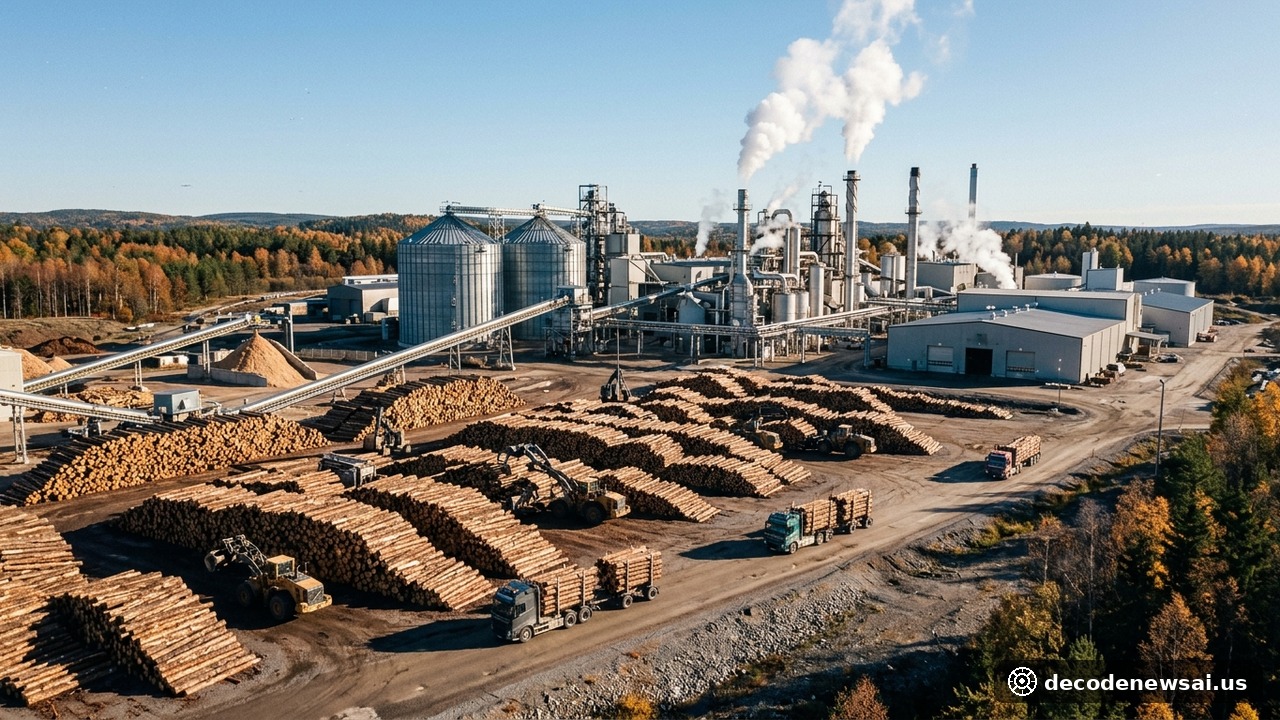
Mercer International, a vital supplier of Northern Bleached Softwood Kraft (NBSK) pulp across European and North American markets, experienced severe operational headwinds from prolonged cyclical downturns in global commodity pricing combined with inflated fiber and chemical input costs. High European industrial energy rates and elevated debt service obligations eroded operating margins, generating persistent negative free cash flow throughout 2025 and 2026.
By autumn 2026, Mercer's liquidity reached critical thresholds. The company elected not to make a scheduled $25.8 million interest payment due October 1 on its 12.875% senior notes due 2028. While a supplemental indenture initially extended the contractual grace period from 30 to 90 days, the insurmountable capital structure prevented conventional refinancing in public credit markets, leaving consensual court-supervised restructuring as the only viable turnaround mechanism.
How Does the Prepackaged Court Process Shield Global Industrial Operations?
To prevent operational disruptions across forest concessions, pulp mills, and international maritime shipping lanes, Mercer structured the proceeding as a prepackaged filing. Because an overwhelming majority of senior noteholders and equity sponsors executed the restructuring support agreement prior to court filing, the debtor anticipates formal plan confirmation within approximately 45 days of docketing.
Mercer's executive leadership confirmed that Chapter 11 proceedings will alter holding company balance sheets without disrupting day-to-day mill operations. Trade vendors, timber suppliers, transport carriers, and plant employees will continue to receive payment in full within ordinary commercial terms. The debtor will replace its legacy borrowing facilities with an exit revolving credit agreement providing up to $300 million in liquidity upon emerging.
What Does Equity Restructuring Mean for the Global Pulp and Paper Sector?
Under the proposed reorganization plan, Mercer's existing common stock trading on Nasdaq will be canceled, with legacy shareholders receiving pro-rata allocations of new common stock and convertible preferred shares, representing a substantial dilution of historical holdings. Mercer intends to apply for relisting of the newly issued common equity on Nasdaq upon restructuring effectiveness by late 2026.
Financial analysts view Mercer's balance sheet overhaul as a pivotal consolidation milestone for capital-intensive timber and bio-economy producers navigating extended commodity downturns. By eliminating $1.1 billion in principal debt and associated coupon burdens, Mercer will emerge with a deleveraged capital foundation, positioned to invest in modern biorefinery operations and sustainable lumber processing capacity.
What Long-Term Structural Trends Are Reshaping the Global NBSK Pulp Market?
Market observers note that the capital restructuring of Mercer International reflects broader secular shifts across the global forest products sector. Increasing climate-driven volatility in timber harvesting regions, combined with tightening environmental permitting standards in North America and Western Europe, has constrained raw fiber access while raising delivered wood basket costs.
Simultaneously, the demand landscape is undergoing structural bifurcation. While traditional publication and graphic paper grades experience permanent demand contraction, specialized hygiene products, absorbent packaging liners, and green biochemical derivatives continue to expand. Companies emerging from Chapter 11 with restructured balance sheets and reduced debt service burdens will be uniquely positioned to modernize processing equipment and pivot capacity toward higher-margin bio-economy applications.