Key Transactional Metrics and Market Fallback from the Canceled AI Capacity Pact
- Oracle Equity Intraday Market Reaction: -4.2% drop to 24-month trading low
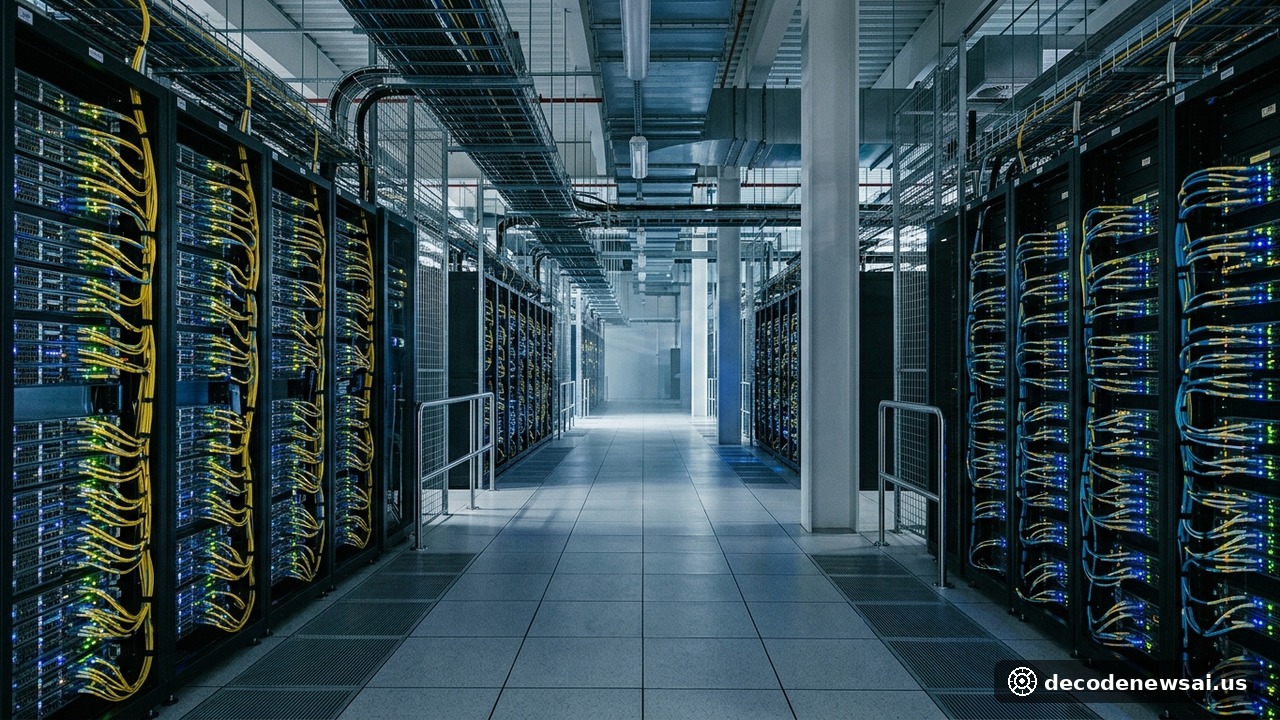
- Decommissioned Compute Server Hardware: Tens of thousands of dedicated Nvidia GPU nodes
- Enterprise Valuation Multiple Compression: Severe contraction in OCI standalone multiples
Why Did Microsoft Decide to Terminate Its Massive Third-Party AI Compute Leases?
The strategic alliance originated during the explosive initial wave of enterprise generative AI adoption in late 2023. Confronted by unprecedented user queries across its AI-augmented Bing search engine and escalating compute obligations to partner OpenAI, Microsoft faced immediate physical capacity constraints across its own facilities. Compounded by chronic grid inter-connection delays and high-voltage transformer shortages across North America, Microsoft executive leadership authorized short-term premium leases on OCI clusters outfitted with Nvidia A100 and H100 hardware to bridge the immediate computational gap.
However, three consecutive fiscal years of unprecedented capital expenditure—surpassing $80 billion annually—have brought massive proprietary Microsoft hyperscale campuses online throughout 2026. Armed with high-density server architectures deploying next-generation Nvidia Blackwell silicon alongside Microsoft's proprietary Maia AI accelerators, continuing to lease legacy third-party rack space from Oracle became economically indefensible. Facing strict corporate mandates from Chief Financial Officer Amy Hood to protect cloud gross margins, Microsoft engineered a systematic migration of workloads back into its proprietary Azure regions.
How Does the Cancellation Threaten Oracle's Standalone Cloud AI Valuation Narrative?
For Oracle Corporation, which had successfully engineered a dramatic equity re-rating by positioning itself as the nimble, preferred high-performance alternative to legacy cloud incumbents, Microsoft's departure represents an existential blow to its commercial narrative. Executive Chairman Larry Ellison repeatedly touted multi-billion-dollar commitments from Microsoft and OpenAI on earnings calls, citing them as empirical proof that OCI's clustered networking topology was structurally superior to Amazon Web Services and Google Cloud Platform.
Wall Street research desks issued immediate analytical warnings on Friday, noting that the loss of its premier external tenant strips Oracle of substantial high-margin operational cash flow while exposing severe capacity vulnerability. To satisfy initial demand, Oracle incurred heavy capital obligations and aggressive debt issuances to secure allocations of graphics processing hardware. With Microsoft relinquishing leased infrastructure, Oracle must rapidly backfill massive datacenter footprints in an increasingly competitive environment where second-tier AI startups face severe capital constraints.
Strategic Realignment Across the Global Hyperscale Cloud Landscape
The unraveling of the Microsoft-Oracle agreement marks the definitive conclusion of the cloud market's initial "scramble for compute," transitioning the AI infrastructure sector into a disciplined era defined by vertical integration and balance-sheet scale. Hyper-scalers have recognized that relying on intermediary third-party compute landlords introduces intolerable operational friction and margin dilution. Controlling physical land rights, sub-station switchgear, long-term nuclear power purchase agreements, and proprietary silicon architectures represents the only viable foundation for sustainable enterprise returns.
This structural shift delivers a chilling message across speculative compute aggregators and independent hosting providers. As Microsoft, Amazon, and Google consolidate generative workloads within proprietary perimeter fences, market pricing power across third-party GPU colocation is experiencing rapid deflation. The future of global artificial intelligence infrastructure is no longer determined by who can execute short-term silicon leases, but by which technology conglomerates possess the balance sheet power to build, power, and operate gigawatt-scale sovereign compute complexes.