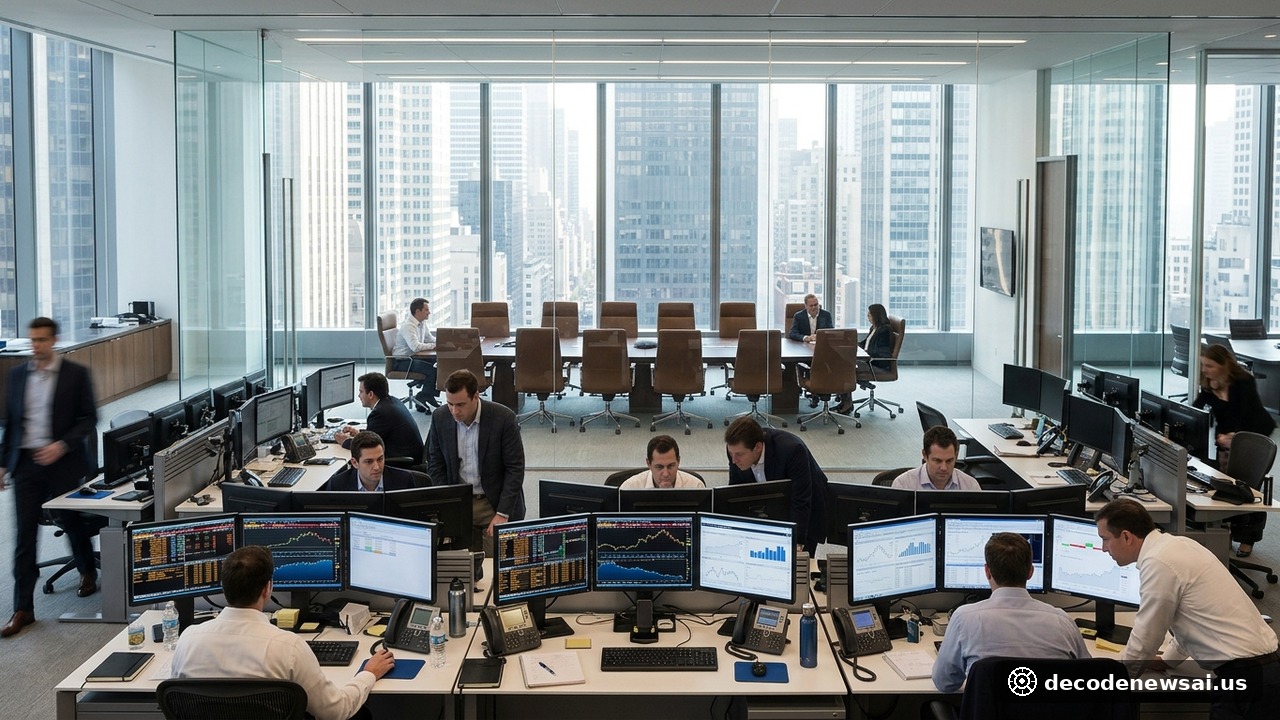
Multistrategy hedge fund powerhouse Walleye Capital, which oversees approximately $17 billion in assets under management, officially notified institutional investors on November 6, 2026, of a sweeping restructuring of its equities division that includes returning roughly $2 billion in capital to clients. Alongside the substantial cash distribution, the firm dismissed Anil Gondi, head of its fundamental equities unit, together with substantial sub-portfolio manager cohorts, signaling a watershed retrenchment across the aggressively competitive multi-manager platform landscape following persistent underperformance.
Operational Benchmarks and Performance Data from Walleye Capital's Restructuring
- Direct Capital Liquidated and Returned to LPs: ~$2.00 billion (representing over 11% of AUM)
- Executive Reconstitution and Key Hires: Ouster of Anil Gondi; hiring of Mike Scheer
What Driven Factors Propelled Walleye's Rapid Expansion and Sudden Reversal?
Walleye Capital represented one of the most meteoric growth trajectories across the global alternative investment industry over the past three years. Spurred by standout historical returns in quantitative arbitrage and volatility strategies, the firm's balance sheet swelled more than four-fold from $4 billion in late 2023 to $17 billion. Seeking to replicate the institutional dominance of blue-chip multi-manager platforms like Citadel and Millennium Management, leadership initiated an aggressive hiring blitz, recruiting dozens of high-cost fundamental equity pod managers from top-tier investment banks.
However, erratic market dispersion and extreme megacap equity concentration severely punished fundamental stock-pickers throughout 2026. During October's corporate earnings season, unexpected earnings volatility and liquidity squeezes triggered a painful 5.9% single-month net asset value drop, dragging year-to-date performance to negative 6.8%. In a multistrategy sector anchored by low-volatility mandates and stringent capital preservation covenants, fundamental equity operations transformed from an intended diversification engine into a severe operational drag.
Why Did Chief Investment Officer Will England Choose Decisive Capital Return?
Addressing clients in a transparent investor memorandum, Chief Investment Officer Will England conceded that attempting to build an in-house fundamental multi-manager equities factory failed to generate a sustainable competitive moat. England wrote candidly: "We are going to lean into the businesses where we have a proven and differentiated right to win, including our Volatility, Quant and external businesses. Our competitive advantage does not lie in replicating the traditional multi-manager stocks trading model."
England emphasized that returning $2 billion represents deliberate capital optimization rather than fund-level distress. Concurrently with the dismissal of equities chief Anil Gondi and the unwinding of redundant equity research pods, Walleye retained Mike Scheer, formerly a senior portfolio manager at quantitative giant Jain Global, to report directly to England in supervising residual risk hedging. Going forward, the fund will access equity exposure primarily through external single-manager allocations and systematic quantitative models, eliminating bloated fixed overhead.
Structural Reckoning Across the Wall Street Multi-Manager Platform Model
Walleye Capital's dramatic capital contraction delivers a sober warning across the alternative investment industry. Over the past five years, institutional capital poured hundreds of billions of dollars into multi-manager "pod" structures, sparking bidding wars that inflated portfolio manager compensation packages. However, as financing costs remain structurally elevated and equity correlations decouple, second-tier platforms that expanded indiscriminately are grappling with operational bloat, manager churn, and compressed risk-adjusted returns.
Institutional allocators observed that by returning $2 billion directly to clients and swiftly shuttering unprofitable units, Walleye broke with the industry tendency to protect fee-generating assets at all costs, earning praise from sovereign wealth and endowment backers. The retrenchment marks an inflection point in the hedge fund cycle, signaling that the era of unconstrained multi-strategy expansion has crested in favor of focused quantitative engineering, strict risk budgeting, and ruthless capital discipline.