Financial Baseline and Operating Dimensions of the Terminated $2 Billion Expansion
- Total Committed Capital Investment: $2.00 billion (46.3 billion CZK)
- Primary Semiconductor Fabrication Target: 8-inch (200mm) silicon carbide epitaxy & fab
- Corporate Capital Allocation Trajectory: Discretionary CapEx trimmed to bolster utilization
Why Did onsemi Abruptly Abandon Its Flagship European Silicon Carbide Project?
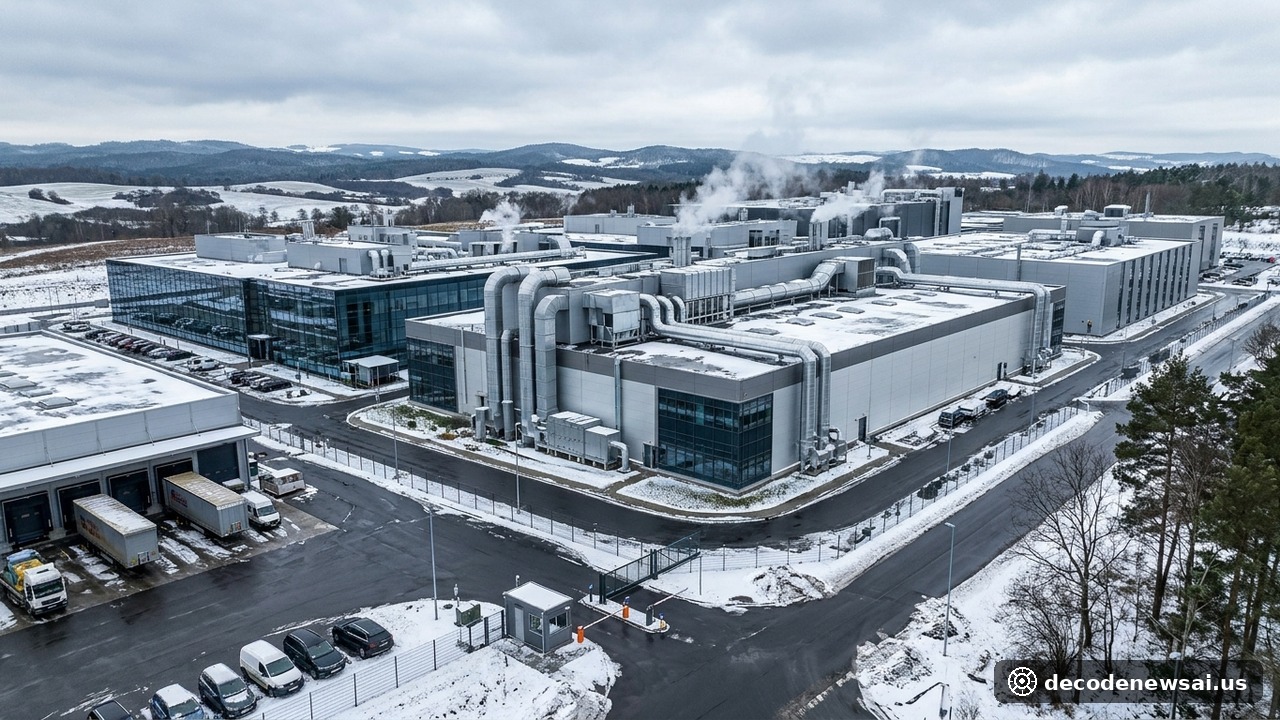
Announced in mid-2024 with substantial political fanfare, the Rožnov project was championed by the European Commission as a cornerstone of the European Chips Act, designed to insulate the continent's automotive sector against foreign semiconductor supply disruptions. However, over the ensuing twenty-four months, macroeconomic headwinds profoundly depressed the underlying commercial thesis. Addressing financial stakeholders, onsemi Chief Executive Officer Hassane El-Khoury emphasized that leading European and North American automotive manufacturers systematically delayed their high-voltage electric vehicle deployment roadmaps.
While silicon carbide MOSFET modules deliver vastly superior high-voltage efficiency and thermal endurance compared to legacy silicon IGBTs, their premium wafer cost requires robust volume absorption from premium battery electric platforms. As major European governments abruptly eliminated consumer purchase subsidies and mainstream consumer purchasing pivoted toward cost-effective plug-in hybrids, automakers repeatedly deferred firm multi-year procurement commitments. Proceeding with the construction of an expansive 8-inch greenfield fab would have exposed onsemi to crushing depreciation charges and sub-optimal capacity utilization through 2027.
Strategic Repercussions for the Czech Republic and European Semiconductor Sovereignty
For the Czech Republic, which sought to establish itself as the premier silicon heart of Central Europe, onsemi's withdrawal deals a painful blow to regional industrial development. The Czech government had assembled an aggressive investment incentive package encompassing structured corporate tax exemptions, specialized training subsidies, and public utility upgrades. The cancellation eliminates 1,300 anticipated high-income technical roles and derails ancillary expansion plans across dozens of regional specialty chemical suppliers and precision gas distributors.
Within the broader architecture of the European Union, the project's demise underscores the structural vulnerability of public subsidy frameworks when confronted by market deflation. Following Intel's timeline deferrals in Germany and capacity rationalization by peer foundries, the cancellation highlights that sovereign incentives alone cannot compensate for sluggish end-market demand. Without an expansive, hyper-competitive domestic consumer electronics and electric vehicle manufacturing ecosystem, European attempts to build localized wafer fabrication capacity face persistent commercial fragility.
Cyclical Rationalization and Restructuring Across Global Automotive Semiconductor Supply Chains
The collapse of the Rožnov expansion signals a decisive transition from aggressive capacity land-grabs toward operational austerity across the third-generation semiconductor sector. Anticipating universal automotive electrification, global foundries expanded silicon carbide capacity by more than three-fold within a condensed three-year window. Compounded by aggressive low-cost pricing from emerging manufacturers in Asia, the power semiconductor landscape transitioned rapidly into margin-crushing oversupply.
Industry analysts conclude that while onsemi's exit delivers an acute psychological shock to European industrial policy, it shields the balance sheet from catastrophic capital misallocation. Across the global market, capital expenditure is consolidating around brownfield fab optimizations, yield enhancement at established manufacturing facilities, and specialized high-density multi-chip packaging. Deprived of a localized, high-volume automotive silicon carbide hub, European automobile manufacturers will remain dependent on complex transoceanic supply lines, sustaining external geopolitical risks across their critical electrification architectures.