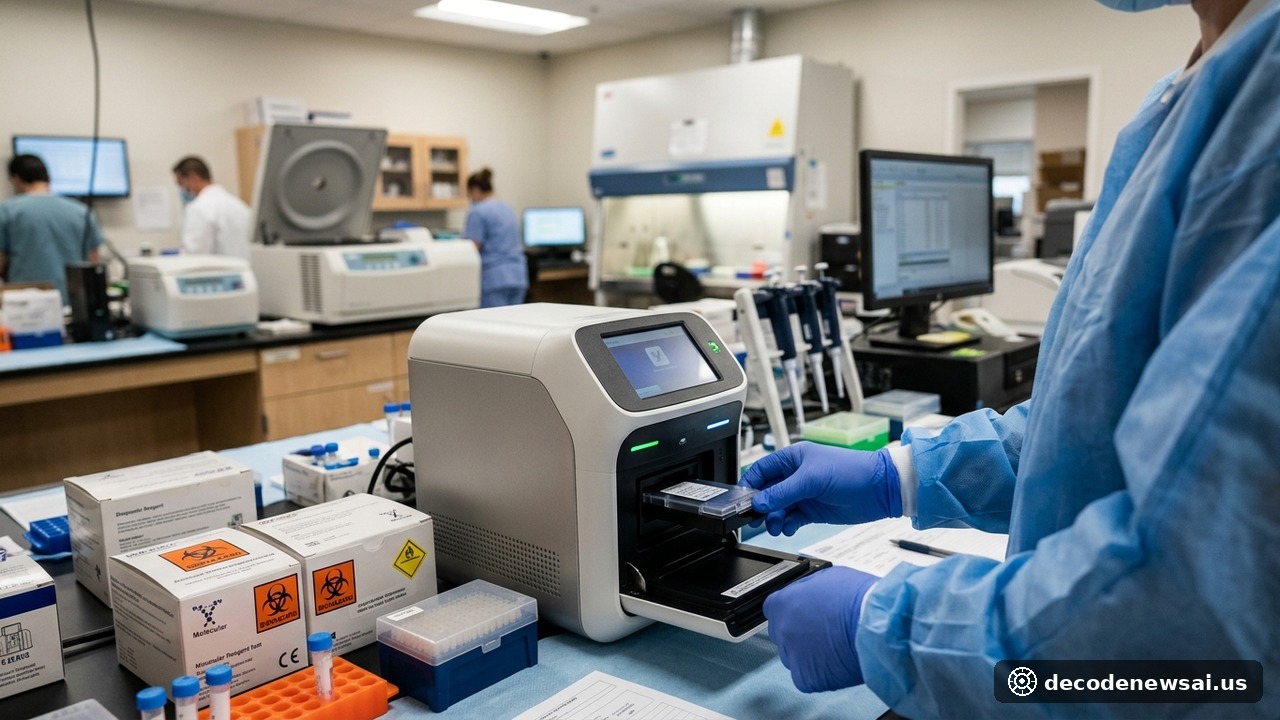
Roche Diagnostics officially announced on November 6, 2026, that it has secured 510(k) market clearance from the United States Food and Drug Administration for its next-generation cobas eplex Respiratory Pathogen Panel 3 (RP3). Operating on the automated, random-access cobas eplex molecular platform, the syndromic multiplex assay qualitative detects and differentiates up to 19 distinct viral and bacterial respiratory targets from a single nasopharyngeal swab in less than two hours. With hands-on preparation time reduced to under one minute, the system delivers rapid diagnostic turnaround heading into the peak northern hemisphere winter infection season.
Technical Baseline and Empirical Performance Metrics of the Cobas Eplex RP3 Panel
- FDA Premarket Regulatory Mechanism: 510(k) Clearance Notification (K261890)
- Broad-Spectrum Pathogen Targets Evaluated: 19 targets (Influenza A/B, RSV, SARS-CoV-2, Pertussis)
- Total Sample-to-Answer Turnaround: Under 2 hours (less than 60 seconds preparation)
- Customizable Diagnostic Reporting Modes: 5 distinct customer-configurable panel options
- Analytical Instrument Hardware Platform: Random-access automated cobas eplex system;Clinical and Laboratory Standards Institute
Why Does the RP3 Panel Represent a Critical Advance in Syndromic Diagnostics?
During seasonal winter infection peaks, hospital emergency departments and pediatric ambulatory clinics face heavy admissions of patients presenting with overlapping symptoms of fever, cough, and dyspnea. Because clinical presentations across Influenza A, Influenza B, Respiratory Syncytial Virus (RSV), human metapneumovirus, and Bordetella pertussis are virtually indistinguishable during early symptomatic phases, legacy lateral-flow rapid antigen assays frequently yield false negatives. Conversely, batch-processed laboratory PCR workflows require 12 to 24 hours, depriving emergency clinicians of actionable microbiological data during critical triage windows.
The cobas eplex RP3 resolves this bottleneck through closed-system microfluidic electrosensing cartridge technology. Clinical operators dispense raw nasopharyngeal swab transport media directly into the self-contained cartridge without manual centrifugation or reagent preparation. Once loaded into the analyzer, automated pneumatic channels execute cellular lysis, magnetic-bead total nucleic acid extraction, multiplex target amplification, and hybridized electrochemical micro-array detection. Rapid delivery of definitive results within two hours enables emergency physicians to initiate targeted antivirals and implement infection-control isolation while patients remain in evaluation bays.
How Does Flexible Panel Configuration Mitigate Healthcare Payer Bottlenecks?
Beyond analytical sensitivity, the RP3 architecture addresses a critical structural hurdle in modern clinical laboratory economics through flexible software-driven panel configuration. Historically, when clinicians ordered comprehensive respiratory syndromic panels to rule out routine pathogens, laboratories were forced to run and bill exhaustive multi-target assays costing hundreds of dollars, provoking aggressive reimbursement denials from commercial healthcare payers.
Roche engineered the RP3 software to support five distinct digital reporting panels on a single physical cartridge format. Laboratories can selectively unmask results tailored precisely to the physician's specific order, seasonal prevalence, or payer coverage guidelines—ranging from targeted Flu/COVID-19/RSV panels to exhaustive immunocompromised diagnostic profiles. This modular paradigm curbs unnecessary utilization costs, providing hospital administrations with a compliant pathway to deploy advanced molecular syndromic testing under value-based care constraints.
Global Public Health Impact on Nosocomial Containment and Surveillance
Infectious disease specialists and clinical microbiologists emphasize that the deployment of the RP3 panel provides vital infrastructure for national healthcare resilience. In recent years, post-pandemic travel and waning population immunity have caused erratic, non-seasonal respiratory pathogen surges. In particular, the re-emergence of Bordetella pertussis across pediatric cohorts has caused severe clinical complications in infants too young to receive complete immunization series.
The RP3 panel's high analytical sensitivity in identifying fastidious bacterial pathogens like Bordetella pertussis equips frontline clinical providers with definitive confirmatory capabilities, preventing inappropriate antibiotic administration while halting community transmission. As hospital networks and academic health centers deploy the cobas eplex RP3 nationwide, the platform will shorten emergency room boarding times, reduce hospital-acquired cross-infection rates, and deliver real-time epidemiologic surveillance feeds to public health authorities tracking respiratory disease outbreaks.