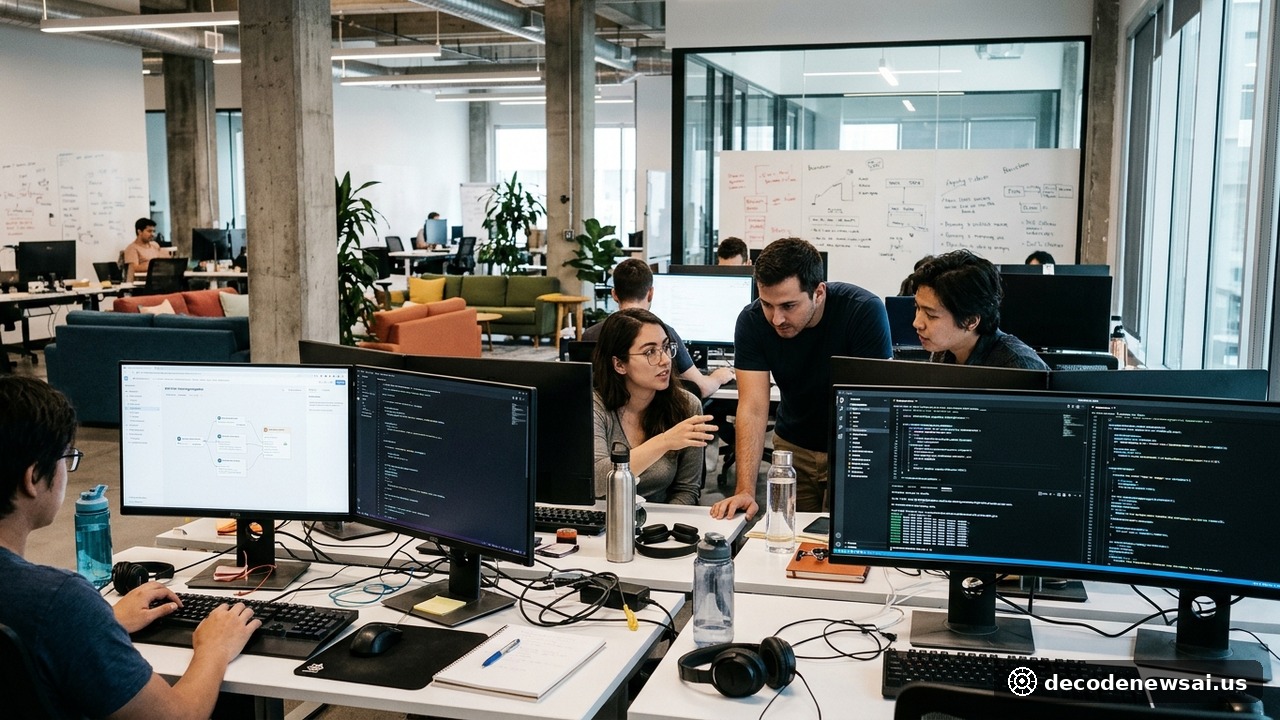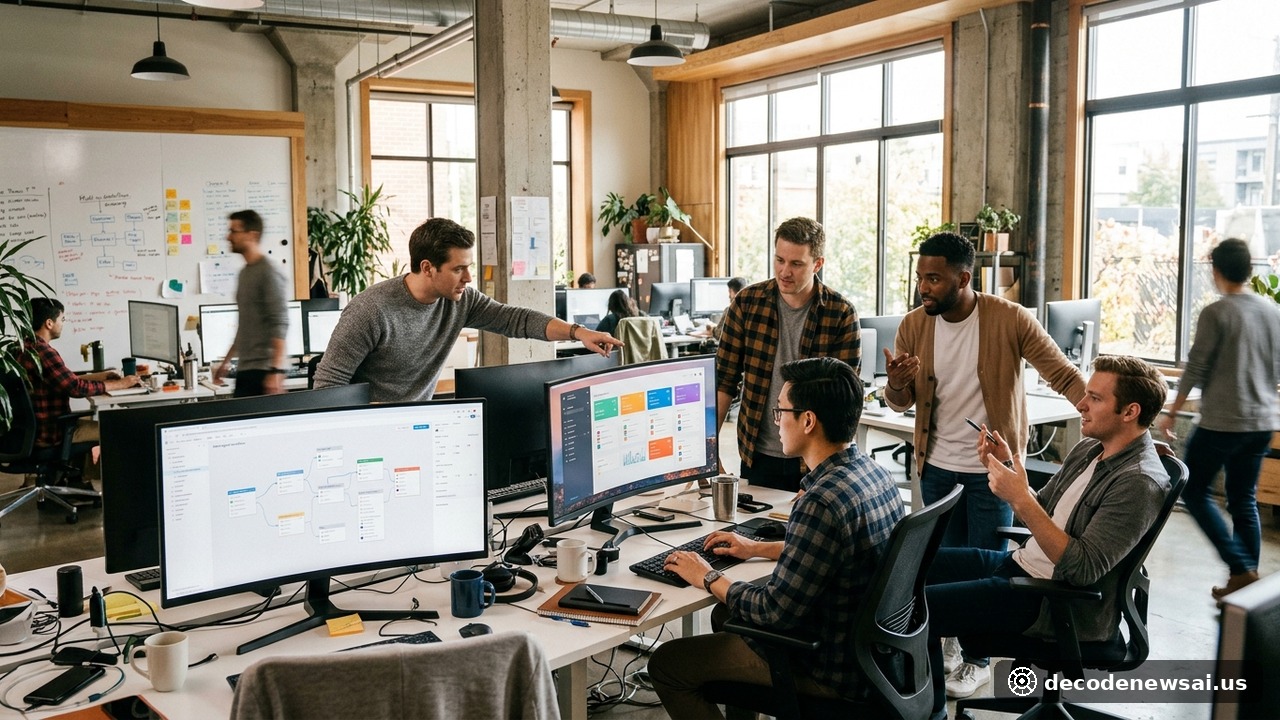
Meta officially unveiled Muse Spaces across the United States on November 6, 2026, launching an agentic environment within the Meta AI platform. The product update enables consumer subscribers and commercial enterprise teams to generate persistent digital workspaces populated by multiple specialized autonomous artificial intelligence agents. Within each designated space, autonomous agents coordinate workflows, review code bases, and execute long-horizon project roadmaps asynchronously without requiring constant manual prompt chaining. The platform integrates expressive 3D avatars and real-time full-duplex conversational voice audio, transitioning generative artificial intelligence from isolated chat windows into persistent collaborative digital workrooms.
Meta Muse Spaces Multi-Agent Workspace Technical Specifications
- Commercial Availability & Target Footprint: Deployed Nationwide for Individual and Enterprise Users
- Concurrent Active Agent Capacity per Space: Up to 8 Autonomous Task-Specialized Neural Agents
- Multimodal Audio and Visual Telemetry: Full-Duplex Low-Latency Voice; Expressive Avatars
- Episodic Memory & Task Persistence: Persistent Vectorized Memory and Gantt Task Tracking
- Connected Workflow Integration Pipeline: Native Connectors for WhatsApp, Instagram, and APIs
Shifting from Ephemeral Text Windows to Persistent Spatial Workspaces
For years, human interactions with large language models remained constrained within temporary, single-threaded chat interfaces.
When users attempted complex cross-functional projects—such as engineering a full-stack web application, orchestrating global product launches, or coordinating legal discovery—they were forced to manually copy and paste contextual parameters across fragmented chat sessions. Muse Spaces replaces this linear model with persistent collaborative environments. Once established, each space maintains permanent vectorized episodic memory. Project specifications, software repositories, and brand style guides uploaded to the space remain accessible across all participating artificial intelligence agents. Furthermore, spaces operate asynchronously in cloud server environments, enabling agents to parse market filings, compile code regressions, and prepare administrative morning summaries while human collaborators remain offline.
Autonomous Task Division and Real-Time Peer Review Among Neural Agents
The core technological advancement within Muse Spaces resides in its internal cross-agent coordination architecture.
Within a single enterprise space, a user can simultaneously commission specialized agents: one parsing financial competitor pricing, another authoring localized marketing campaigns, and a third evaluating regulatory compliance standards. When a marketing agent drafts an international advertising campaign, the compliance agent automatically reviews the generated text to identify copyright risks, while the analytics agent models conversion projections based on historical customer segments. This collaborative exchange occurs autonomously in background runtime environments using structured inter-agent protocols, enabling users to direct high-level strategic objectives without serving as manual relays between disparate tools.
Deploying Expressive Avatars to Anchor Consumer Spatial Intelligence
Beyond enterprise operational workflows, Meta leverages computer vision research to differentiate Spaces within consumer market sectors.
The platform natively incorporates Meta's long-developed Codec Avatar technologies alongside low-latency neural speech synthesis. Rather than interacting with text interfaces, users interact with expressive digital avatars displaying realistic micro-expressions, gaze tracking, and dynamic conversational speech cadences. When accessed via desktop monitors or Meta Quest virtual reality hardware, collaborating within Spaces replicates an interactive conference room staffed by specialized digital assistants. Industry analysts observe that while competing technology platforms concentrate on corporate productivity suites, Meta's integration of expressive social avatars, affective voice models, and autonomous agents establishes a benchmark for spatial intelligence. Industry researchers emphasize that collaborative digital workspaces represent the natural progression for generative computing platforms. By combining persistent multi-agent execution with rich audio-visual interaction, Meta provides enterprise organizations with an accessible foundation for complex project management and automated problem solving.
International industry observers and regulatory authorities will continue to monitor these developments closely as operational benchmarks and market conditions evolve over the coming quarterly financial and regulatory reporting cycles across global jurisdictions.