Savara Inc., a clinical-stage biopharmaceutical company focused on rare respiratory diseases, announced on April 15, 2026, that the U.S. Food and Drug Administration has extended the review period for the Biologics License Application for molgramostim inhalation solution by three months. The application seeks marketing approval for molgramostim as a treatment for autoimmune pulmonary alveolar proteinosis, an ultra-rare and debilitating lung condition. Under Priority Review status, the target action date under the Prescription Drug User Fee Act has been adjusted from the original date of August 22, 2026, to a revised target date of November 22, 2026. The regulatory agency did not cite any concerns regarding the drug's safety, efficacy, or manufacturing profile in its official correspondence. Major Amendment Designation Extends Regulatory Clock to November The regulatory timeline extension was prompted after the FDA determined that Savara's responses to recent information requests constituted a major amendment to the pending biologics application. Under standard FDA regulatory review procedures, the classification of submitted materials as a major amendment triggers an automatic three-month extension of the target action date. This procedural extension provides agency reviewers with additional administrative and technical time to evaluate the supplemental documentation alongside the comprehensive BLA submission.
Molgramostim Holds Fast Track and Orphan Designations
Molgramostim has received multiple expedited development and orphan designations across major international regulatory jurisdictions. In the United States, the therapy holds Fast Track designation, Breakthrough Therapy designation, and Orphan Drug designation from the FDA. In Europe, molgramostim was granted Orphan Drug designation by the European Medicines Agency, while the United Kingdom Medicines and Healthcare Products Regulatory Agency granted it Innovation Passport and Promising Innovative Medicine designations. The regulatory pathway included an earlier Refuse to File letter issued by the FDA in May 2025, after which Savara supplemented the dossier and resubmitted the application in October 2025, leading to official acceptance and Priority Review designation in February 2026. Regulatory experts noted that the extension reflects the meticulous evaluation required for rare-disease biologic filings, balancing accelerated review mechanisms against rigorous scientific verification. Reconstituting Macrophage Function to Restore Alveolar Surfactant Clearance Autoimmune pulmonary alveolar proteinosis is a chronic, life-threatening pulmonary disorder characterized by the abnormal accumulation of surfactant within the pulmonary alveoli. Surfactant, composed of lipids and specialized proteins, plays a critical physiological role by coating the alveoli to maintain surface tension and prevent alveolar collapse. In healthy lungs, alveolar macrophages continuously clear and catabolize surfactant, a process regulated by granulocyte-macrophage colony-stimulating factor.
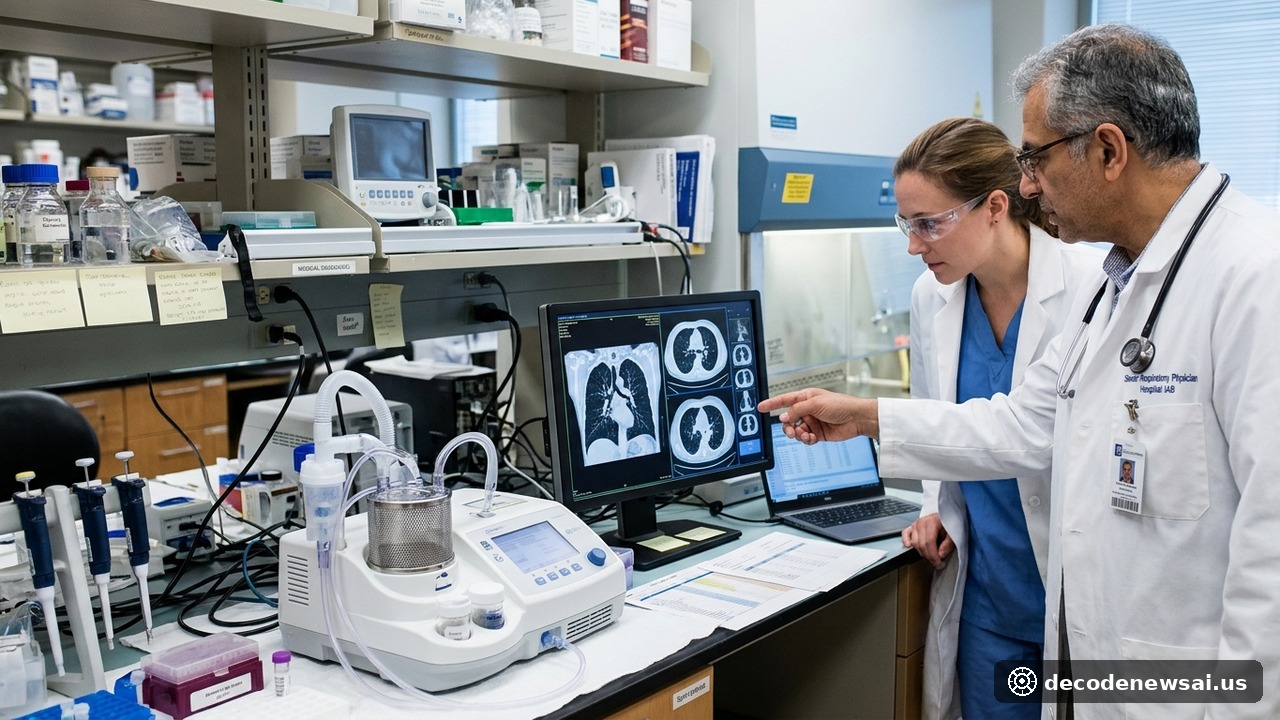
In patients suffering from autoimmune PAP, circulating autoantibodies neutralize endogenous GM-CSF, paralyzing alveolar macrophages and preventing surfactant breakdown. The resulting intra-alveolar accumulation severely restricts pulmonary gas exchange. Patients experience worsening dyspnea, chronic coughing, profound fatigue, and reduced exercise tolerance, alongside risks of fever, chest discomfort, and hemoptysis from secondary respiratory infections. Left unmanaged, the condition can progress to permanent pulmonary fibrosis, respiratory failure, and the need for invasive whole lung lavage or organ transplantation. Molgramostim is an investigational recombinant human GM-CSF formulated for nebulized inhalation, designed to directly replenish functional cytokine activity within the alveolar microenvironment. Administered once daily using the investigational eFlow Nebulizer System developed by PARI Pharma GmbH, the therapy delivers biologic macromolecules directly to the respiratory epithelium, maximizing targeted therapeutic exposure while minimizing systemic bioavailability. Pivotal Phase 3 IMPALA-2 Trial Achieves Primary Gas-Exchange Improvement The marketing application is supported primarily by clinical evidence from the pivotal Phase 3 IMPALA-2 trial, the largest randomized clinical study conducted in patients with autoimmune PAP. The 48-week, global, double-blind, placebo-controlled study enrolled 164 adult patients across 43 specialized trial sites in 16 countries. Participants were randomized to receive either inhaled molgramostim at a daily dose of 300 micrograms (81 patients) or matching inhaled placebo (83 patients).
IMPALA-2 Trial Meets Primary DLco Endpoint in 164 Patients
The trial successfully met its primary efficacy endpoint, demonstrating a statistically significant improvement in pulmonary gas transfer as measured by the hemoglobin-adjusted percent predicted diffusing capacity of the lungs for carbon monoxide at Week 24. Patients receiving molgramostim achieved a 9.8% improvement from baseline in DLco% compared to a 3.8% change in the placebo group, yielding an estimated treatment difference of 6.0% (p < 0.001). This therapeutic benefit demonstrated sustained durability through the completion of the 48-week double-blind period, with molgramostim-treated patients exhibiting an 11.6% improvement in DLco% versus 4.7% for placebo, reflecting an estimated treatment difference of 6.9%.
Secondary clinical outcomes further corroborated therapeutic efficacy, including significant reductions in St. George's Respiratory Questionnaire scores reflecting improved respiratory health-related quality of life and measurable gains in peak exercise tolerance. Molgramostim demonstrated a favorable safety and tolerability profile throughout 48 weeks, with most reported adverse events characterized as mild to moderate in severity. Study participants completing the double-blind phase transitioned into a 96-week open-label extension to monitor extended safety and clinical outcomes. The review extension to November 22, 2026, ensures comprehensive regulatory evaluation for what could become the first approved inhaled biologic targeting the underlying pathology of autoimmune PAP.