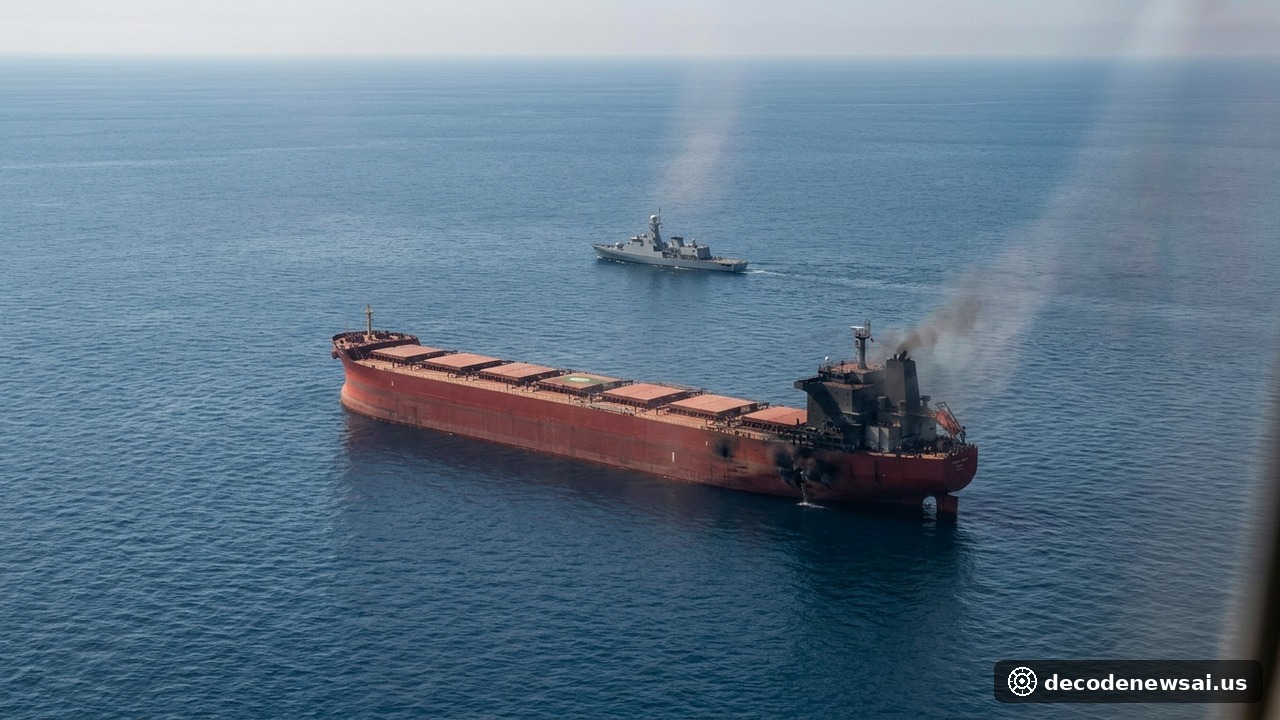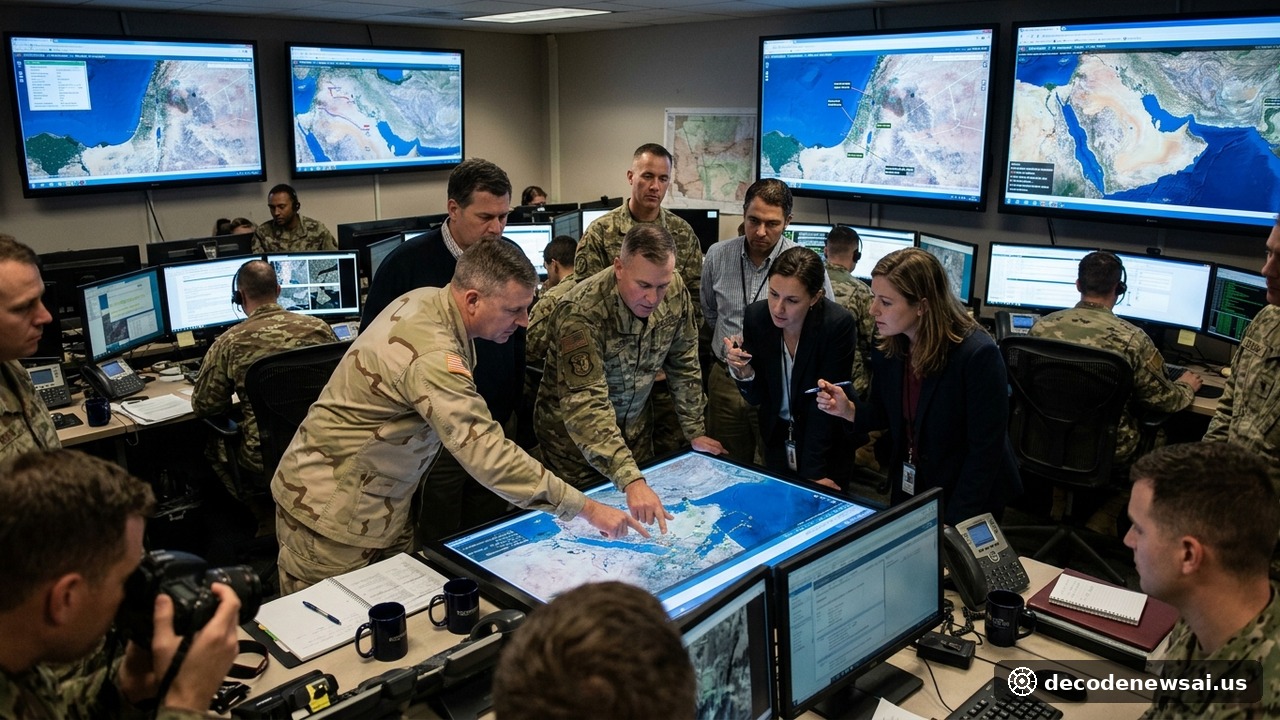
U.S. Central Command announced the formal establishment of Task Force Iron Gate to disrupt Iranian overland and maritime weapons transport across regional borders and the Caspian Sea. The initiative deploys approximately 20 specialized military and civilian personnel based in Tampa, Florida, to coordinate interagency operations. The announcement follows months of strict naval enforcement in regional waters that military officials estimate has blocked more than $25 billion in Iranian crude oil shipments.
Interagency Team Coordinates Operations from Tampa Headquarters
Interagency Team Coordinates Operations from Tampa Headquarters
Task Force Iron Gate operates under the direct guidance of Admiral Brad Cooper, Commander of U.S. Central Command. Headquartered at MacDill Air Force Base in Tampa, the dedicated task force integrates specialists from the Department of Defense, Department of the Treasury, Department of State, and Department of Justice. The team is charged with monitoring, tracking, and interdicting the unauthorized movement of advanced conventional munitions, dual-use components, and illicit revenue flows across Iran's extensive terrestrial borders.
Military intelligence assessments indicate that Iranian authorities have increasingly turned to overland transport corridors through Iraq, Syria, and Lebanon to supply allied armed groups with critical missile guidance parts and drone subcomponents. In conjunction with the initiative, Iraqi Foreign Minister Fuad Hussein confirmed that Washington formally requested the closure of all but two official crossing points along the Iraq-Iran frontier. Specialized satellite surveillance and aerial reconnaissance flights are monitoring major transport nodes connecting Iranian supply centers with regional destinations.
Economic and Logistical Measures Target Weapons Supply Infrastructure
Economic and Logistical Measures Target Weapons Supply Infrastructure
Central Command officials stressed that maritime blockades successfully choked off petroleum revenue but prompted Iranian logistical networks to exploit commercial trucking corridors and Caspian Sea shipping. A recent analytical review revealed that defense-affiliated procurement firms coordinated more than $2 billion in illicit transactions to import missile airframes and explosives through front companies.
The newly formed task force collaborates directly with the Treasury Department's Office of Foreign Assets Control to identify and penalize transport companies, customs brokers, and banking intermediaries facilitating illicit transit. Entities caught moving sanctioned hardware will face immediate asset freezes and secondary sanctions designed to sever access to global trade. Pentagon planners emphasized that disrupting overland supply networks directly hampers weapons assembly plants and curtails funding for proxy military operations.
State Department Offers Up to $20 Million Reward for Nuclear Intelligence
Complementing the military interdiction initiative, the U.S. Department of State's Rewards for Justice program announced a bounty of up to $20 million for actionable intelligence regarding Iran's nuclear infrastructure. The reward notice explicitly covers details on uranium enrichment sites, centrifuge manufacturing workshops, and key personnel involved in nuclear research.
The program offers potential relocation and protection services for informants and their immediate families who provide credible documentation on hidden nuclear facilities. Central Command publicized the bounty across international communication platforms in multiple languages, urging technicians and logistical staff with firsthand knowledge to establish contact. Strategic analysts observe that financial bounties paired with overland interdiction intensify operational pressure on internal Iranian programs.
Regional Tensions Escalate as Mediators Urge De-escalation
Regional Tensions Escalate as Mediators Urge De-escalation
Diplomats in Qatar, Oman, and neighboring Gulf states have renewed appeals for restraint, cautioning that escalating economic chokeholds could ignite broader military exchanges. Mediators continue shuttle diplomacy in Doha to explore indirect discussions between Washington and Tehran. Task Force Iron Gate is scheduled to complete full operational integration by mid-November, with routine reporting commencing on November 20, 2026.