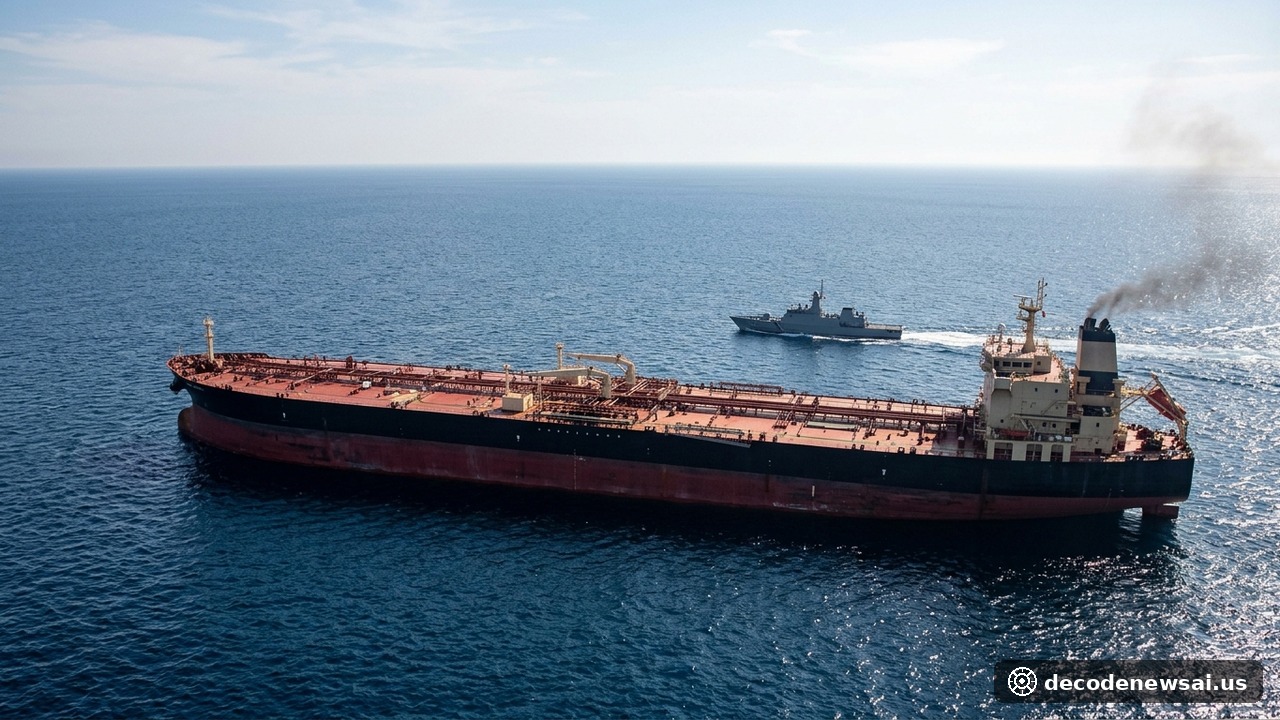
Athens-based commercial fleet operator Velos Tankers officially confirmed on November 7, 2026, that an unladen crude carrier under its management was struck by an anti-ship missile in the southern Persian Gulf. The strike ignited a fire inside the auxiliary engine machinery room, resulting in the death of one crew member before onboard damage control teams successfully extinguished the blaze and guided the vessel into Bahrain's Khalifa Bin Salman Port. The fatal incident disrupted international tanker traffic across the strategic waterway, prompting multinational maritime monitoring agencies to raise regional alert levels.
Incident Profile and Maritime Operational Metrics for MT Velos Sapphire
- Commercial Target & Registry Flag: MT Velos Sapphire (Marshall Islands Registered)
- Suspected Attack Ordnance & Impact Zone: Anti-Ship Cruise Missile; Aft Engine Machinery
- Confirmed Casualties & Cargo Load Status: 1 Fatality; Ballast Transit Without Crude Cargo
- Emergency Port of Refuge & Damage Profile: Khalifa Bin Salman Port; Hull Inward Deflection
- Marine War-Risk Additional Premium Shift: Regional Hull Underwriting Rates Up Nearly 30%
Missile Impact Penetrates Auxiliary Engine Spaces During Ballast Transit
The MT Velos Sapphire is a 100,000 deadweight tonnage Suezmax tanker deployed on regional oil routes.
The tanker was navigating in ballast without petroleum cargo toward loading terminals in Saudi Arabia when radar systems detected a low-altitude target approaching at high velocity roughly forty nautical miles east of Bahrain. The projectile penetrated the outer hull plating above the water line, detonating inside the auxiliary engine compartment. Emergency isolation valves were engaged to cut primary fuel feeds while the crew deployed carbon dioxide suppression systems. Although flames were contained before reaching fuel storage tanks, an engine department technician sustained fatal injuries from blast overpressure. Escorted by regional naval patrol vessels, the damaged tanker entered port under auxiliary power.
Gulf Shipping Corridors Face Heightened War-Risk Classifications
The fatal strike marks the most severe kinetic action against civilian commercial shipping in the Persian Gulf in recent months.
The United Kingdom Maritime Trade Operations issued emergency advisories instructing merchant vessels transiting the Strait of Hormuz to maintain strict radio watches and extinguish non-essential deck lighting. Several international tanker owners suspended unescorted nighttime voyages through the corridor pending updated naval security guarantees. In London, the Joint War Committee convened to review maritime safety ratings, lifting hull war-risk premiums for Persian Gulf port calls by nearly thirty percent. For a standard very large crude carrier, the adjustment adds hundreds of thousands of dollars in transit insurance, elevating freight benchmarks across global energy exchanges.
Naval Forensics Teams Inspect Hull Fragments at Bahrain Drydocks
Maritime authorities and naval explosive ordnance teams boarded the vessel at Khalifa Bin Salman Port to initiate forensic metallurgical analysis.
Investigators recovered structural fragments of specialized titanium alloys alongside unburned chemical propellant residue embedded in the torn machinery casing. Ballistics analysts noted that the sea-skimming flight profile and terminal guidance signatures reflect military-grade anti-ship munitions rather than improvised aerial drones. Coastal defense radars are cross-referencing telemetry logs to trace the point of origin along the northern Gulf littoral. Marine engineers have installed temporary reinforcement brackets along the compromised bulkhead, and the tanker will undergo comprehensive structural repairs once evidentiary documentation concludes. Maritime security analysts observe that commercial shipping lines are increasingly demanding multinational naval escort convoys throughout the strategic corridor. Without coordinated international naval escorts, rising war-risk insurance premiums threaten to disrupt commercial navigation and elevate consumer energy delivery costs worldwide.
International industry observers and regulatory authorities will continue to monitor these developments closely as operational benchmarks and market conditions evolve over the coming quarterly financial and regulatory reporting cycles across global jurisdictions.