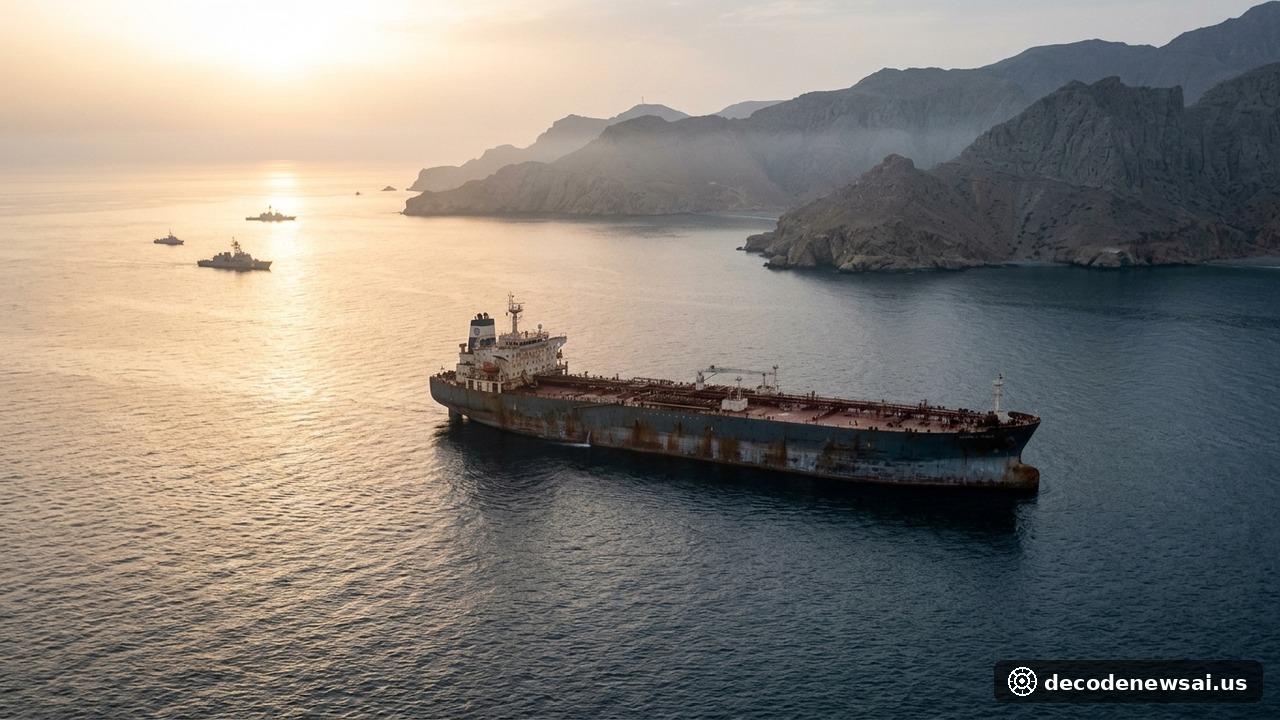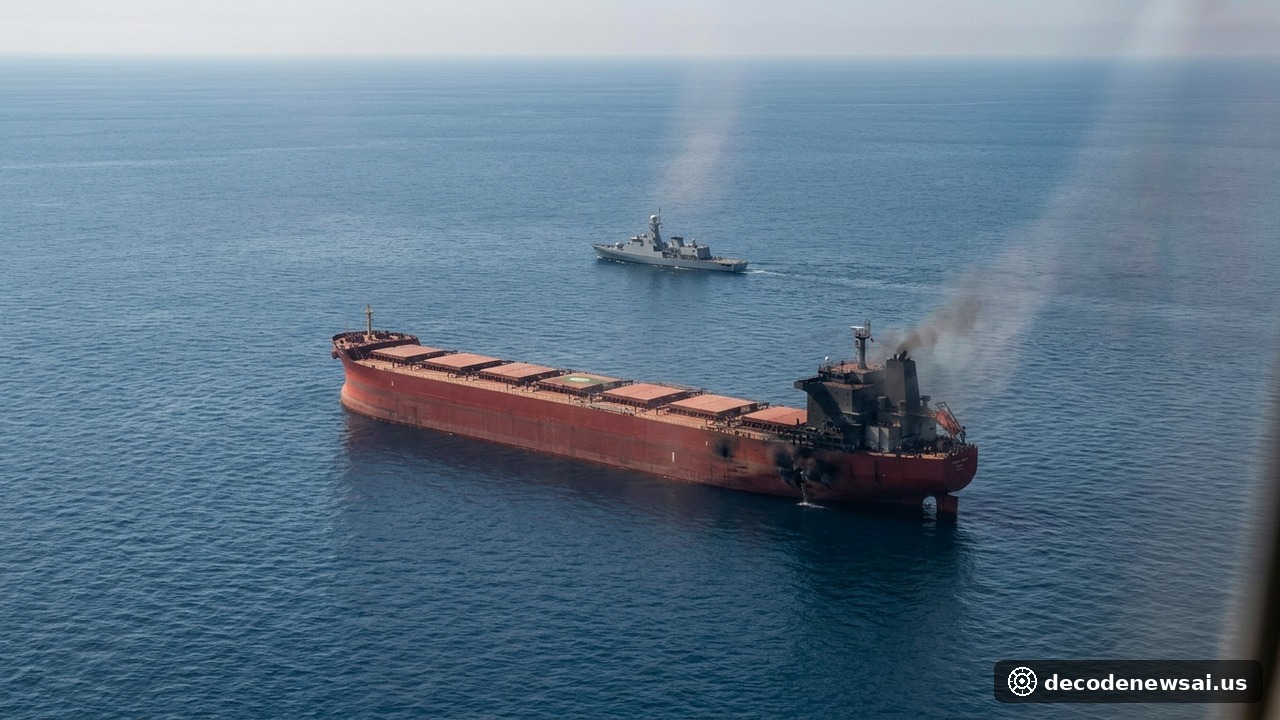
United States Central Command (CENTCOM) officially confirmed on November 7, 2026, that an American military aircraft fired precision-guided munitions at a commercial cargo vessel in the Gulf of Oman, successfully disabling its propulsion systems after the ship attempted to breach the ongoing US naval blockade on Iran. The St. Kitts and Nevis-flagged bulk carrier, which had recently departed an Iranian commercial port suspected of hosting military transshipments, ignored repeated radio warnings and visual challenges from American naval patrol craft in international waters. After directing crew members to evacuate hazardous engine room compartments, the US aircraft conducted a precision kinetic strike against the ship's stern steering gear and propulsion machinery, rendering the vessel dead in the water without causing maritime casualties.
Operational Specifications of the Gulf of Oman Maritime Interdiction Action
- Interdicted Vessel Flag & Operational Class: St. Kitts-Flagged Bulk Carrier (Departed Iran)
- Engagement Munitions & Precision Target Area: Air-Launched Precision Ordnance; Stern Machinery;The Washington Post Middle East Bureau
- Interagency Task Force Geographic Theater: Caspian Sea Littoral, Inland Border Corridors
- Diplomatic Retaliation & Infrastructure Alert: Iran Rescinds Missile Range Caps; Port Alerts;Al Jazeera Investigative Defense Wire
Why Did American Strike Aircraft Engage a Commercial Vessel in International Waters?
According to detailed declassified operational briefs provided by CENTCOM leadership, the merchant vessel had spent multiple days berthed at a restricted dual-use harbor terminal in southern Iran, loading shipping containers suspected of concealing solid-propellant missile components and unmanned aerial vehicle guidance systems.
Fifth Fleet maritime surveillance assets initiated continuous sensor tracking as the bulk carrier transited outward into international sea lanes. When US Navy guided-missile destroyers dispatched boarding inspection requests via VHF distress frequencies, the cargo ship deactivated its automated identification transponders and accelerated toward congested maritime traffic lanes to evade lawful search. Following visual flares and non-lethal warning fire across its bow that were disregarded by the navigating crew, CENTCOM authorized strike fighters to disable the rudder assembly. Precision munitions pierced the uncrewed steering compartment, crippling propulsion without igniting cargo holds or inducing fuel contamination, allowing special warfare boarding teams to subsequently secure the adrift vessel.
How Will the Newly Established Interagency Task Force Dismantle Arms Smuggling Networks?
During a Pentagon defense briefing, senior military planners detailed the operational framework governing the newly commissioned multi-domain interdiction task force.
Recognizing that conventional surface patrols across the Strait of Hormuz cannot fully neutralize distributed asymmetric proliferation, the United States established an expanded intelligence and interdiction network dubbed Task Force Iron Curtain. Operating in close technical integration with regional Arab defense ministries, the command fuses synthetic aperture satellite radar, high-altitude persistence drones, and financial intelligence to track covert logistical pathways extending into the Caspian Sea and mountainous border highways. The formation focuses explicitly on intercepting composite carbon fibers, advanced rocket fuel stabilizers, and inertial navigation gyroscopes destined for regional proxy militant organizations. Defense officials confirmed that naval containment has successfully halted more than $25 billion in illicit petroleum transactions, and the expanded land-sea cordon aims to eliminate remaining barter channels.
Regional Military Escalation and Geopolitical Risks Threaten Persian Gulf Energy Lifelines
The decisive kinetic action in the Gulf of Oman immediately triggered an intense wave of geopolitical confrontation between Tehran and Western coalition partners.