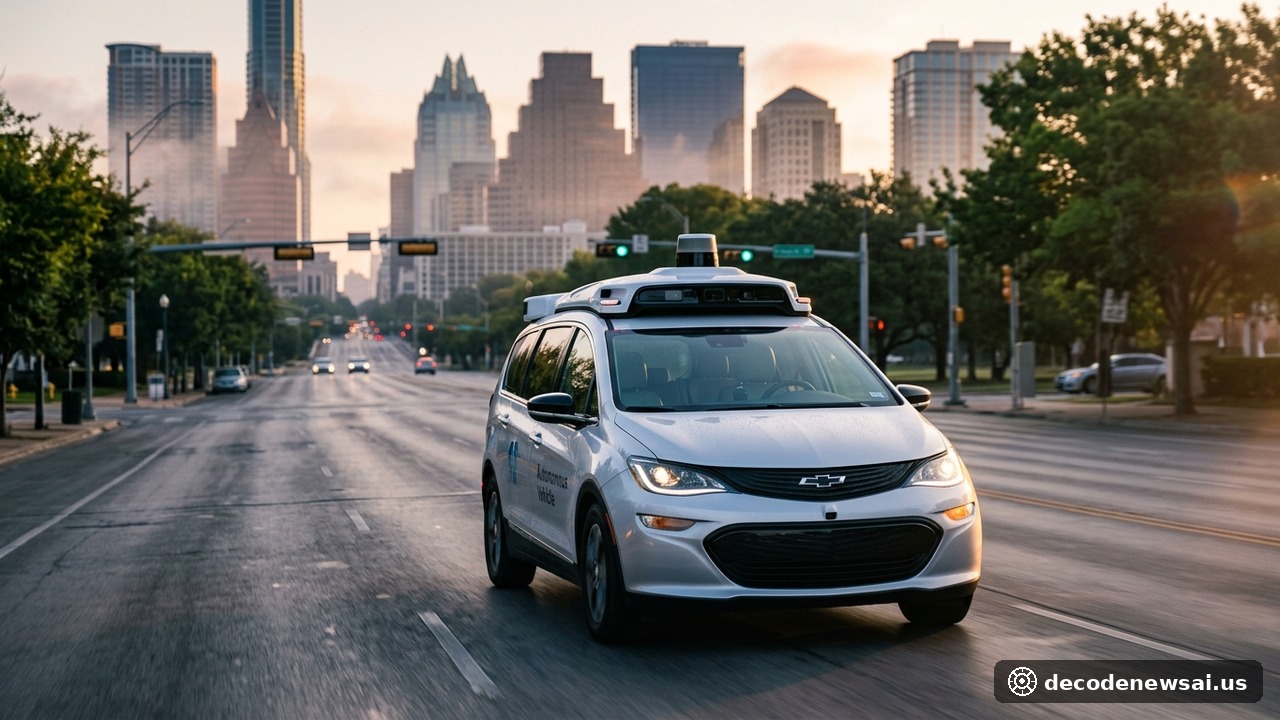
Tesla expanded the service window for its Austin commercial Robotaxi network on November 8. Daily dispatch now runs 21 hours. Commercial passenger vehicles start pickups at 5 AM, not 6 AM. They run uninterrupted until 2 AM.
Firmware 26.11.0 adds vehicle allocation recommendations
The change narrows the gap to round-the-clock commercial dispatch. Fleet management is scaling urban coverage in steps. Travis County deployment logs show the pre-dawn extension serves early travelers. These riders head to Austin-Bergstrom International Airport and intercity transit centers.
Tesla also released firmware update 26.11.0 across passenger app portals. The release adds an automated vehicle allocation recommendation engine. The updated mobile interface checks luggage count, party size, and estimated route time. It then recommends the two-passenger Cybercab or the high-capacity Model Y autonomous crossover.
Heavy airport luggage triggers a dispatch priority. The algorithms favor vehicles with large rear cargo capacity. The booking protocol is simpler. Carl Hansen is operations manager for autonomous fleet testing. He spoke at a technical operations briefing.
Low-light vision model validation and dawn glare challenges
"Expanding pre-dawn passenger hours enables engineering teams to continuously validate end-to-end vision models under low-light ambient conditions. Our strategic milestone remains safely scaling toward uninterrupted 24-hour urban commercial operations." Municipal transportation mobility data shows short waits. Average arrival wait times in central Austin commercial districts fell to under four minutes.
Active commercial fleet units in municipal test zones grew about 50 percent. That growth came over the preceding three months. Autonomous vehicle software architects flagged a perception problem at dawn. Camera-only sensor suites face acute challenges then. Low-angle morning sunlight creates high-contrast glare.
That glare can temporarily blind conventional convolutional vision models. Longer operating hours let Tesla collect training telemetry across hard lighting conditions. The data hardens neural network policies against visual edge cases. Operational insights from the Austin deployment will shape standard playbooks. These playbooks will guide future municipal network launches.
Florida and Nevada permitting talks and Cybercab production readiness
Regulatory compliance teams are in early talks with transportation regulators in Florida and Nevada. The talks concern commercial fleet permitting. Scaled autonomous mobility economics will speed up as production manufacturing expands. Fleet dispatch telematics shows rising revenue density. Early morning commuter demand across suburban corridors drives it.
Tesla's route management software cuts deadhead mileage. It pre-positions available vehicles next to residential transit nodes before morning rush hours. Fleet deployment enhancements raise vehicle asset utilization. They also shorten passenger pickup times. Automotive manufacturing engineers report production readiness for the dedicated Cybercab architecture.
That work remains on schedule. Removing manual steering wheels and pedal assemblies freed up interior passenger volume. It also opened ergonomic packaging flexibility. Supply chain audit teams are verifying Tier-1 actuator and optical sensor production lines. This happens ahead of high-volume industrial scaling. Urban mobility planners and municipal transit authorities stressed a complementary role.
Round-the-clock fleets support transit and shift competition
Round-the-clock autonomous ridesharing networks support traditional fixed-route public transportation. That support matters during late-night and pre-dawn windows. Scaled autonomous fleet operations significantly lower per-mile passenger transit expenses. They also improve personal transit accessibility across suburban metropolitan regions. Autonomous vehicle engineering teams confirmed a feedback loop.
Fleet testing data will directly inform vehicle firmware refinements in upcoming software updates. Expanding operating schedules enhances continuous algorithmic learning. That learning covers varied municipal driving conditions. Mobility equity analysts noted a shift in competition. The autonomous rideshare sector is pivoting from basic technology demonstrations to vehicle utilization efficiency.
Autonomous fleet operators maximize productive hours on public roadways. This compresses depreciation costs. It also captures market share from conventional human rideshare networks. Industry analysts expect expanded municipal operating windows to speed mainstream public acceptance. That acceptance would spread across major metropolitan areas nationwide.