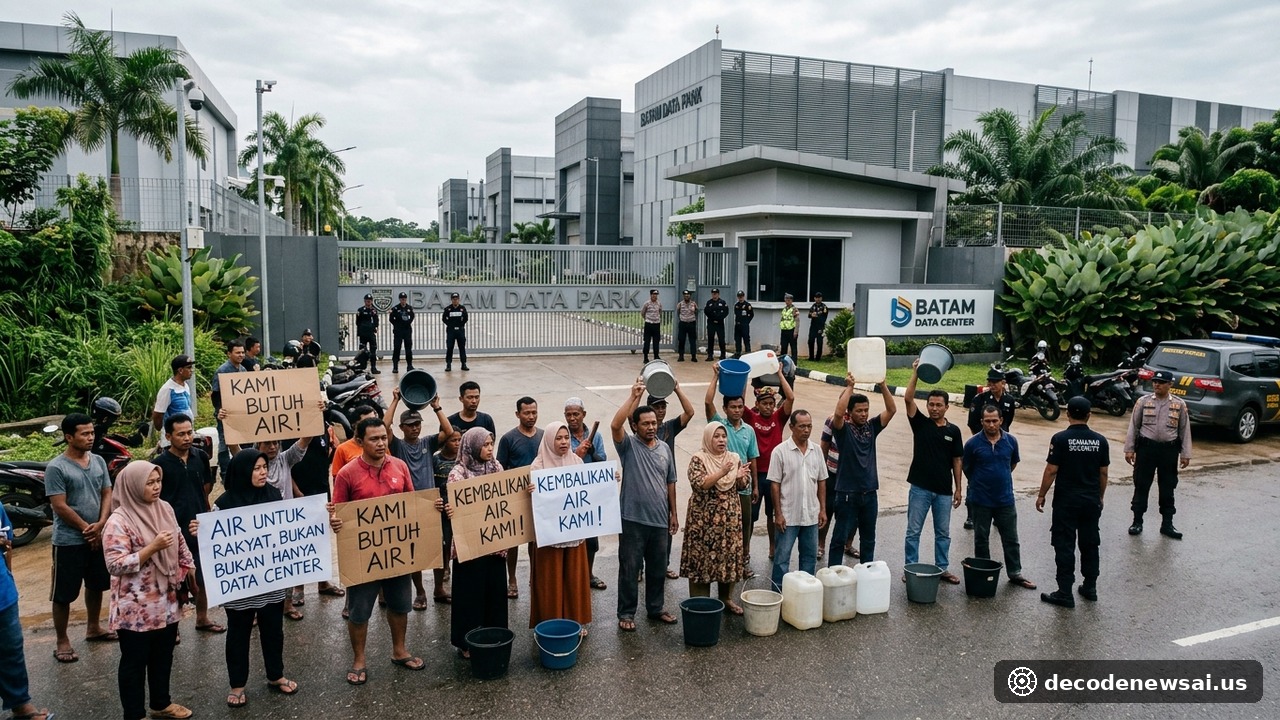
A wave of localized civil protests materialized across Southeast Asia over the weekend as local communities confronted the accelerating environmental footprint of large-scale artificial intelligence data centers. An infrastructure telemetry assessment released by professional services firm KPMG indicates that aggregate regional data center capacity across Southeast Asian nations is projected to triple by 2030 relative to 2025 baselines, driven by a tenfold surge in artificial intelligence training and real-time inference workloads. On Friday, residents in Batam, Indonesia, staged demonstrations outside Nongsa Digital Park to protest municipal water diversions and prolonged residential utility outages linked to intensive evaporative cooling towers.
Batam reservoir depletion and Johor data center power demand
High-Density Server Facilities Exert Extreme Pressure on Municipal Utilities
The rapid construction of hyperscale computational parks has created intense localized competition for finite civic resources. In Batam, situated directly south of Singapore across the Singapore Strait, the Nongsa Reservoir reached historically low storage thresholds following prolonged regional dry spells compounded by continuous industrial cooling extraction from tech park facilities. Thousands of local households endured consecutive weeks of complete residential water supply interruptions.
Municipal water authorities deployed emergency water transport convoys to mitigate the humanitarian crisis. Public utility provider Air Batam Hilir (ABH) confirmed that water tanker trucks are distributing non-potable emergency supplies daily to coastal villages, while engineering teams evaluate reservoir dredging and weather modification initiatives to replenish dwindling catchment volumes.
Cross-border tech clusters in southern Malaysia reflect parallel infrastructure stress. Across Johor state, operational data center capacity expanded 200-fold over the past five years, growing from 10 megawatts to 2.1 gigawatts. Addressing the Malaysian Parliament, ministerial representatives confirmed that data center installations are projected to consume one-third of the nation's total domestic electricity generation capacity by 2035.
Singapore permit pause drives spillover and Kota Damansara withdrawal
Resource Constraints and Cross-Border Spillover from Singapore
The regional construction boom stems directly from regulatory moratoriums imposed within prime metropolitan hubs. Faced with statutory carbon reduction targets and electrical grid limitations, the government of Singapore instituted a three-year pause on new data center permits between 2019 and 2022. Consequently, multinational technology conglomerates and private equity real estate developers pivoted capital investments across maritime borders into adjacent Indonesian and Malaysian commercial economic zones.
Community resistance has demonstrated measurable legal efficacy in pausing urban projects. In Kota Damansara, a municipality bordering Kuala Lumpur, an international developer formally withdrew a zoning application to construct a multi-megawatt server campus after more than 9,000 residents submitted formal petitions citing acoustic pollution and municipal utility strains.
Environmental engineering academics issued urgent warnings regarding unrestricted expansion. In an interview with international press, Professor Mohd Fadhil Md Din of the University of Technology Malaysia stated, "Johor and Batam are approaching a critical ecological inflection point, and without stringent mandates requiring closed-loop water recycling, computational growth will directly compromise essential civilian living conditions."
Immersion cooling pilots and joint zoning rules for data centers
Liquid Cooling Innovations and Stricter Regulatory Zoning
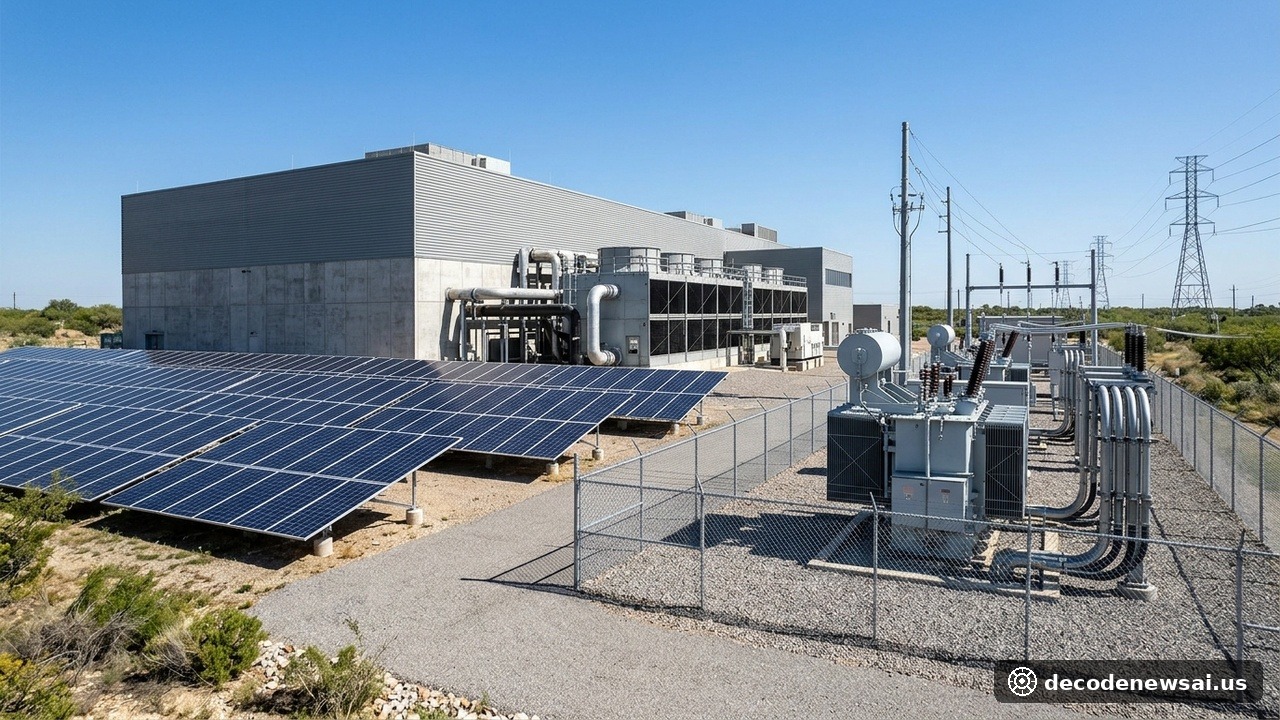
Intensive evaporative cooling systems face accelerating obsolescence amid public pushback. Hyperscale operators are exploring pilot deployments of direct-to-chip dielectric immersion cooling and indirect marine heat exchangers to decouple server thermal management from potable municipal water distribution grids.
Sovereign regulatory authorities are preparing mandatory environmental compliance guidelines. Indonesian and Malaysian ministerial bodies are drafting joint zoning regulations requiring upcoming data center developments to finance dedicated utility-scale solar generation and satisfy rigorous Water Usage Effectiveness (WUE) benchmarks prior to land acquisition approval.
Balancing technological modernization with social sustainability represents a critical challenge for emerging Asian digital economies. Civic policy institutes emphasize that data center development must incorporate transparent environmental impact auditing to preserve community stability across high-density computing clusters.
Aligning computational capacity with local environmental limits
Sustainable infrastructure planners note that long-term technology investments must align computational capacity with local environmental limits to ensure lasting communal benefits across Southeast Asian digital corridors.