WASHINGTON - The Federal Aviation Administration announced a comprehensive technology modernization directive on Monday, November 9, committing to completely eliminate 3.5-inch floppy disks across more than 400 air traffic control facilities nationwide by the end of 2028. The long-awaited infrastructure overhaul aims to retire vintage computer systems and harden ground communications networks that have contributed to recent nationwide flight disruptions.
Legacy floppy disks and fiber cable outages disrupt flights
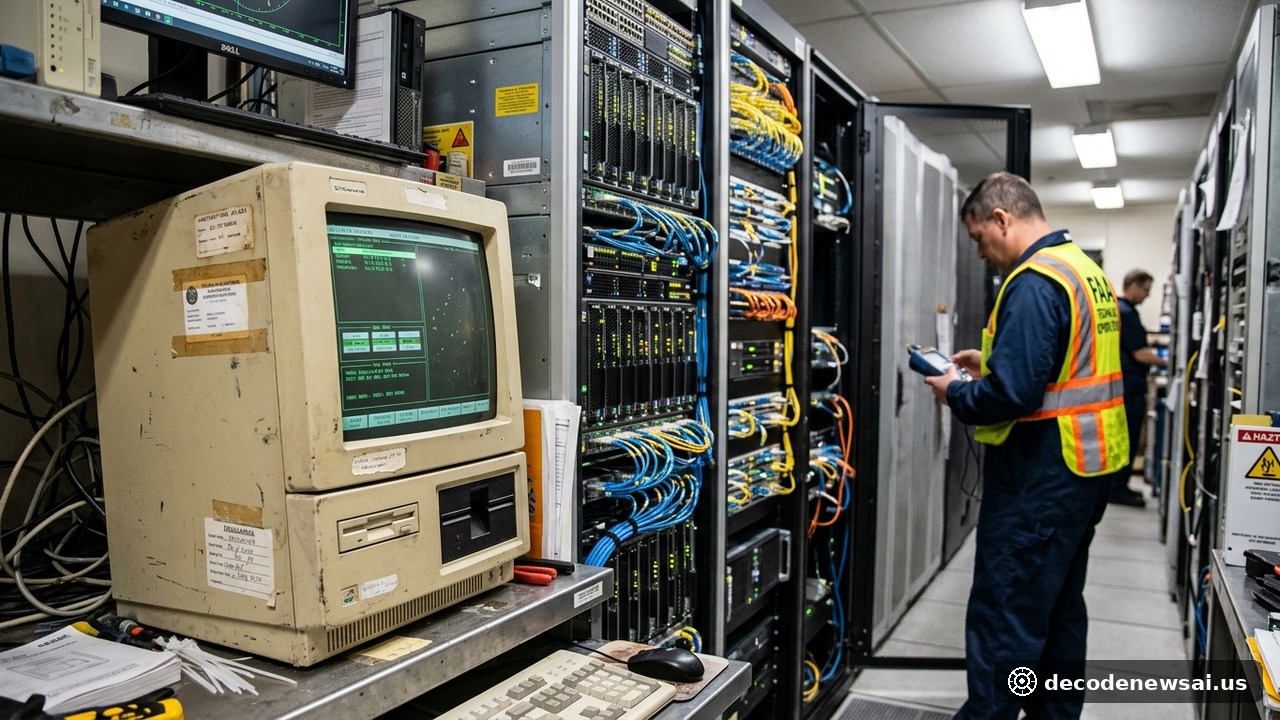
Across hundreds of federal terminal radar approach control and en route centers, technicians routinely rely on legacy floppy disks to load flight navigational databases, airway restrictions, and critical software updates. Many field facilities continue to operate decades-old Compaq computer terminals installed during the twentieth century, forcing engineering teams to procure obsolete replacement microchips and mechanical drives through third-party secondary marketplace vendors.
Compounding hardware obsolescence, federal air traffic networks have suffered repeated localized communication outages triggered by physical infrastructure disruptions. An agency memorandum disclosed that a severed commercial fiber optic cable outside George Bush Intercontinental Airport in Houston on October 13 severed data transmission lines between regional radar sites, necessitating an emergency ground stop. Similar construction severances in New Jersey delayed thousands of Northeast flights in September.
A senior FAA communications program director stated during an agency briefing: 'Air traffic control facilities have functioned as isolated operational silos for far too long. Modernizing data architecture and phasing out obsolete physical media is indispensable for safeguarding commercial aviation.' Aviation safety organizations praised the initiative.
Five initial sites and digital flight data transfers
The FAA outlined a phased implementation schedule identifying five initial regional installations scheduled to receive modern digital operational workstations. Early conversion sites include Atlantic City International Airport, Nashville International Airport, and Greater Rochester International Airport, alongside major regional computing and communications hubs located in Atlanta and Salt Lake City. Technical lessons from early deployments will inform subsequent facility rollouts through 2028.
The modernized technical architecture replaces isolated physical disks with secure, high-speed digital communications protocols operating across dedicated redundant enterprise fiber networks. Flight data transfers that previously required minutes of manual handling will execute within milliseconds. The enhanced platform provides real-time situational air traffic telemetry across regional sectors, reducing systemic delay propagation during adverse weather.
Congressional transportation oversight committees endorsed the modernization initiative, noting that aging computing infrastructure poses unacceptable operational vulnerabilities across the National Airspace System. Lawmakers pledged to safeguard necessary discretionary appropriations within upcoming federal transportation spending bills. The agency will submit quarterly implementation progress audits to evaluate project milestones.
Controller training and 2.8 million daily travelers
Industry stakeholders emphasized that modernization cannot proceed without rigorous workforce transition support. The National Air Traffic Controllers Association urged comprehensive technical training protocols to ensure field operators transition smoothly to touch-screen digital flight strip displays without interrupting daily flight separation operations across congested terminal airspace.
As commercial passenger volumes surpass 2.8 million travelers daily ahead of peak holiday travel corridors, aviation experts view the retirement of floppy disks as an overdue transformation. Upgrading vital federal flight infrastructure enhances systemwide operational resilience and establishes modernized foundational technology across the national air traffic network.
Federal transportation analysts pointed out that modernizing national airspace infrastructure requires consistent, multi-year technological investments across federal facilities. Outdated physical media and aging computing terminals create unnecessary systemic bottlenecks, compounding delay risks across congested commercial flight corridors during periods of adverse weather or localized equipment failures.
Digital flight strips and modernized flight data communications
Aviation safety experts emphasized that modernizing ground data networks must accompany comprehensive workforce training programs for air traffic controllers. Transitioning from physical paper and magnetic media to automated digital flight strips streamlines airspace management while enabling real-time communications between adjacent air traffic control facilities.
Commercial aviation trade groups emphasized that transitioning away from vintage physical media represents an essential milestone for federal air traffic management. Modernizing flight data communications infrastructure bolsters systemic reliability and minimizes disruption across the National Airspace System.