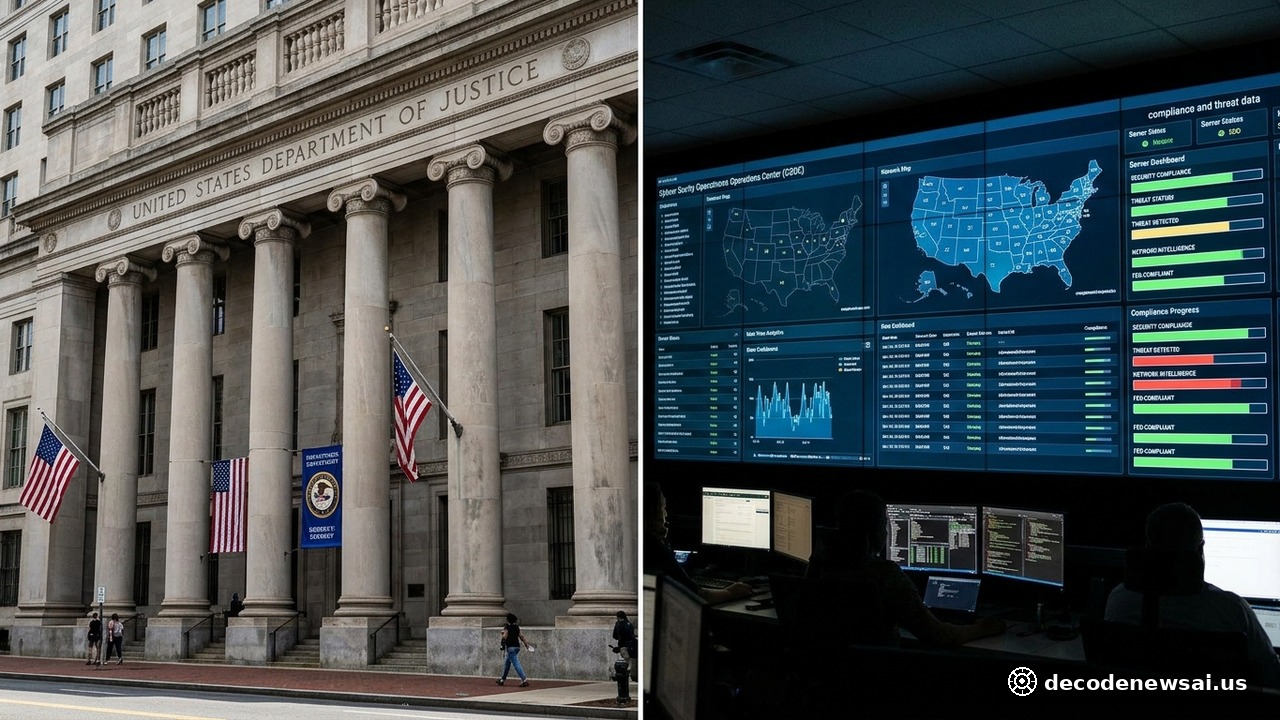
WASHINGTON - The United States Department of War Office of Strategic Capital (OSC) executed a binding conditional loan agreement on Sunday, November 8, committing 150 million dollars in federal credit financing to commercial radar operator LeoLabs. The transaction represents the largest direct credit allocation authorized by the Office of Strategic Capital since its creation under statutory national defense authorization frameworks. Loan proceeds will fund the expansion of LeoLabs' global radar tracking network dedicated to orbital debris monitoring and space domain awareness.
Ten-year loan funds six new radar stations
The Office of Strategic Capital was established as a defense financing instrument tasked with mobilizing private capital toward dual-use national security supply chains. Operating under authorities enacted in the Fiscal Year 2024 National Defense Authorization Act, the agency issues low-cost loans to commercial technology firms. The financing package provided to LeoLabs carries a ten-year repayment schedule with borrowing costs pegged directly to prevailing benchmark United States Treasury yields.
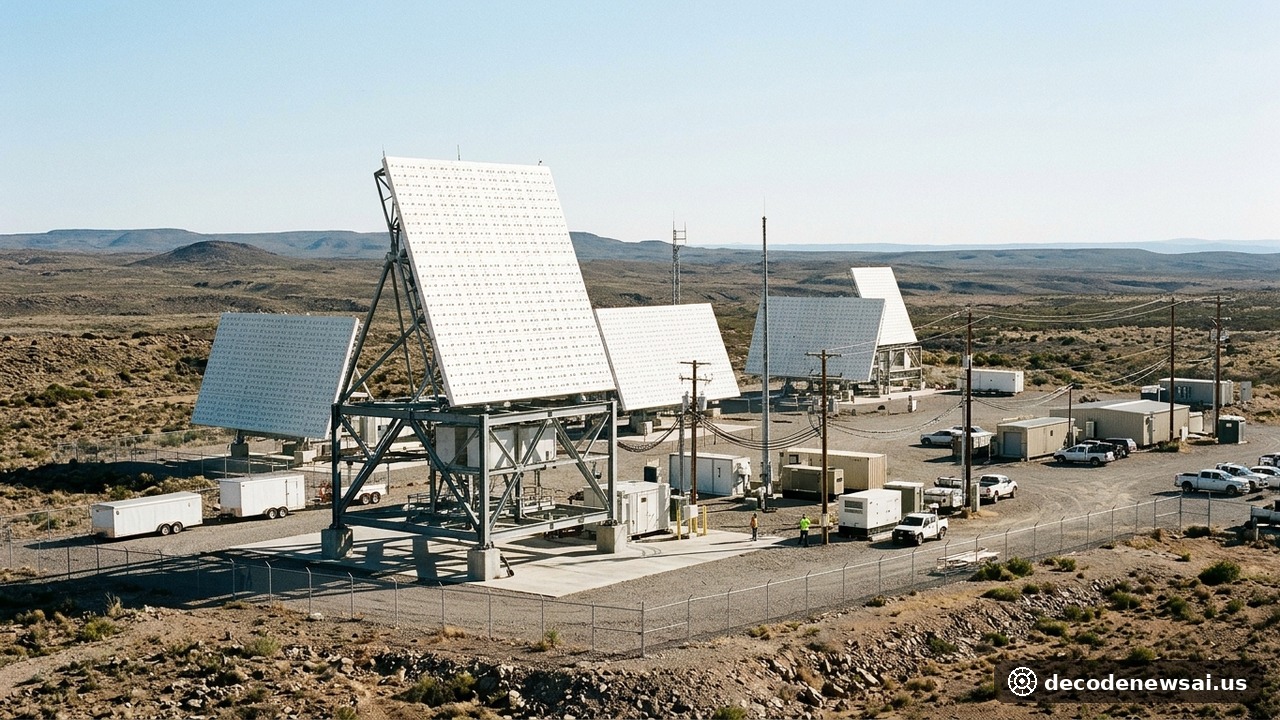
LeoLabs operates ten modular phased-array radar sites positioned across strategic global locations. The company's automated tracking network catalogs dozens of thousands of operational satellites and non-functional debris pieces transiting low Earth orbit every day. The rapid proliferation of commercial mega-constellations has heightened collisions risks across orbital highways. The federal financing supports constructing six new radar stations situated in the Southern Hemisphere and high-latitude zones capable of tracking debris down to two centimeters in diameter.
The Director of the Office of Strategic Capital stated in an official announcement: "Expanding high-precision global radar infrastructure significantly accelerates early warning capabilities. This mitigates orbital collisions and monitors non-cooperative orbital maneuvers." Aerospace executives commended the federal financing initiative.
Orbital space congestion has accelerated over the past five years. Telemetry compiled by the United States Space Force 18th Space Defense Squadron records over 45,000 tracked debris fragments currently orbiting Earth. Legacy government sensor networks face coverage gaps across southern latitudes. Commercial radar systems mitigate these structural tracking deficits. LeoLabs generates automated probability conjunction warnings within minutes of trajectory alterations.
The upcoming radar installations incorporate solid-state gallium nitride semiconductor transmitter units. Beam-steering switching frequencies operate at millisecond intervals, allowing simultaneous target discrimination across fifty distinct orbital planes. Tracking observations will transmit through secure military-grade channels to the Combined Space Operations Center. Commercial operators will access designated telemetry feeds through enterprise cloud interfaces.
Defense officials confirmed that supplementary strategic loan candidates are undergoing programmatic due diligence. Future financing targets include advanced semiconductor packaging lines, thermal protection components for hypersonic vehicles, and quantum navigation hardware. The Pentagon aims to mobilize more than one billion dollars in private capital over the next three fiscal cycles using low-cost debt instruments instead of traditional procurement.
Direct federal loans replace cost-plus contracting models
National security analysts in Washington highlighted that the deployment of direct federal loans signals an operational departure from rigid cost-plus contracting models. Commercial radar platforms scale production faster and integrate off-the-shelf electronic components with greater speed than legacy government acquisition pipelines. By providing capital directly to high-growth dual-use startups, the Department of War accelerates operational readiness across contested orbital corridors.
Private space telemetry integration will also support civil space agencies including the Federal Aviation Administration and commercial space station developers. Real-time orbital ephemeris feeds are becoming indispensable for commercial launch license clearances and orbital re-entry predictions. LeoLabs' expansion ensures persistent multi-angle sensor coverage across orbital inclination tracks that currently experience radar blackout intervals.
Congressional armed services committees endorsed the financing structure. Lawmakers observed that targeted credit allocations accelerate defense deployment timelines without traditional federal acquisition delays. LeoLabs projects finalizing construction across all six designated radar stations prior to the close of 2027, with the initial installation breaking ground in southwestern Australia.
LeoLabs to finish six radar stations before 2027
Defense industrial base analysts underscored that direct credit financing from the Office of Strategic Capital provides an agile alternative to cumbersome defense procurement cycles. By enabling rapid commercial scaling for high-resolution orbital tracking arrays, the Pentagon bolsters national space deterrence while encouraging commercial co-investment across dual-use aerospace technologies. Aerospace supply chain contractors confirmed that subsystem component procurement for the upcoming radar sites is already underway.