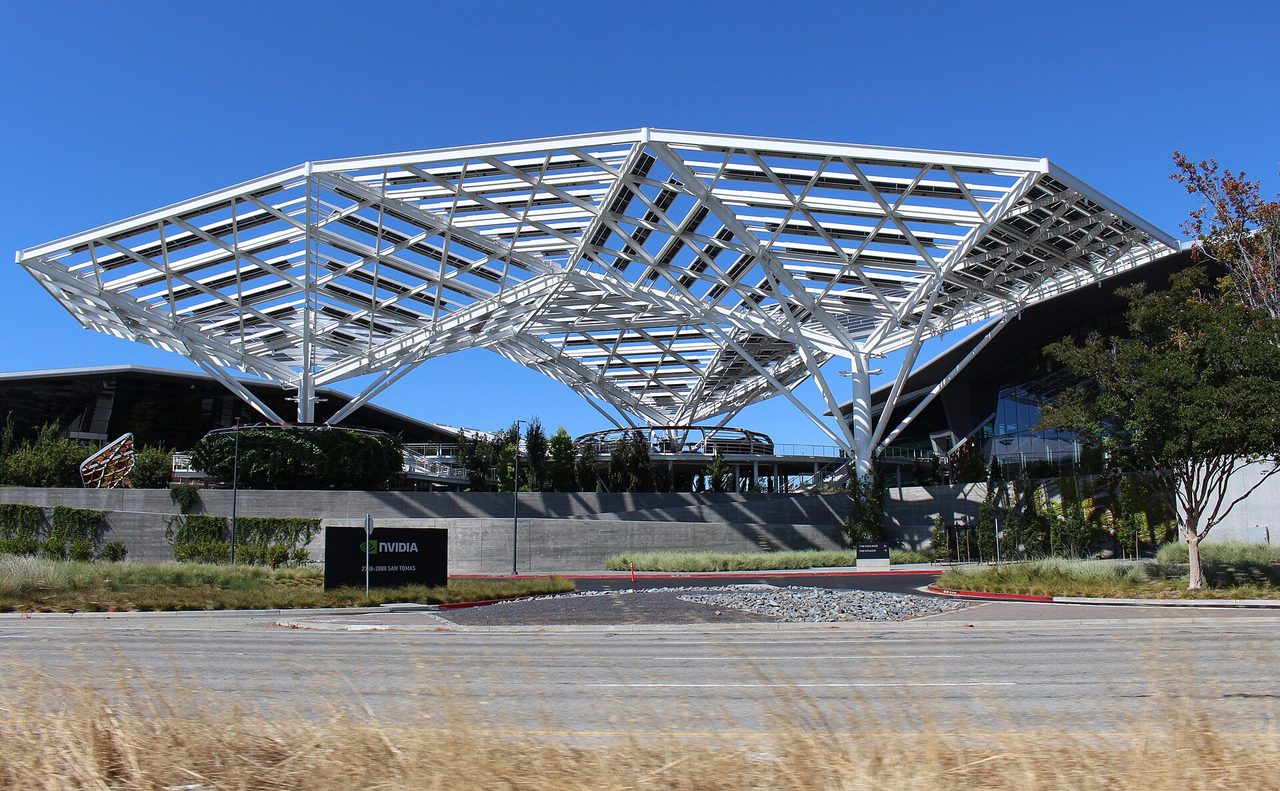
SEOUL - Technology giant Nvidia Corporation convened its flagship AI Day Seoul conference at the COEX Convention Center on Monday, November 9, presenting expanded sovereign artificial intelligence infrastructure partnerships with the South Korean Ministry of Science and ICT. The keynote gathered more than 2,000 international technology executives and researchers.
NVLink Fusion links Rebellions R200 with Nvidia racks
The central engineering revelation showcased a novel heterogeneous inference architecture integrating Nvidia hardware with Korean semiconductor technology. Nvidia opened its proprietary NVLink Fusion interconnect protocol to connect Korean startup Rebellions' R200 neural processing units directly alongside Nvidia enterprise accelerator racks, establishing modular compute continuity.
National telecommunications provider SK Telecom confirmed plans to deploy the integrated architecture across enterprise data centers by 2028. The split inference paradigm assigns prefill prompt ingestion to Nvidia GPUs, while Rebellions' custom NPUs execute high-efficiency token generation, delivering substantial energy optimizations across continuous reasoning workflows.
Nvidia's Vice President of Worldwide Developer Relations stated during the keynote: "Sovereign AI infrastructure requires tight collaboration between foundational computing platforms and domestic semiconductor innovators. Our partnerships in Korea establish an operational model for national AI ecosystems." Government officials praised the alliance.
Nvidia equity investments in Point2 Upstage Motif
Complementing hardware integration, Nvidia announced equity venture investments across Korean artificial intelligence pioneers, including optical interconnect developer Point2 and foundation model creators Upstage and Motif Technologies. Automotive conglomerate Hyundai Motor Company confirmed pilot testing of Nvidia's physical robotics simulation platforms, accelerating regional sovereign compute self-sufficiency.
Semiconductor architecture specialists noted that heterogeneous computing paradigms pairing general-purpose graphics processors with specialized neural processing units represent the future of commercial AI inference economics. By offloading sequential token generation workloads to workload-optimized accelerators, enterprise data center operators achieve substantial thermal and electrical power reductions across hyperscale clusters.
Global technology strategists observed that Nvidia's strategic collaboration with South Korean hardware and software pioneers accelerates the localization of sovereign artificial intelligence capabilities across key Asian manufacturing hubs. Fostering indigenous semiconductor ecosystems ensures that sovereign nations maintain technological autonomy while integrating seamlessly with international high-performance computing standards.
Live benchmarking telemetry for Korean language models
Engineers at the Seoul conference demonstrated live benchmarking telemetry, confirming that heterogeneous rack architectures maintained high inference throughput across complex Korean language model deployments.
Semiconductor architecture specialists noted that heterogeneous computing paradigms pairing general-purpose graphics processors with specialized neural processing units represent the future of commercial AI inference economics. By offloading sequential token generation workloads to workload-optimized accelerators, enterprise data center operators achieve substantial thermal and electrical power reductions across hyperscale clusters.
Global technology strategists observed that Nvidia's strategic collaboration with South Korean hardware and software pioneers accelerates the localization of sovereign artificial intelligence capabilities across key Asian manufacturing hubs. Fostering indigenous semiconductor ecosystems ensures that sovereign nations maintain technological autonomy while integrating seamlessly with international high-performance computing standards.
Heterogeneous chip architectures for sovereign AI workloads
Engineers at the Seoul conference demonstrated live benchmarking telemetry, confirming that heterogeneous rack architectures maintained high inference throughput across complex Korean language model deployments. Industry participants expressed strong interest in adopting modular open-source computing recipes for regional enterprise workflows.
High-performance computing engineers emphasized that heterogeneous chip architectures represent a vital transition pathway for commercial artificial intelligence workloads. Collaborative hardware designs enable enterprise developers to optimize power utilization while scaling foundational intelligence models.
Enterprise technology directors in Seoul affirmed that localized computational infrastructure substantially improves data privacy and regulatory compliance for sovereign workloads. Software optimization engineers pointed out that modular hardware stacks allow domestic cloud providers to achieve competitive throughput while maintaining flexible procurement strategies. Regional semiconductor analysts noted that cooperative development models establish sustainable technical foundations for domestic artificial intelligence deployment across Asia. Technology policy researchers observed that national computational infrastructure initiatives encourage private sector innovation while ensuring data sovereignty. Scalable hybrid architectures accelerate regional artificial intelligence adoption.