The Access to Medicine Foundation published its 2026 Access to Medicine Index on November 10, 2026. The report ranks Swiss pharmaceutical company Novartis first among the world's 20 largest research-based healthcare corporations. Novartis took the top spot on the strength of its global health governance, equitable pricing strategies, and faster rollout of an innovative dispersible antimalarial formulation. That formulation was designed specifically for infants in developing nations.
Independent Foundation Evaluates 20 Global Drugmakers on Healthcare Equity Metrics
The Access to Medicine Index is published every two years. It offers an independent evaluation of how multinational pharmaceutical corporations facilitate equitable access to life-saving medicines across low- and middle-income countries. The assessment measures governance, research and development for priority pathogens, non-exclusive patent licensing, and commercial distribution depth.
Novartis secured top rankings in both the Governance and Market Access sub-categories. The Foundation commended the company's systematic implementation of equitable tiered pricing models. It also cited non-profit product delivery programs across sub-Saharan Africa and Southeast Asia.
The Chief Executive Officer of the Access to Medicine Foundation stated in Amsterdam: "Novartis earning the top position in our 2026 Index demonstrates how pharmaceutical innovation can be harmonized with robust public health commitments. Ensuring that vulnerable infants in low-income regions receive specialized treatments must be an industry-wide imperative."
Novel Infant Antimalarial Formulation Solves Critical Pediatric Dosing Challenges
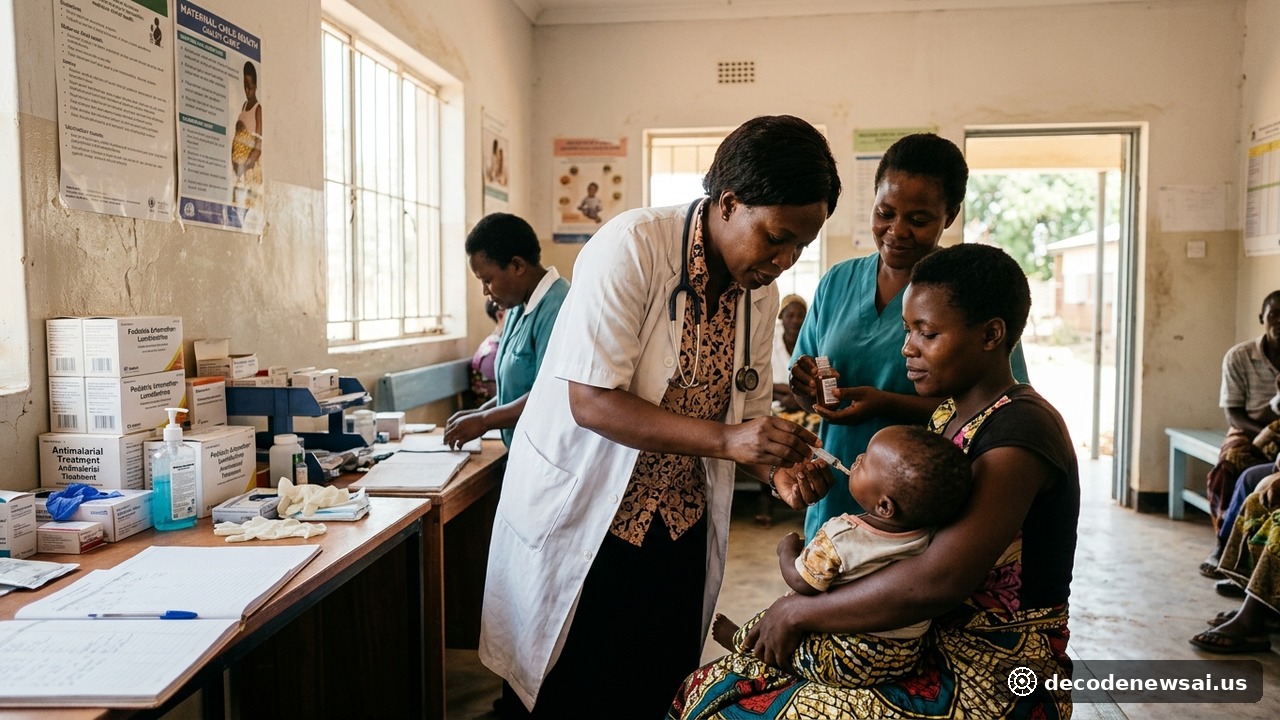
A major contributor to Novartis's benchmark score was the clinical development and distribution of a novel dispersible artemisinin-based combination therapy. The therapy was engineered for infants weighing under five kilograms. Traditional antimalarial tablets presented severe administration hurdles. Bitter taste and risks of choking or incorrect dosage splitting were the main problems.
The new child-friendly formulation dissolves rapidly in breast milk or water. It has a pleasant taste profile. It delivered a high clinical cure rate exceeding 95 percent in pediatric trials. National regulatory health authorities across four African nations granted expedited marketing approvals, enabling subsidized distribution across rural clinics.
The Global Head of Public Health at Novartis commented during an international briefing: "The fight against malaria is entering a decisive phase where protecting the most vulnerable children is paramount. We remain committed to working closely with the World Health Organization and local health ministries to ensure no child dies from a preventable disease."
Expanding Voluntary Patent Licensing and Technical Knowledge Transfer Partnerships
Beyond finished pharmaceutical product donations, Novartis expanded institutional capacity-building initiatives through voluntary licensing agreements with the United Nations-backed Medicines Patent Pool. The framework permits qualified local generic manufacturers across developing countries to produce affordable formulations under royalty-free licenses.
Novartis provides technical on-site manufacturing guidance and quality control training. The aim is to ensure regional production facilities meet strict World Health Organization pre-qualification standards. Strengthening domestic manufacturing capabilities significantly shortens supply chains. It also fortifies regional healthcare resilience against supply disruptions.
A global health coordinator for Doctors Without Borders commended the collaborative licensing model. The coordinator emphasized that open technology sharing and equitable pricing represent critical pillars for closing the global healthcare divide.
Macroeconomic analysts and international policy researchers highlighted that structured institutional collaboration establishes long-term operational certainty across global markets. By aligning statutory guidelines with rigorous technical standards, regulatory agencies and commercial stakeholders cultivate resilient operational ecosystems capable of navigating evolving economic conditions. Global industry participants look forward to tracking forthcoming milestone developments as organizations implement their strategic priorities throughout 2027. Cross-sector coordination remains essential for driving sustainable innovation and delivering tangible economic benefits across public and private sectors.
Strategic planning advisors and international trade specialists noted that long-term intergovernmental frameworks generate predictable operating environments across key industry sectors. By coupling transparent administrative guidelines with rigorous scientific benchmarks, regulatory bodies and enterprise leaders establish sustainable operating models capable of withstanding shifting macroeconomic dynamics. Global market participants will continue observing forthcoming implementation milestones as public agencies execute their mandated responsibilities throughout 2027. Cross-border coordination remains vital for driving sustained operational resilience and delivering measurable societal benefits worldwide.