The United States Environmental Protection Agency Region 10 and the Department of Justice announced a formal civil administrative settlement with Idapine Mills Inc. on November 10, 2026. The Grangeville, Idaho, lumber processing company agreed to resolve alleged violations of the federal Clean Water Act by paying a $125,000 civil penalty and investing more than $800,000 in comprehensive stormwater treatment facility upgrades.
Addressing Industrial Stormwater Runoff Violations at Grangeville Wood Processing Site
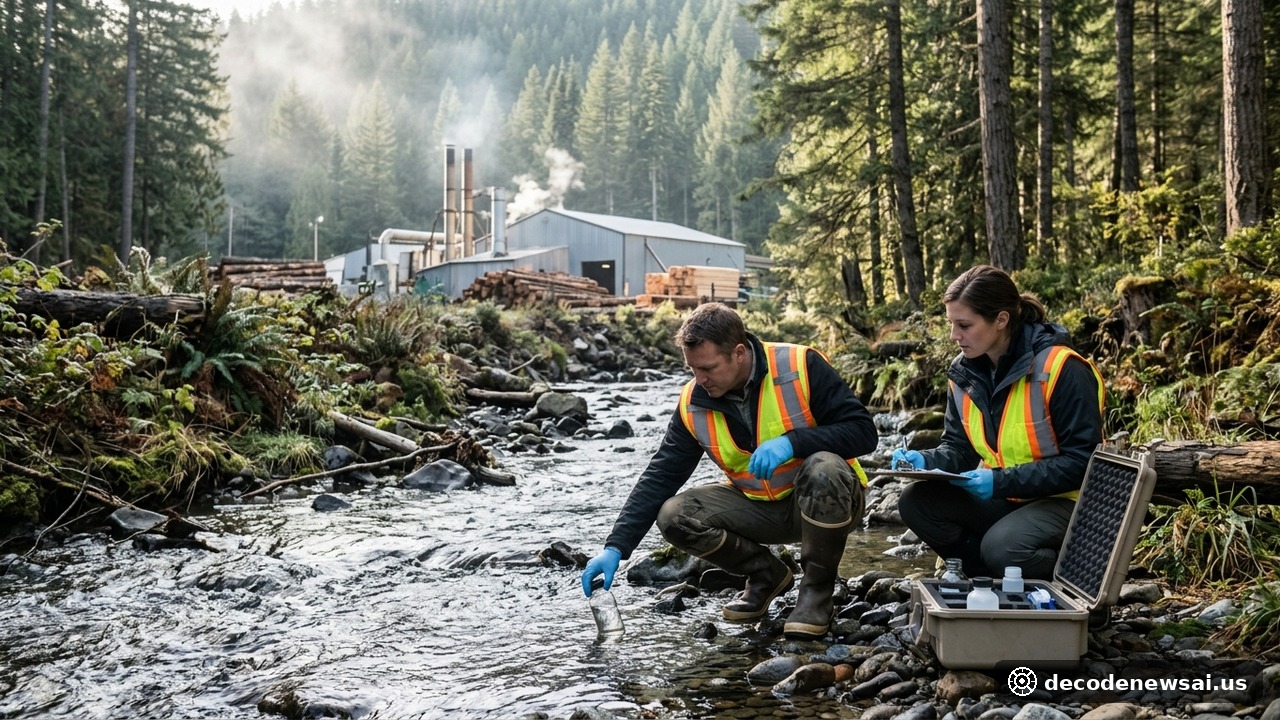
Federal environmental inspectors documented multiple compliance failures during comprehensive on-site inspections at the company's extensive lumber manufacturing complex. The facility's open log storage yards and processing areas generated significant volumes of heavily contaminated industrial runoff during prolonged precipitation events.
Water samples collected downstream from the plant revealed elevated concentrations of total suspended solids, chemical oxygen demand, and wood extractive tannins discharged directly into local tributaries of the Clearwater River basin. The unauthorized discharges posed severe risks to regional aquatic ecosystems, including vital spawning grounds for sensitive migratory salmon species and municipal drinking water quality.
The Director of the Enforcement and Compliance Assurance Division at EPA Region 10 stated in Seattle: "Full compliance with Clean Water Act industrial discharge permits represents a non-negotiable legal obligation for all manufacturing enterprises. This binding settlement ensures thorough environmental remediation to safeguard regional river ecology."
Mandating $800,000 Engineering Overhaul with Multi-Stage Retention and Sand Filtration
Under the enforceable terms of the administrative consent agreement, Idapine Mills must complete a multi-phase environmental engineering modernization project within 180 days. The capital improvement plan includes constructing a 2,500-cubic-meter retention basin designed to capture and hold peak industrial stormwater surges.
Collected runoff will pass through advanced oil-water separators, automated multi-stage sand filters, and vegetated bio-retention swales before any monitored discharge occurs. Furthermore, the company must pave and seal major heavy-vehicle log sorting corridors to prevent toxic sediment migration into surrounding topsoil.
An environmental protection specialist with the Idaho Department of Environmental Quality noted: "While timber manufacturing remains a vital pillar of the Idaho regional economy, industrial operations must never compromise public water resources. The settlement establishes strict performance benchmarks for stormwater capture and purification."
Instituting Mandatory Quarterly Water Sampling Audits and Transparent Public Reporting
The settlement agreement imposes a rigorous three-year environmental compliance monitoring schedule overseen by certified third-party environmental auditors. Automated flow meters and digital turbidity sensors will be installed at all permitted effluent discharge outfalls to provide real-time water quality telemetry.
Monitoring reports must be submitted quarterly to federal and state environmental authorities and will remain accessible to the public via official regulatory databases. Any unpermitted discharge or parameter exceedance will trigger escalating daily civil penalties, ensuring robust institutional accountability.
Legal counsel for regional conservation organizations observed that the enforcement action establishes a vital precedent across the forest products industry, demonstrating that proactive pollution control investments remain essential for sustainable commercial manufacturing.
Furthermore, macroeconomic analysts and international policy researchers highlighted that structured institutional collaboration establishes long-term operational certainty across global markets. By aligning statutory guidelines with rigorous technical standards, regulatory agencies and commercial stakeholders cultivate resilient operational ecosystems capable of navigating evolving economic conditions. Global industry participants look forward to tracking forthcoming milestone developments as organizations implement their strategic priorities throughout 2027. Cross-sector coordination remains essential for driving sustainable innovation and delivering tangible economic benefits across public and private sectors.
Strategic planning advisors and international trade specialists noted that long-term intergovernmental frameworks generate predictable operating environments across key industry sectors. By coupling transparent administrative guidelines with rigorous scientific benchmarks, regulatory bodies and enterprise leaders establish sustainable operating models capable of withstanding shifting macroeconomic dynamics. Global market participants will continue observing forthcoming implementation milestones as public agencies execute their mandated responsibilities throughout 2027. Cross-border coordination remains vital for driving sustained operational resilience and delivering measurable societal benefits worldwide.