Planetary Defense Mission Commences Proximity Operations
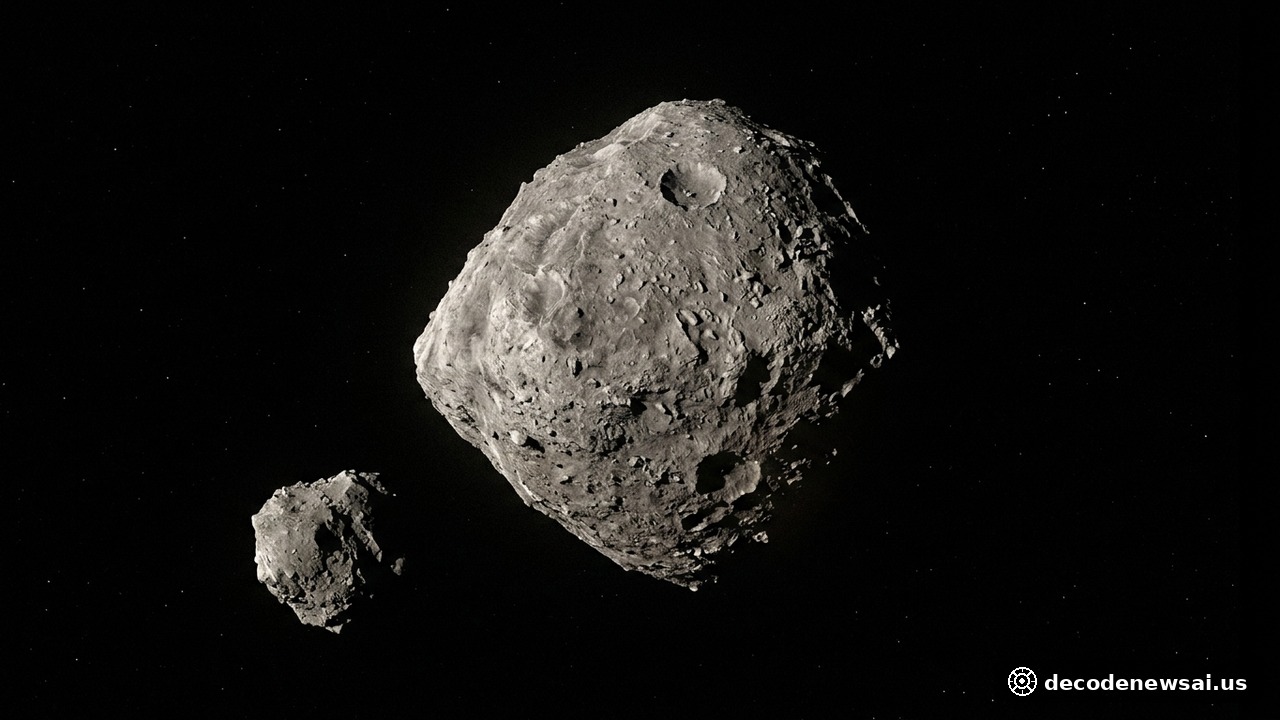
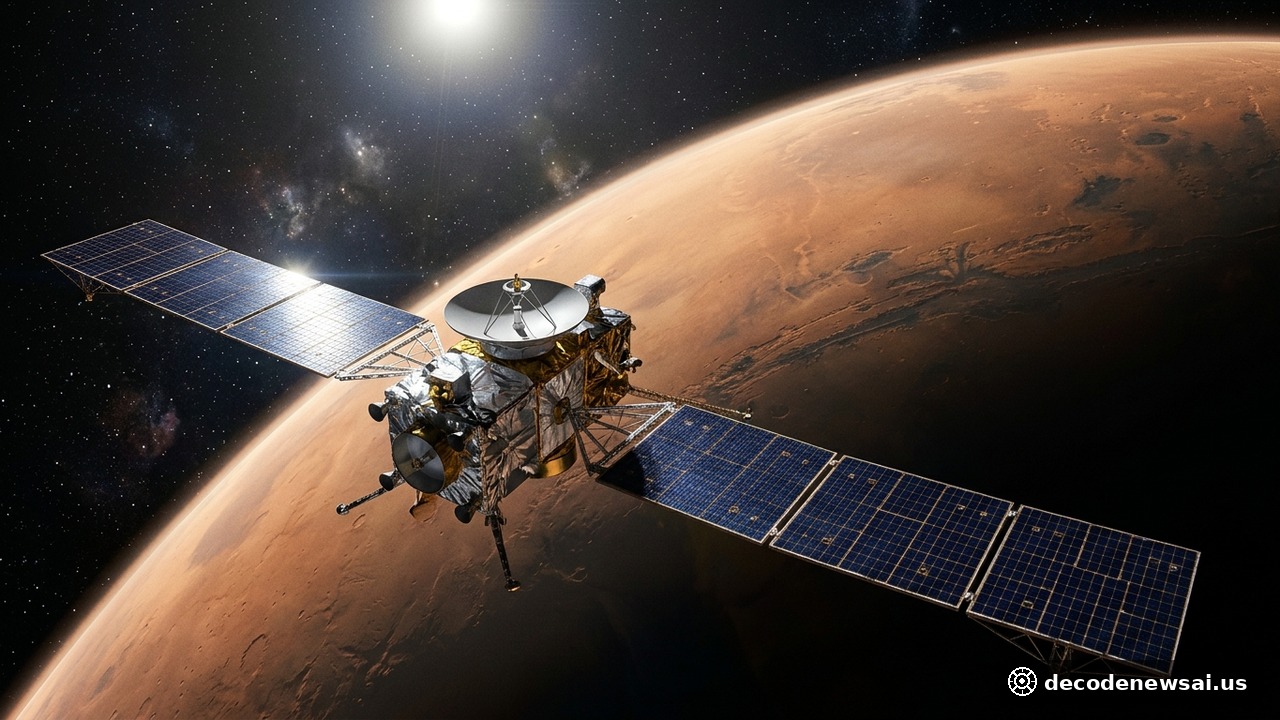
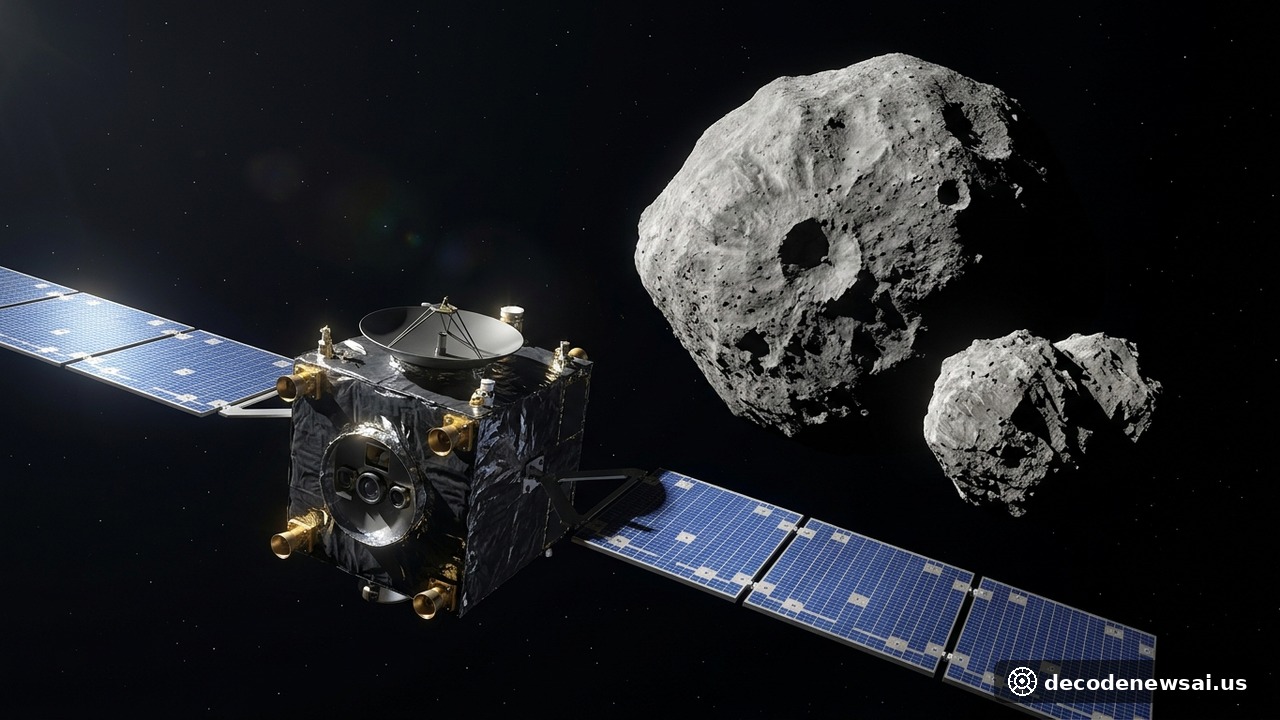
The European Space Agency’s Hera planetary defense spacecraft arrived at the binary asteroid system Didymos and Dimorphos on November 11. Following a two-year deep-space cruise, the probe initiated detailed orbital proximity operations around the pair. It conducts high-resolution forensic reconnaissance of the crater formed by NASA’s DART kinetic impactor mission four years ago. Launched in October 2024 from Cape Canaveral, Hera covered millions of kilometers through the inner solar system before automated navigation sensors acquired the target asteroid system. Thruster firings synchronized the spacecraft’s orbital velocity with the asteroid pair.
Ian Carnelli, Hera Mission Manager at ESA, said during an agency briefing in Darmstadt reported by the BBC and Sky at Night Magazine that the sensor payload would conduct three-dimensional topographical mapping of the impact zone and measure kinetic energy transfer with millimeter precision. Early black-and-white telemetry frames recorded by Hera’s Asteroid Framing Cameras revealed boulder-strewn regolith across Didymos.
The mothership will deploy two shoe-box-sized CubeSats, Juventas and Milani, into low-altitude orbits. The nanosatellites will execute low-velocity flybys across Dimorphos to map subsurface properties. Juventas carries a monostatic low-frequency radar sounder engineered to penetrate beneath the asteroid’s surface regolith; the instrument will measure internal structural cohesion and void fractions. Milani carries a compact hyperspectral spectrometer designed to analyze surface mineral distributions across fresh impact ejecta; surface compositions will be compared against terrestrial meteorite records.
NASA’s DART spacecraft struck Dimorphos at approximately six kilometers per second in September 2022, shortening the moonlet’s orbital period by 33 minutes. Hera’s direct volumetric and gravitational mass measurements will resolve momentum enhancement factors (Beta values) governing kinetic asteroid deflection. The scientific campaign around Didymos and Dimorphos is scheduled to continue through mid-2027.