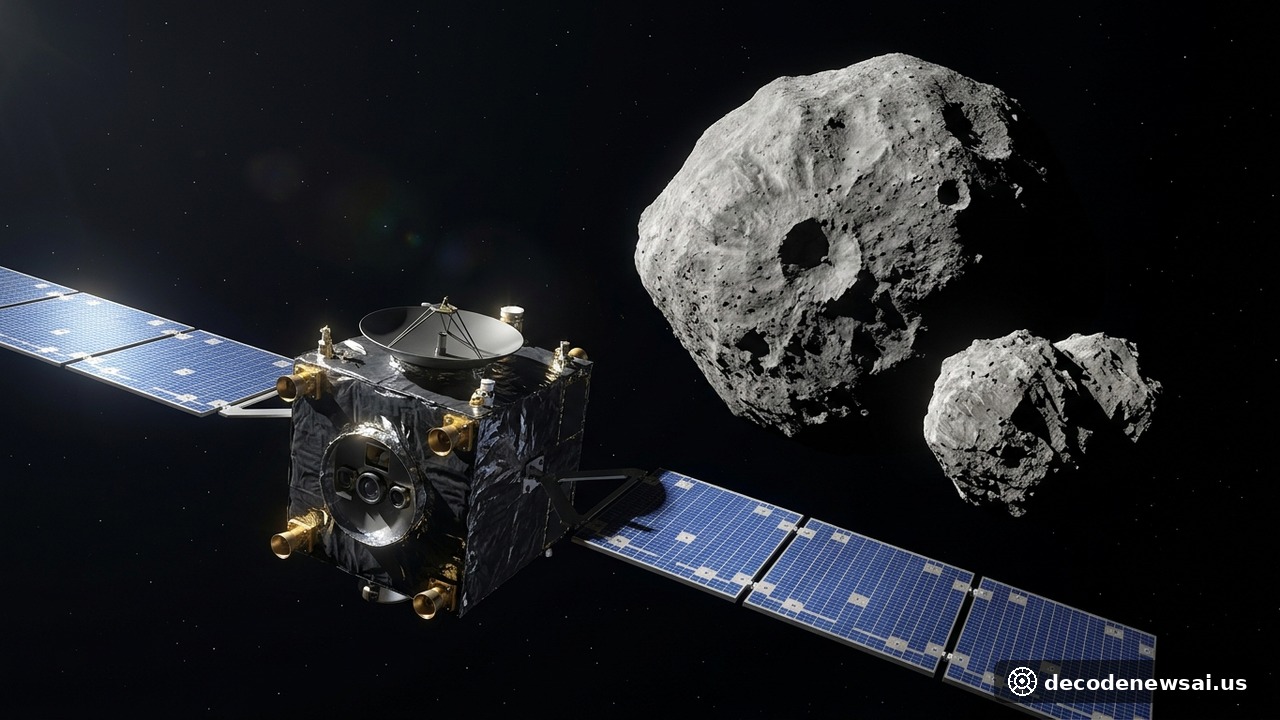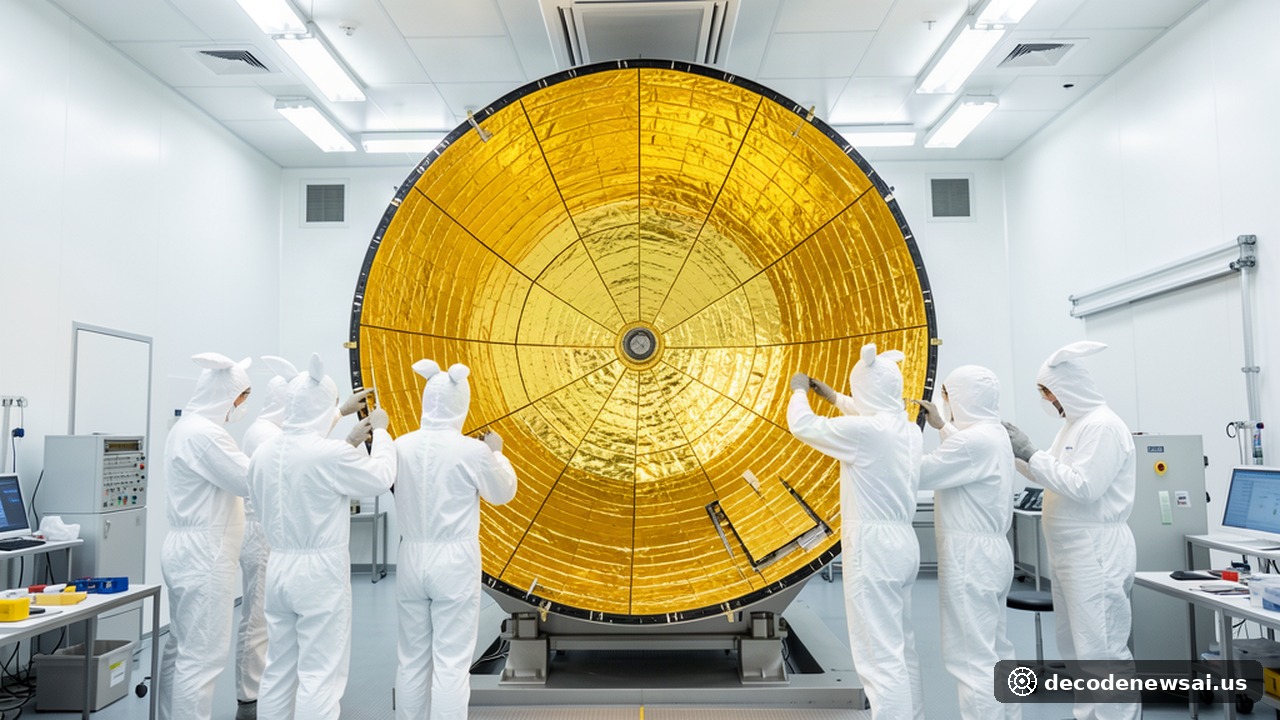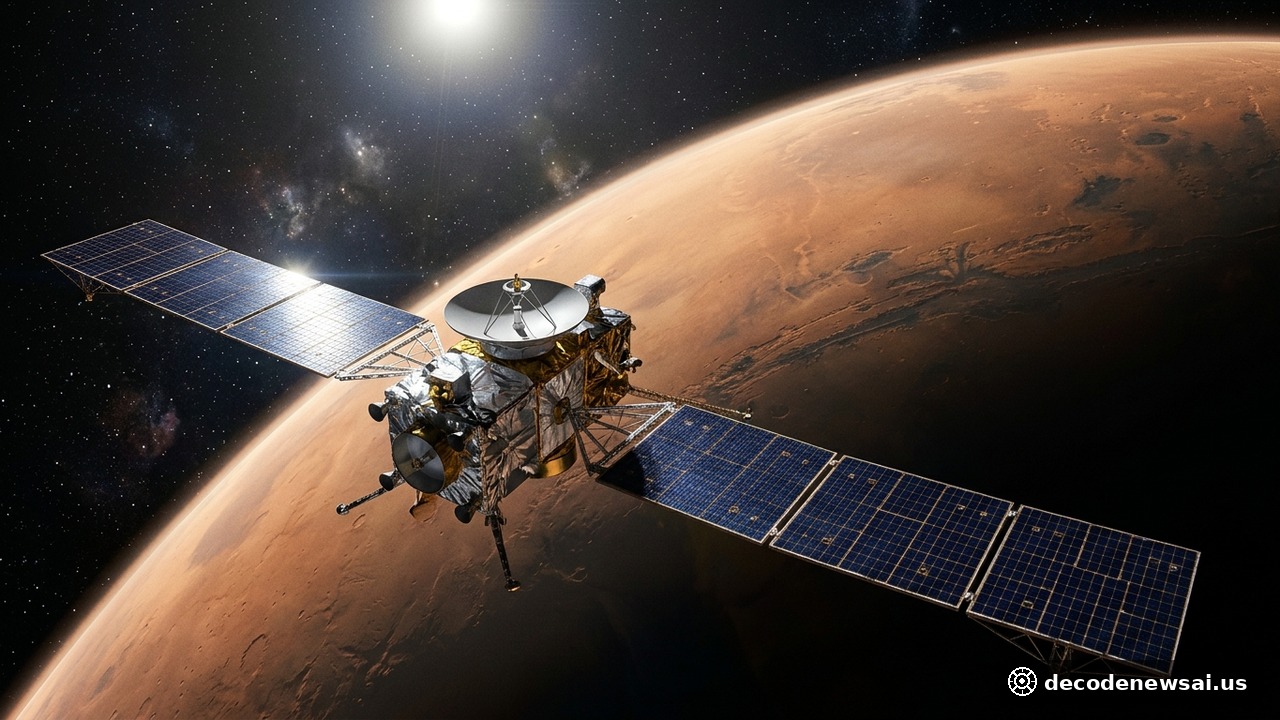
NASA’s Jet Propulsion Laboratory announced on November 11, 2026, that Europa Clipper executed its first major Trajectory Correction Maneuver (TCM-1) en route to the outer solar system. Hydrazine thrusters fired for several minutes, refining the spacecraft’s flight path toward an upcoming Mars gravity assist. The burn secures the navigational corridor required for a Mars flyby and eventual orbital insertion into the Jupiter system in April 2030.
Telemetry engineering data released by JPL flight operations confirmed execution parameters across the propulsion system. Flight computers commanded 24 attitude control and trajectory thrusters across a continuous burn of 12 minutes and 20 seconds. Monopropellant consumption matched pre-flight orbital simulation models. The calculated velocity adjustment nullified minor trajectory drift introduced after launch aboard a SpaceX Falcon Heavy rocket. Europa Clipper cruises through interplanetary space at approximately 30 kilometers per second. High-gain parabolic radio antennas maintain telemetry locking with the Deep Space Network. Flight controllers confirmed the spacecraft’s 30-meter solar array wings deployed fully and generate stable electrical power across increasing solar orbital distances.
Following the propulsion maneuver, ground controllers initiated calibration testing across nine primary scientific investigation suites. Instruments including the Radar for Europa Assessment and Sounding: Ocean to Near-surface (REASON), high-resolution multispectral cameras, and magnetometers completed initial in-flight health diagnostics. Flight directors plan to activate secondary sensor sweeps during the Mars gravity assist flyby, gathering empirical calibration datasets before entering Jupiter’s intense radiation environment.
Trajectory roadmaps indicate Europa Clipper loops back past Earth in late 2026 after its Mars gravity assist to gain orbital velocity for its Jovian transfer leg. Total cumulative travel will surpass 2.9 billion kilometers prior to Jupiter orbit insertion in April 2030. European Space Agency flight directors operating the JUICE spacecraft sent congratulations to NASA counterparts; the two flagship missions will execute coordinated observations across Jovian icy moons.