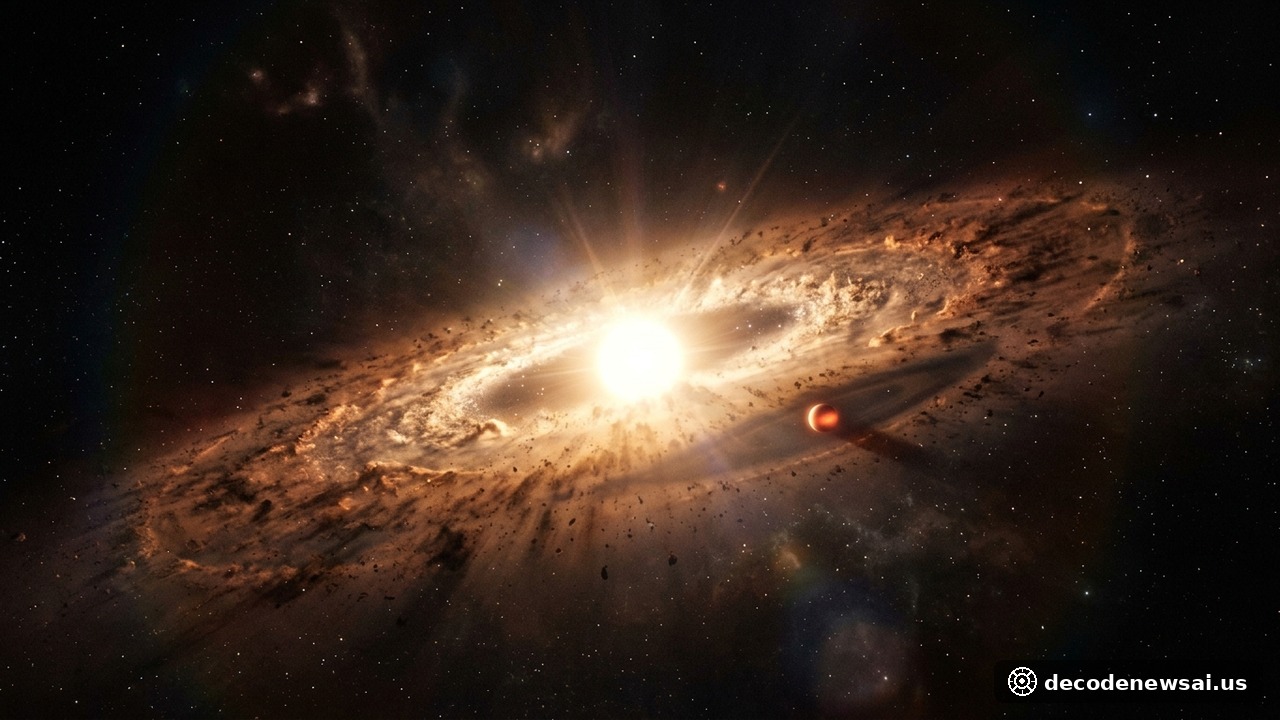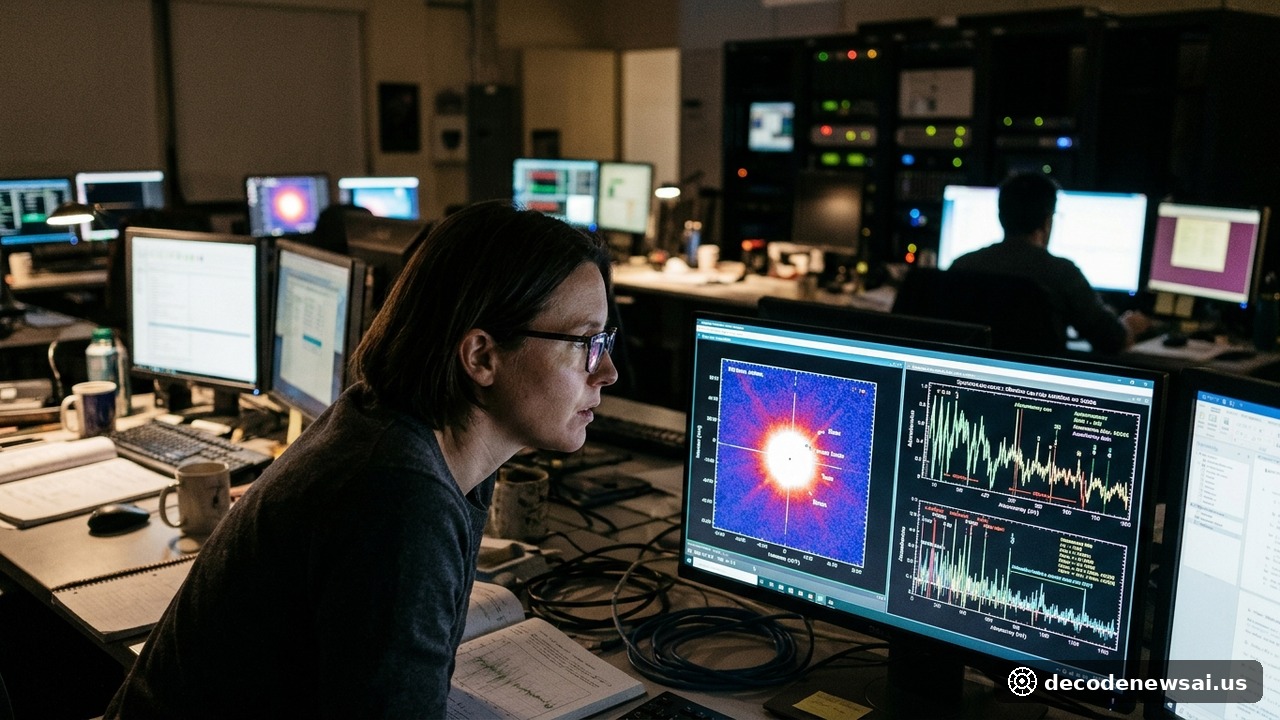
An international astrophysical collaboration announced a breakthrough planetary detection on Friday achieved through computational optics. By constructing a high-fidelity software digital twin of the James Webb Space Telescope, researchers simulated and subtracted persistent optical diffraction glare produced by the observatory's primary mirror array. The algorithmic pipeline revealed a previously unknown extrasolar planet concealed within archived observations of an intensely bright nearby star. Computational astrophysics unlocked unprecedented observational sensitivity.
The achievement overcomes physical optical limitations inherent to multi-segment beryllium space mirrors. Planetary photons previously obscured by hexagonal stellar diffraction spikes were isolated and characterized. Deep space exploration capabilities expanded decisively.
Official Briefing and Core Dispatches
According to scientific reporting published Friday by ZME Science and briefings from NASA's Astrophysics Division, micrometeorite strikes and thermal gradients introduce minute optical wavefront errors across Webb's eighteen gold-coated hexagonal mirrors. Outlining the computational breakthrough in their published findings, astronomers stated that by simulating every mirror segment and structural strut in software, they effectively eliminated optical glare to reveal faint exoplanets hiding in archival data. The workflow validated the scientific utility of computational re-processing on archived public astronomical repositories. Observational clarity reached new milestones.
Industry Response and Operational Impacts
The digital model dynamically reproduces complex optical point spread functions generated by the secondary mirror support spider across near-infrared wavelengths. Microscopic scatter patterns that exceed the attenuation limits of hardware coronagraph masks are digitally subtracted. The identified exoplanet contains approximately half the mass of Jupiter and maintains an orbital period of roughly 4.2 years. Spectroscopic retrieval indicates distinct atmospheric absorption features corresponding to gaseous methane and vaporized water molecules. The detection delivers vital physical constraints for comparative planetary formation models.