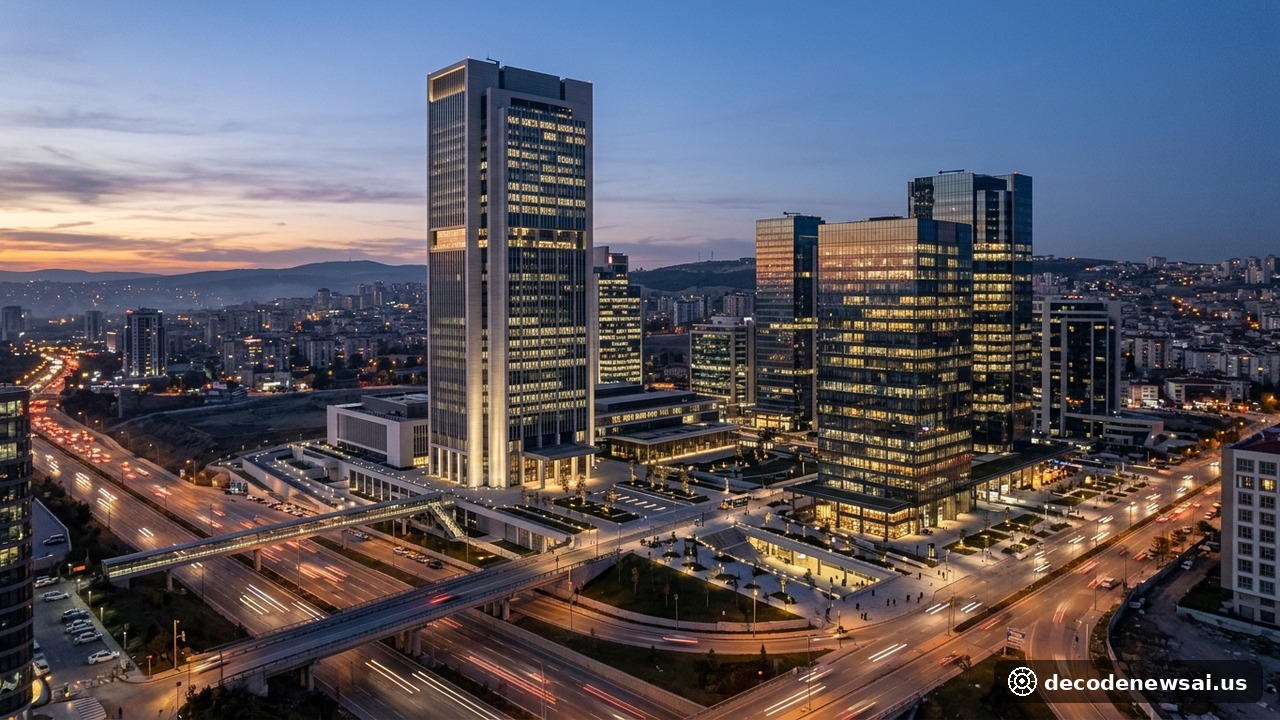
The Central Bank of the Republic of Türkiye raised its inflation projections for both this year and next on Thursday as Middle East hostilities drive up energy import costs.
Delivering the fourth quarterly Inflation Report of 2026 in Istanbul, Governor Fatih Karahan set the year-end 2026 inflation forecast at 29.5 percent. He also projected 21 percent inflation for the end of 2027. Policymakers pointed directly to supply disruptions and commodity price swings linked to the war in Iran; Trading Economics noted that the central bank's October Market Participants Survey showed private-sector year-end CPI expectations edged up to 29.63 percent from 29.61 percent in September. Daily Sabah reported: "The Turkish central bank revised its inflation forecasts upward on Thursday, setting a 2026 year-end forecast of 29.5% and a 21% forecast for next year, citing effects related to the war in Iran."
ING Think observed that Turkish monetary authorities have kept their policy course unchanged while monitoring how long geopolitical energy shocks persist. Central bank officials maintained that tight monetary conditions remain necessary to prevent secondary price pressures from becoming entrenched across services. Turkey's Treasury previously scheduled 13 billion dollars in external borrowing for 2026. International Monetary Fund projections published in October estimated Turkey's 2026 real GDP growth at 2.7 percent and average annual consumer inflation at 31.2 percent. Karahan emphasized during his Istanbul presentation that the central bank will evaluate incoming monthly inflation prints before considering any shift in its monetary stance.
Historical figures compiled by Trading Economics show Turkish inflation expectations averaged 21.65 percent between 2013 and 2026. Those expectations previously peaked at 70.60 percent in August 2022. The revised 29.5 percent year-end projection remains above the central bank's medium-term target band.