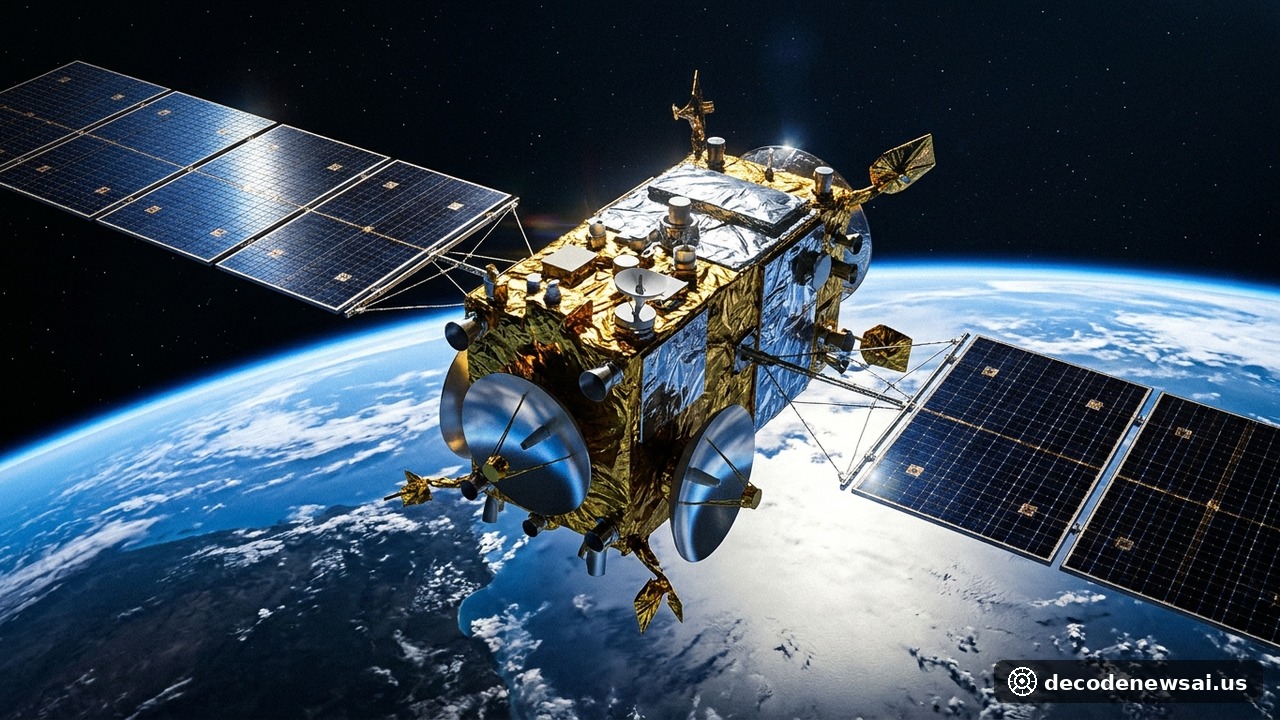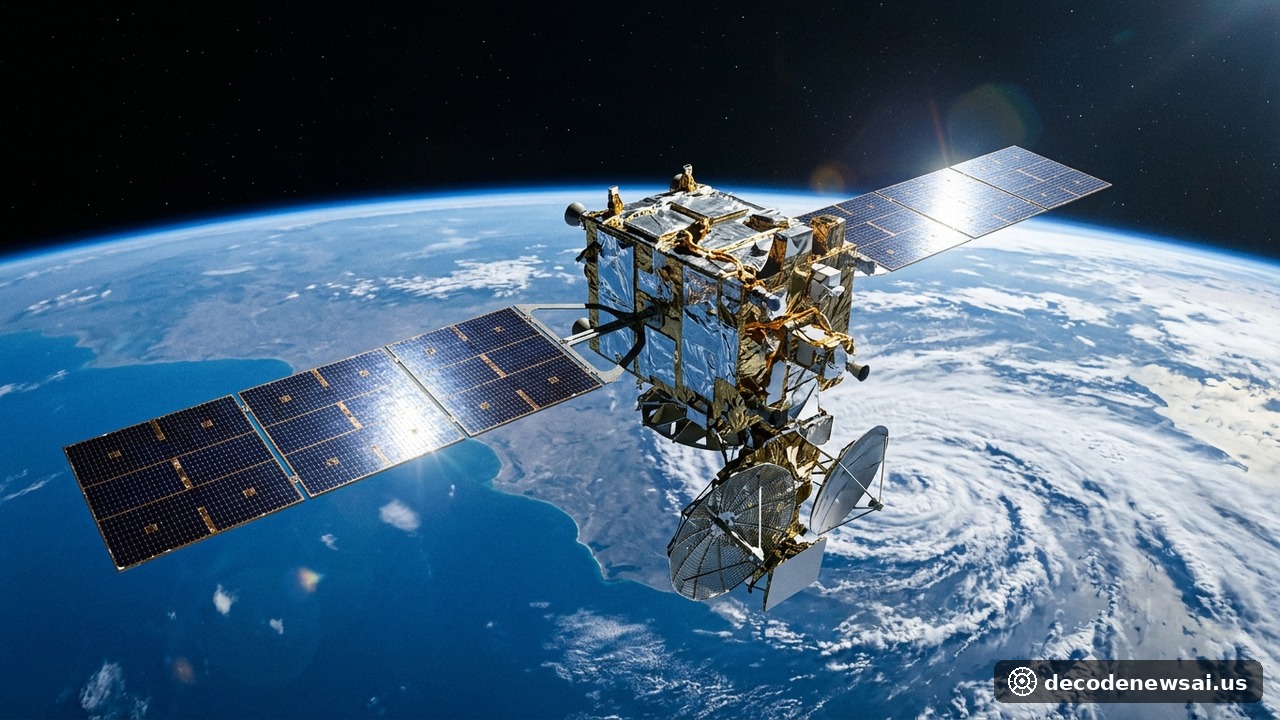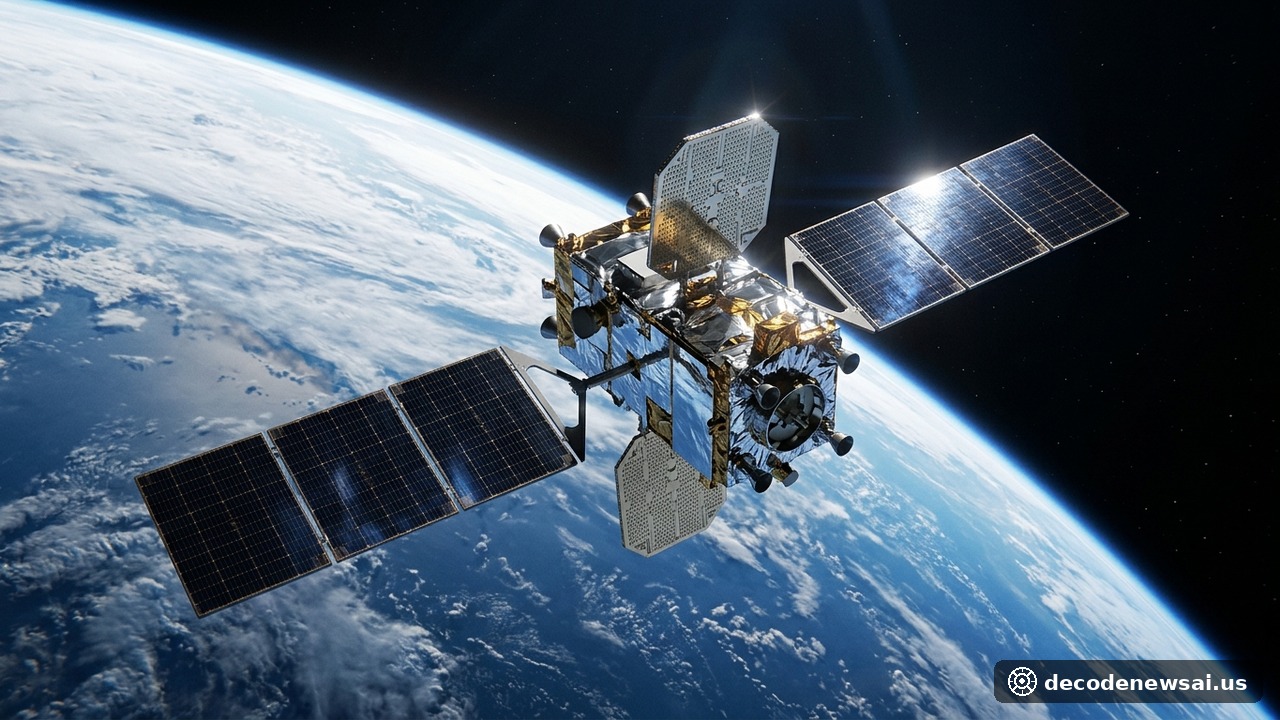
Austin-based space communications pioneer CesiumAstro Inc. formally announced on November 5, 2026, the successful closing of an oversubscribed $730 million Series D equity financing round led by global asset manager Janus Henderson Investors, vaulting the aerospace company's post-money valuation beyond $4.5 billion. The capital infusion features major participation from prominent investment firms including Insight Partners, Toyota's growth fund Woven Capital, and NewSpace Capital. Alongside the financing, CesiumAstro unveiled its ambitious "Synchronicity" constellation initiative, a planned network of 737 software-defined, AI-enabled satellites deployed in low Earth orbit (LEO) to deliver multi-orbit, high-throughput defense and commercial connectivity.
What Are the Core Valuation Metrics and Constellation Parameters in CesiumAstro's Series D Round?
- Lead Financial Sponsor and Notable Strategic Participants: Led by Janus Henderson; Joined by Woven Capital (Toyota)
Shey Sabripour, Founder and Chief Executive Officer of CesiumAstro, outlined the company's strategic evolution during an executive webcast: "Historically, CesiumAstro built an exceptional reputation as a premier Tier-1 payload and avionics supplier, providing software-defined radios (SDR) and active electronically steered arrays (AESA) to aerospace prime contractors and government agencies. Following the flawless on-orbit validation of our fully integrated Element-1 satellite mission, CesiumAstro is accelerating its transition from a specialized space hardware vendor into a vertically integrated orbital infrastructure operator delivering scalable space-to-ground connectivity."
How Does a 737-Satellite AI Constellation Revolutionize Multi-Band Space Communications?
Unlike conventional commercial communication satellites that function primarily as static analog transponders limited to single frequency allocations, the Synchronicity constellation leverages fully reconfigurable digital architectures.
Each spacecraft integrates CesiumAstro's proprietary active phased arrays, capable of dynamically supporting Ku-, Ka-, and high-frequency V-band links simultaneously across varying orbital regimes. Most critically, the constellation incorporates radiation-hardened edge computing hardware, enabling individual satellites to process complex data payloads directly on orbit without relying on continuous ground station round-trips. This onboard neural architecture autonomously executes real-time beam steering, adaptive electronic counter-countermeasures (anti-jamming), and low-latency inter-satellite optical mesh routing, reducing point-to-point latency down to single-digit milliseconds.
Aerospace payload specialists emphasized that CesiumAstro's modular active electronically steered arrays eliminate heavy mechanical gimbal systems that have historically presented critical points of mechanical failure in space hardware. By steering radio-frequency beams electronically using software-defined phase shifts, a single flat-panel satellite antenna can establish and track dozens of independent communication links simultaneously across aerial drones, naval vessels, and remote ground stations.
Furthermore, the integration of edge computing allows the Synchronicity constellation to function as an autonomous in-orbit mesh network. In contested military operating environments where terrestrial ground stations may be targeted or jammed, the satellites can dynamically reroute critical telemetry through inter-satellite optical crosslinks, ensuring uninterrupted command and control for allied defense commands and commercial enterprise operators worldwide.
What Are the Broader Industry Ramifications for Global Defense Aerospace and Private Capital?
CesiumAstro's $730 million Series D highlights how sovereign defense modernization and secure commercial data requirements are driving capital into dual-use space infrastructure.
While consumer satellite broadband constellations face intense retail pricing pressures, CesiumAstro has strategically prioritized high-margin enterprise and sovereign defense applications, including airborne beyond-line-of-sight command links, uncrewed autonomous vehicle telemetry, and resilient tactical relays. Backed by a $500 million investment to expand its Austin manufacturing footprint to 270,000 square feet of advanced semiconductor and payload assembly space, CesiumAstro combines high-volume domestic manufacturing with proprietary silicon architectures, establishing a resilient technological moat across the evolving commercial space economy.