The National Aeronautics and Space Administration (NASA) officially announced on November 6, 2026, the selection of San Francisco-based commercial satellite manufacturer Astranis Space Technologies Corp. for the NEXUS Ka-Band Relay Satellite Initiative, awarding a milestone contract valued at up to $264 million. Facilitated through the Communications Services Project (CSP) within NASA's Space Communications and Navigation (SCaN) division, the partnership will develop and deploy next-generation geostationary commercial data relay satellites to modernize NASA's space communications architecture as the agency's legacy Tracking and Data Relay Satellite (TDRS) fleet approaches scheduled retirement.
What Are the Core Financial Parameters and Technical Specifications of the NASA-Astranis Contract?
- Astranis Active Commercial Contract Delivery Backlog: Exceeding $1.0 Billion USD (Serving Enterprise and Military)
- Cumulative Equity Capital Raised by Astranis to Date: Over $1.2 Billion USD (Backed by A16z, BlackRock, Fidelity)
- Astranis Northern California Advanced Production Facility: 153,000 Square Feet Dedicated Satellite Manufacturing
John Gedmark, Co-Founder and Chief Executive Officer of Astranis, articulated the historical gravity of the award in an executive briefing: "For decades, NASA's TDRS constellation has stood as one of humanity's premier engineering triumphs, routing every voice transmission, scientific dataset, and critical maneuver from low Earth orbit back to mission control. As those monolithic, multibillion-dollar spacecraft reach the end of their operational design lifespans, commercial space enterprise is ready to step in with more agile, cost-effective architectures. NEXUS represents a decisive paradigm shift in how civil space agencies procure mission-critical communications infrastructure, and Astranis is honored to anchor this vital transition."
How Does a Micro-GEO Satellite Architecture Outperform Traditional Monolithic Relay Platforms?
Historically, NASA's TDRS spacecraft represented multi-ton aerospace behemoths requiring dedicated heavy-lift launch vehicles and multi-year procurement schedules costing hundreds of millions of dollars per asset.
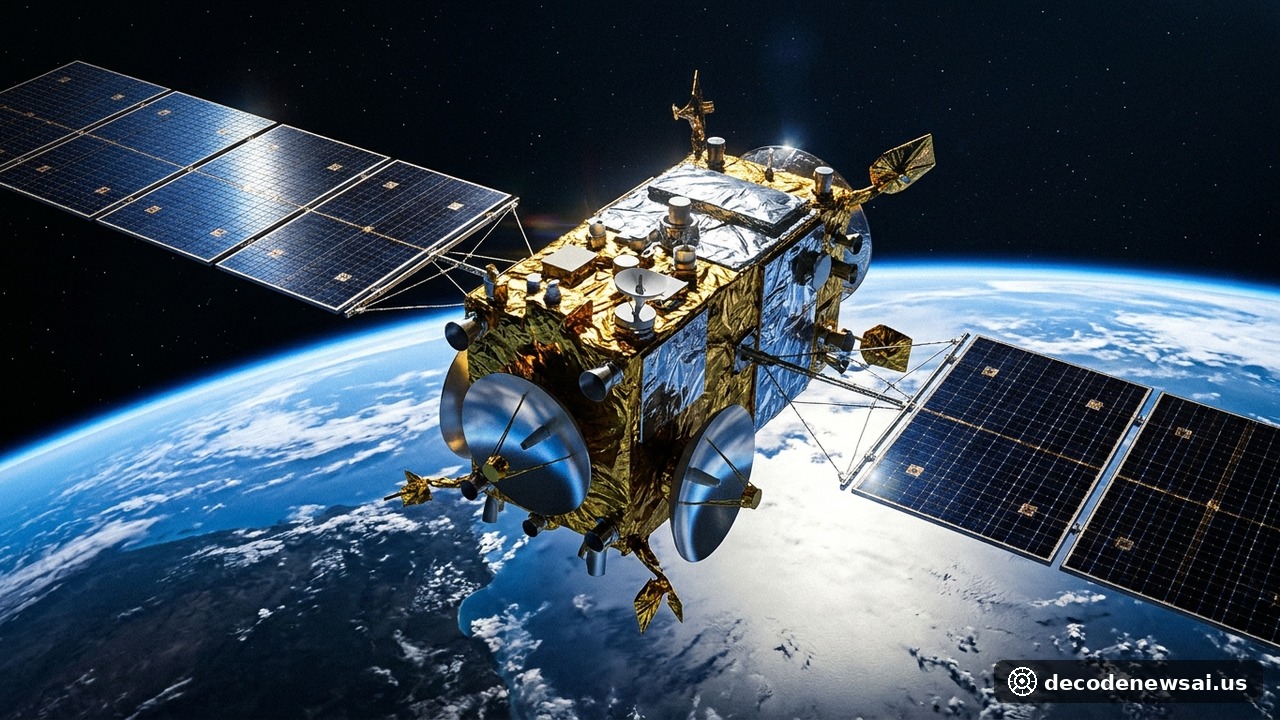
Aerospace engineering analysts emphasized that Astranis' proprietary micro-GEO satellite platform achieves substantial cost efficiencies by utilizing serialized manufacturing lines and commercially available radiation-tolerant electronic components. Rather than customizing monolithic spacecraft for decades of operational longevity, modular micro-satellites can be launched in clusters aboard commercial rideshare missions, allowing NASA to replenish orbital data relay nodes on rapid multi-year replenishment cycles.
From an operational standpoint, the NEXUS initiative will integrate advanced digital beamforming technology that allows single satellites to simultaneously track multiple low Earth orbit science platforms, lunar transit vehicles, and commercial orbital laboratories. This multi-access capability ensures seamless, uninterrupted communications bandwidth for real-time robotic operations and scientific telemetry transmission without requiring costly ground tracking dish expansions.
What Are the Broader Industry Ramifications for Commercial Deep Space Logistics?
NASA's decision to entrust core data relay infrastructure to a venture-backed commercial satellite operator underscores the maturation of public-private partnerships in civil aerospace.
As NASA prepares for long-duration Artemis lunar missions and commercial habitats prepare to replace the International Space Station, government agencies are transitioning away from capital-intensive custom hardware toward reliable commercially managed services. With multiple spacecraft already operating in orbit and an active commercial backlog exceeding $1 billion, Astranis has demonstrated the technical viability of serialized micro-GEO production. The NEXUS contract solidifies commercial satellite networks as an indispensable cornerstone of international orbital logistics, paving the way for scalable communications spanning Earth orbit, cislunar space, and deep space exploration.