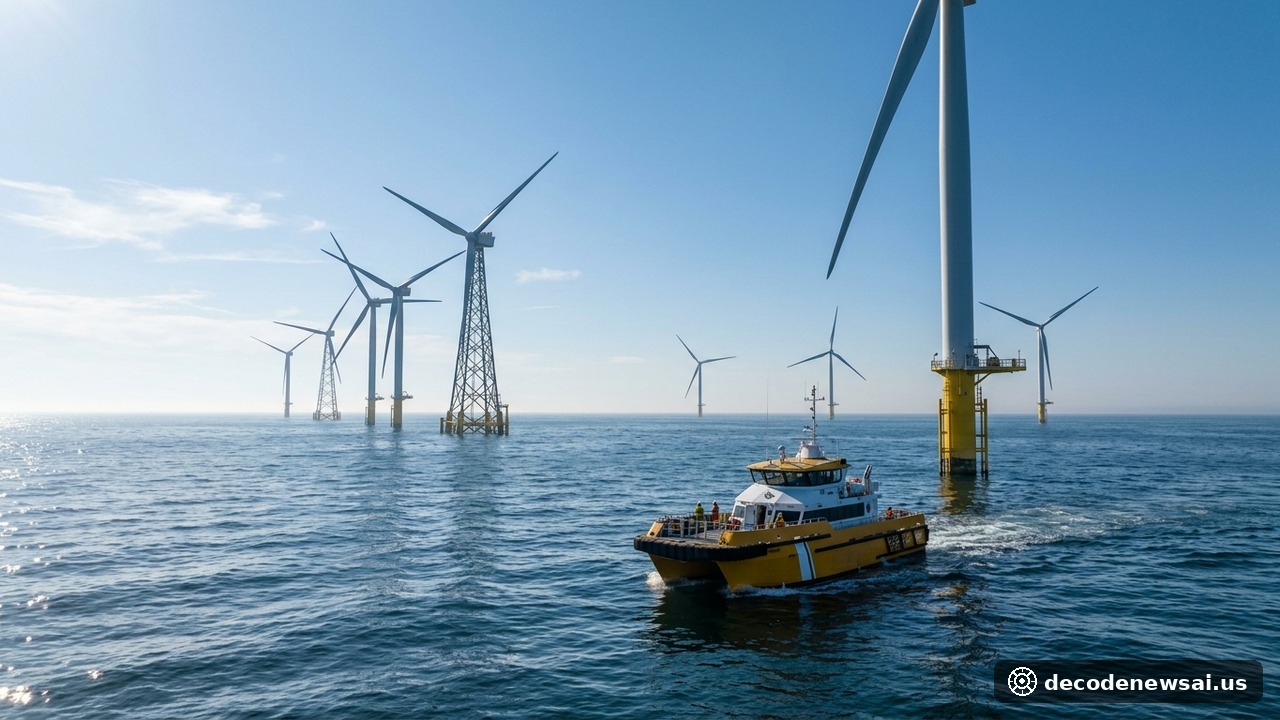
Global offshore wind developer Ørsted A/S, in commercial partnership with Skyborn Renewables, officially announced on November 5, 2026, that the 704-megawatt (MW) Revolution Wind offshore energy project, situated approximately 15 miles south of the Rhode Island coastline, has successfully achieved full commercial operation across its entire turbine array. Standing as the largest operational offshore wind energy development in New England history, the massive offshore facility comprises 65 offshore wind turbines delivering utility-scale green electricity directly into the electric transmission grids of Connecticut and Rhode Island via high-voltage subsea cables, generating power sufficient to supply over 350,000 residential homes annually and establishing a monumental operational triumph for American offshore clean energy.
What Are the Quantifiable Upstream Metrics and Grid Specifications of Revolution Wind?
- Statutory Term of Utility Power Purchase Agreements: 20-Year Fixed-Price Long-Term PPA Contracts
The successful commercial commissioning elevates Ørsted's worldwide operational offshore wind portfolio past 11.8 gigawatts, following closely behind the complete commissioning of Germany's 913-MW Borkum Riffgrund 3 complex.
How Did Developers Navigate Five Years of Legal Challenges and Inflationary Headwinds?
The path to full commercial energization required overcoming acute macroeconomic and legal resistance that stalled competing American offshore ventures.
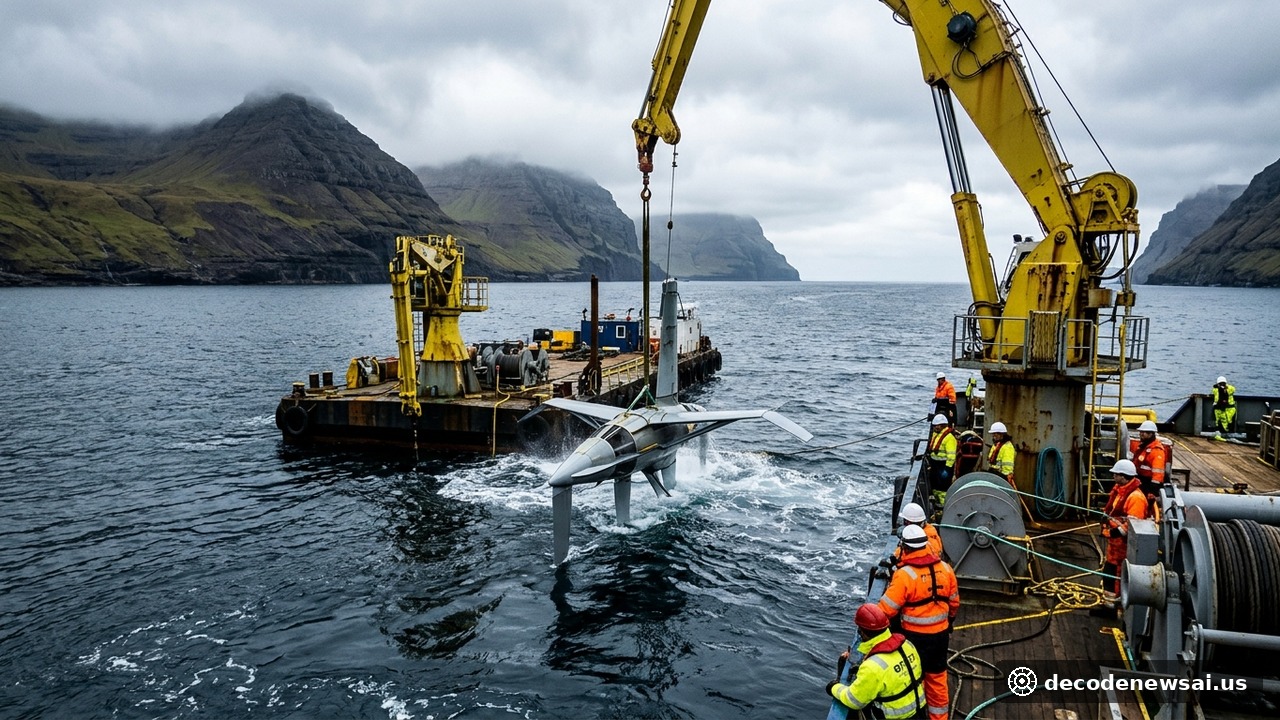
Throughout the multi-year marine staging campaign, anti-wind litigation consortiums led by groups such as Green Oceans filed repeated administrative lawsuits in the U.S. District Court for the District of Columbia, challenging federal environmental authorizations granted by the Bureau of Ocean Energy Management (BOEM). However, Senior U.S. District Judge Royce C. Lamberth twice reprieved the offshore project, rejecting preliminary injunction motions and ruling that environmental reviews satisfied statutory standards. Concurrently, Ørsted utilized the revamped State Pier terminal in New London, Connecticut, as a specialized heavy-lift marshaling hub, containing localized logistics bottlenecks and proving that domestic staging infrastructure can support mega-scale offshore assembly.
Environmental engineering specialists observed that Revolution Wind incorporates advanced acoustic mitigation technologies designed to protect marine mammals during offshore foundation installation. The project utilized dual bubble curtains and hydro-sound dampers to minimize underwater sound propagation during pile driving, satisfying stringent federal environmental monitoring protocols. Continuous aerial and acoustic surveillance confirmed zero adverse interactions with endangered North Atlantic right whales throughout the multi-month offshore construction campaign.
Furthermore, the operational success of Revolution Wind demonstrates the economic feasibility of regional offshore wind cluster strategies. By co-locating maintenance operations with nearby offshore developments, Ørsted achieves operational synergies across crew transfer vessels, specialized service operation vessels, and subsea inspection robotics, reducing levelized lifecycle operations and maintenance costs across its New England offshore portfolio.
What Long-Term Structural Signals Does Revolution Wind Establish for the U.S. Energy Transition?
The full commercial activation of Revolution Wind delivers a definitive vote of institutional confidence to an American offshore wind industry recently unsettled by inflationary supply chain spikes and post-election political uncertainties.
As federal lawmakers in Washington debate clean energy tax provisions following the 2026 midterm realignment, the successful execution of a 704-MW utility asset demonstrates that mature offshore infrastructure delivers tangible reliability and price stability to regional consumers. By locking in fixed-price wholesale clean electricity across multi-decade utility off-take agreements, Revolution Wind cements New England's regional decarbonization trajectory while proving that disciplined engineering and resilient capital structures can successfully deliver world-class infrastructure within federal waters.