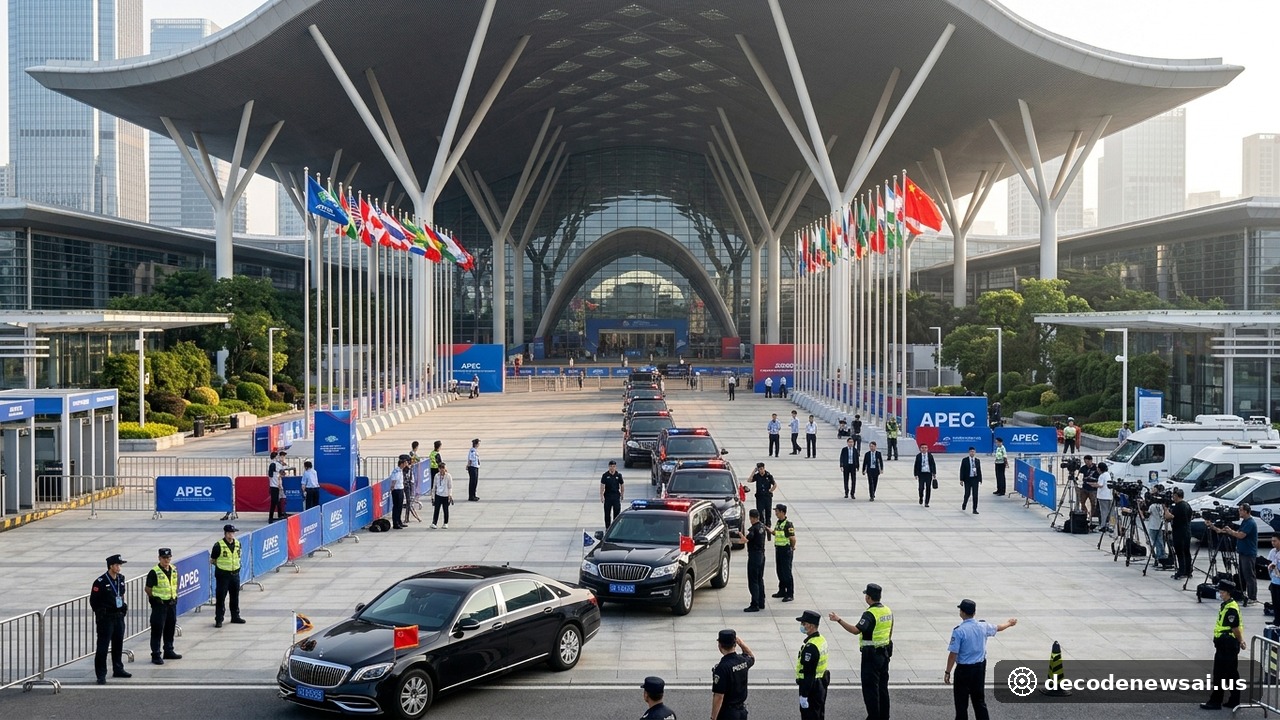
Mexican President Claudia Sheinbaum formally delivered an official notification to the Senate of the Republic on November 10, 2026, outlining her scheduled diplomatic mission to the People's Republic of China. The state visit will center on her participation in the 2026 Asia-Pacific Economic Cooperation (APEC) Economic Leaders' Meeting in Shenzhen from November 15 to 20, where she is scheduled to hold formal bilateral trade discussions with Chinese leadership. Notifying Federal Senate of Formal Mission to Shenzhen APEC Summit and High-Level Talks The official notification submitted to the Mexican Senate outlines the federal executive branch's comprehensive agenda aimed at strengthening trans-Pacific economic ties. The visit marks Sheinbaum's first official journey to East Asia since assuming the presidency.
Ten Industrial Parks Along Isthmus of Tehuantepec Corridor
According to the official dispatch, the presidential delegation includes Foreign Secretary, Economy Secretary Marcelo Ebrard, and heads of environmental and technological portfolios. At the APEC CEO Summit, President Sheinbaum will deliver a keynote address detailing foreign direct investment opportunities within Mexico's burgeoning Interoceanic Corridor. High-level bilateral discussions will emphasize advanced clean energy infrastructure, electric vehicle manufacturing partnerships, and reciprocal investment security protocols.
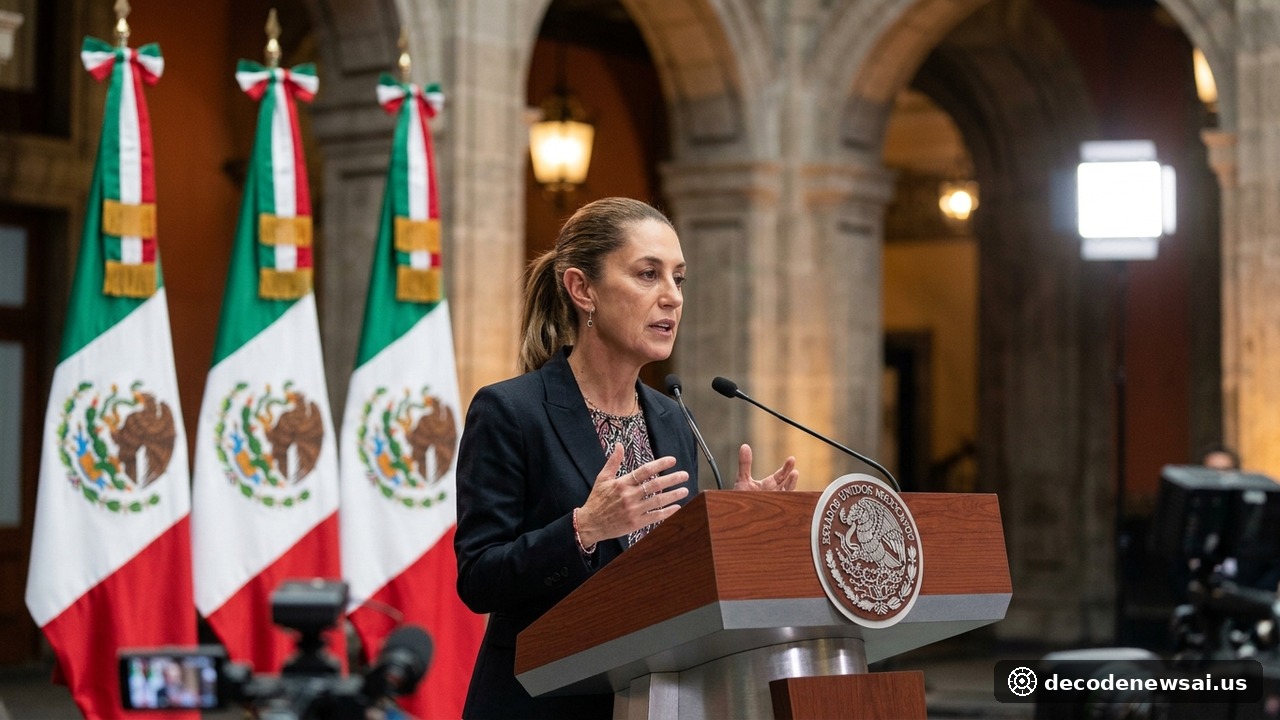
President Claudia Sheinbaum stated during a press conference at the National Palace in Mexico City: "Our planned attendance at the Asia-Pacific Economic Cooperation Leaders' Summit and bilateral meetings with Chinese leadership reflect Mexico's sovereign commitment to expanding high-value global trade partnerships. We are dedicated to forging equitable industrial cooperation that delivers tangible prosperity to our domestic workforce." Presenting Ten Industrial Parks Along Isthmus of Tehuantepec Interoceanic Corridor To convert diplomatic engagement into tangible industrial capital inflows, the Ministry of Economy has prepared extensive technical dossiers showcasing ten strategic development poles along the Isthmus of Tehuantepec.
The multi-billion-dollar transit corridor connects the Pacific port of Salina Cruz with Coatzacoalcos on the Gulf of Mexico, providing a modernized overland alternative to global maritime choke points. The federal government offers significant corporate tax incentives for enterprises establishing manufacturing facilities in advanced semiconductors, automotive batteries, and medical technology. Economy Secretary Ebrard will meet with senior Asian logistics operators to negotiate dedicated container shipping loops connecting Pacific terminals with regional industrial clusters.
Ebrard Balances Asia Outreach with USMCA Commitments
Mexican Economy Secretary Marcelo Ebrard stated during a media briefing: "Asia represents the epicenter of global advanced manufacturing and supply chain innovation. By establishing predictable, compliant investment structures, Mexico offers a premier North American gateway for high-tech capital." Balancing Multilateral Trade Alliances While Maintaining Compliance with USMCA Commitments While accelerating commercial outreach across Asia, the Mexican administration emphasized its steadfast adherence to commitments under the United States-Mexico-Canada Agreement (USMCA).
The federal government reaffirmed that expanded trade cooperation with Asia-Pacific partners will rigorously adhere to established rules of origin and stringent environmental standards. By strategically diversifying export destinations and attracting diversified industrial capital, Mexico aims to buffer its macroeconomic fundamentals against external tariff volatility while generating thousands of skilled domestic engineering jobs.
A senior geopolitical trade analyst at a Latin American economic think tank noted in Mexico City: "President Sheinbaum's mission to Shenzhen demonstrates a pragmatic foreign economic policy that balances regional continental obligations with broader trans-Pacific integration. Constructive commercial dialogue reinforces institutional stability across global supply corridors."
Analysts Note Predictable Frameworks and 2027 Milestones
Strategic planning advisors and international trade specialists noted that long-term intergovernmental frameworks generate predictable operating environments across key industry sectors. By coupling transparent administrative guidelines with rigorous scientific benchmarks, regulatory bodies and enterprise leaders establish sustainable operating models capable of withstanding shifting macroeconomic dynamics. Global market participants will continue observing forthcoming implementation milestones as public agencies execute their mandated responsibilities throughout 2027. Cross-border coordination remains vital for driving sustained operational resilience and delivering measurable societal benefits worldwide.
Strategic planning advisors and international trade specialists noted that long-term intergovernmental frameworks generate predictable operating environments across key industry sectors. By coupling transparent administrative guidelines with rigorous scientific benchmarks, regulatory bodies and enterprise leaders establish sustainable operating models capable of withstanding shifting macroeconomic dynamics. Global market participants will continue observing forthcoming implementation milestones as public agencies execute their mandated responsibilities throughout 2027. Cross-border coordination remains vital for driving sustained operational resilience and delivering measurable societal benefits worldwide.