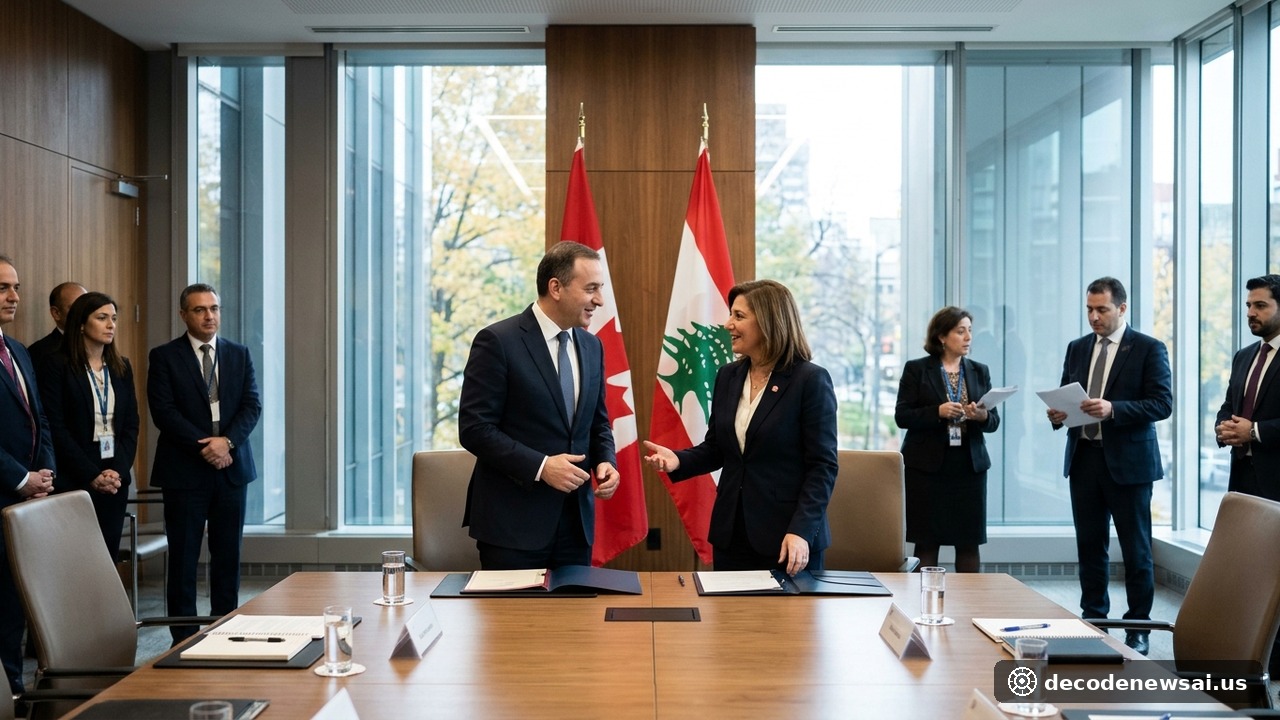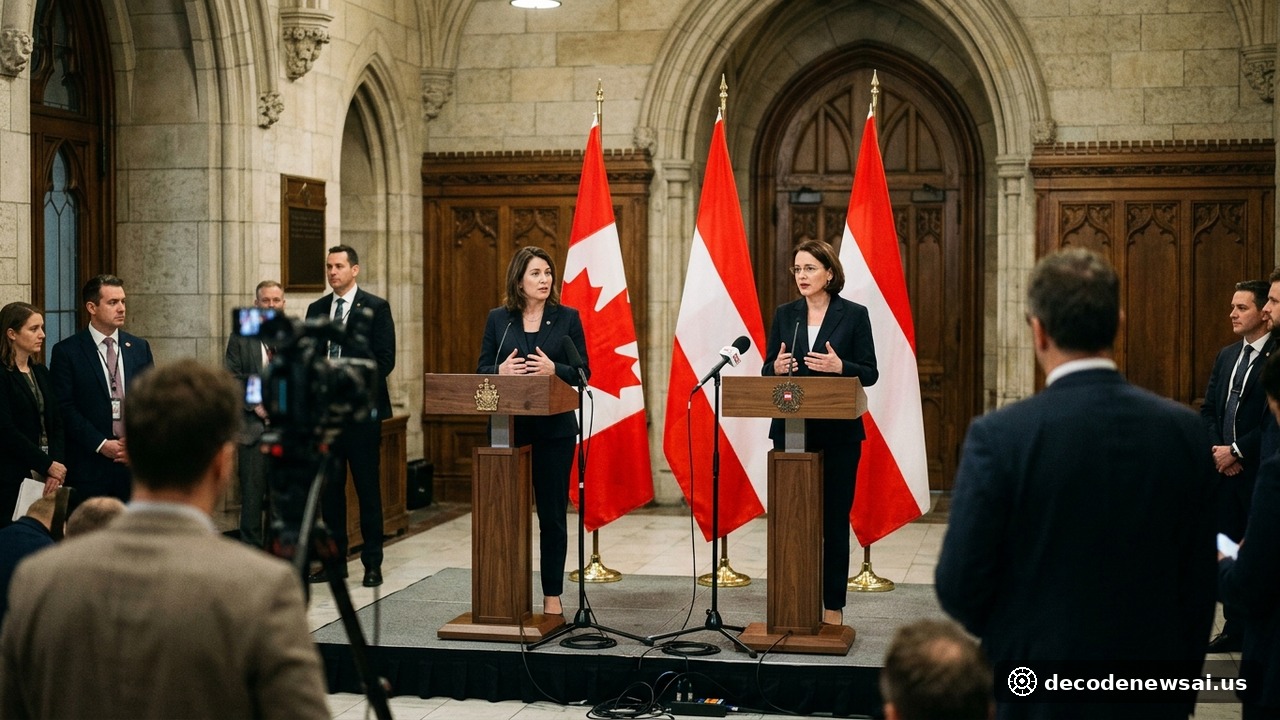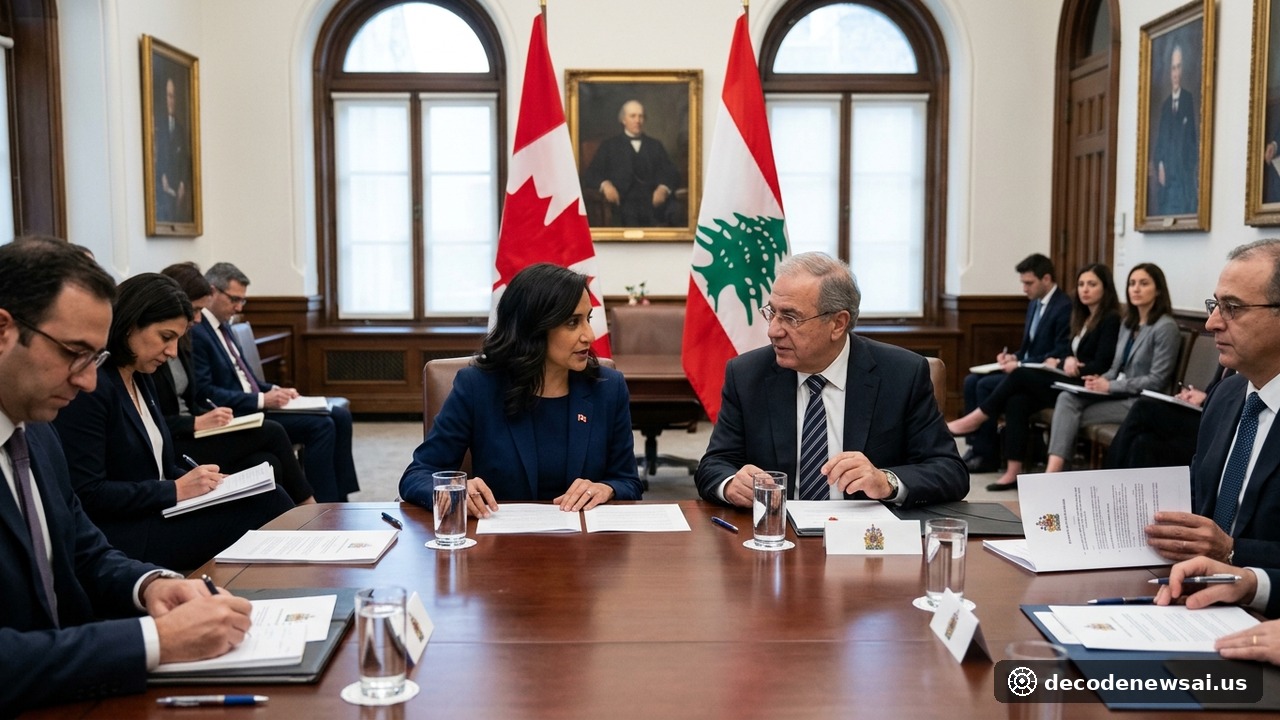
The Honourable Anita Anand, Minister of Foreign Affairs of Canada, officially hosted His Excellency Youssef Raggi, Minister of Foreign Affairs and Emigrants of the Republic of Lebanon, in Ottawa on November 6, 2026, for comprehensive bilateral deliberations. Following extensive deliberations between senior defense and foreign policy officials, the ministers issued a landmark joint ministerial declaration officially launching the "Canada-Lebanon Partnership for Security and Resilience." The framework broadens Canada's sovereign support for the Lebanese Armed Forces (LAF) through operational capacity-building and non-lethal equipment transfers, reinforces Lebanese state institution governance reforms, and formalizes ongoing high-level diplomatic consultative channels to advance conflict de-escalation across the Middle East.
What Are the Core Diplomatic Milestones and Security Parameters in the Canada-Lebanon Accord?
- Official Bilateral Strategic Framework Established in Ottawa: "Canada-Lebanon Partnership for Security and Resilience"
- Cumulative Canadian Humanitarian and Security Assistance to Lebanon: Over $485 Million CAD Committed Since 2016 Fiscal Year
- Primary Defense Institution Targeted for Modernization Support: Lebanese Armed Forces (LAF) Border Security & Counter-Terror
- Bilateral Oversight Mechanism Established Under Agreement: Joint Ministerial and Senior Official Crisis Contact Group
Addressing members of the diplomatic press corps following the bilateral discussions, Minister Anand emphasized the generational bonds uniting both nations: "Canada is home to a proud and vibrant Lebanese diaspora whose contributions enrich Canadian civic life across every province. At a moment of acute geopolitical tension across the Middle East, a sovereign, stable, and resilient Lebanon is indispensable for regional security and international stability. Canada stands resolutely alongside the people of Lebanon. Through the Canada-Lebanon Partnership for Security and Resilience, we are institutionalizing direct assistance to the Lebanese Armed Forces—the foundational pillar of national integrity—strengthening border governance and supporting systemic reforms to build an enduring democratic foundation." Minister Raggi welcomed the expanded partnership, affirming that sustained international engagement is vital for safeguarding national stability.
How Does the Partnership Reshape Canada's Strategic Posture in the Middle East?
Historically, Canadian engagement across the Levant focused predominantly on humanitarian aid disbursements, displaced civilian resettlement, and civil society capacity programs, with bilateral security cooperation conducted on an ad hoc basis.
The formalization of the Partnership for Security and Resilience signifies an operational transition toward systemic security sector stabilization. The accord designates the Lebanese Armed Forces as the sole legitimate security guarantor of the Lebanese state, directing Canadian technical assistance toward field medical trauma units, tactical telecommunications interoperability, counter-IED screening gear, and professionalized peacekeeping curricula. Simultaneously, the framework establishes bilateral advisory pipelines to assist Lebanese public administration and financial regulators in executing transparency and anti-corruption benchmarks required to finalize structural financing arrangements with the International Monetary Fund (IMF).
Diplomatic observers in Ottawa noted that the security partnership incorporates comprehensive civil society oversight mechanisms designed to ensure transparency in international assistance allocation. By channeling resources directly through verified institutional oversight channels rather than partisan bureaucratic agencies, Canada seeks to bolster institutional accountability while delivering tangible humanitarian relief to vulnerable civilian populations.
Furthermore, defense cooperation officials highlighted that Canadian Armed Forces specialists will expand specialized counter-illicit trafficking training for Lebanese customs authorities, enhancing maritime surveillance along eastern Mediterranean littoral corridors.
What Long-Term Ramifications Does Lebanese Stability Hold for Regional Security Architecture?
The high-level ministerial convening in Ottawa provides a critical diplomatic anchor demonstrating how Western middle powers can proactively stabilize vulnerable transit hubs amid escalating regional confrontations.
Protracted domestic political gridlock and economic turbulence have long threatened to render Lebanon an arena for proxy confrontation. By formalizing direct institutional security ties with Beirut, Canada bridges diplomatic coordination between G7 partners and Arab League stakeholders, demonstrating an alternative stabilization blueprint rooted in national defense capacity and institutional resilience. As recurring senior-level working group meetings commence in early 2027, the bilateral architecture provides vital international scaffolding that bolsters Lebanese state sovereignty, curtails the influence of non-state actors, and establishes a durable foundation for long-term regional stability.