- Primary Indicted Defendants: All-Star closer Emmanuel Clase and pitcher Luis Ortiz;Charged with conspiracy to influence sporting contests via bribery
- Adjudicating Federal Forum: U.S. District Court for the Eastern District of New York
- Documentary Evidence: Encrypted messages citing coded "chicken" directives
Prosecutors cite 150 micro-bets and $95,000 profit
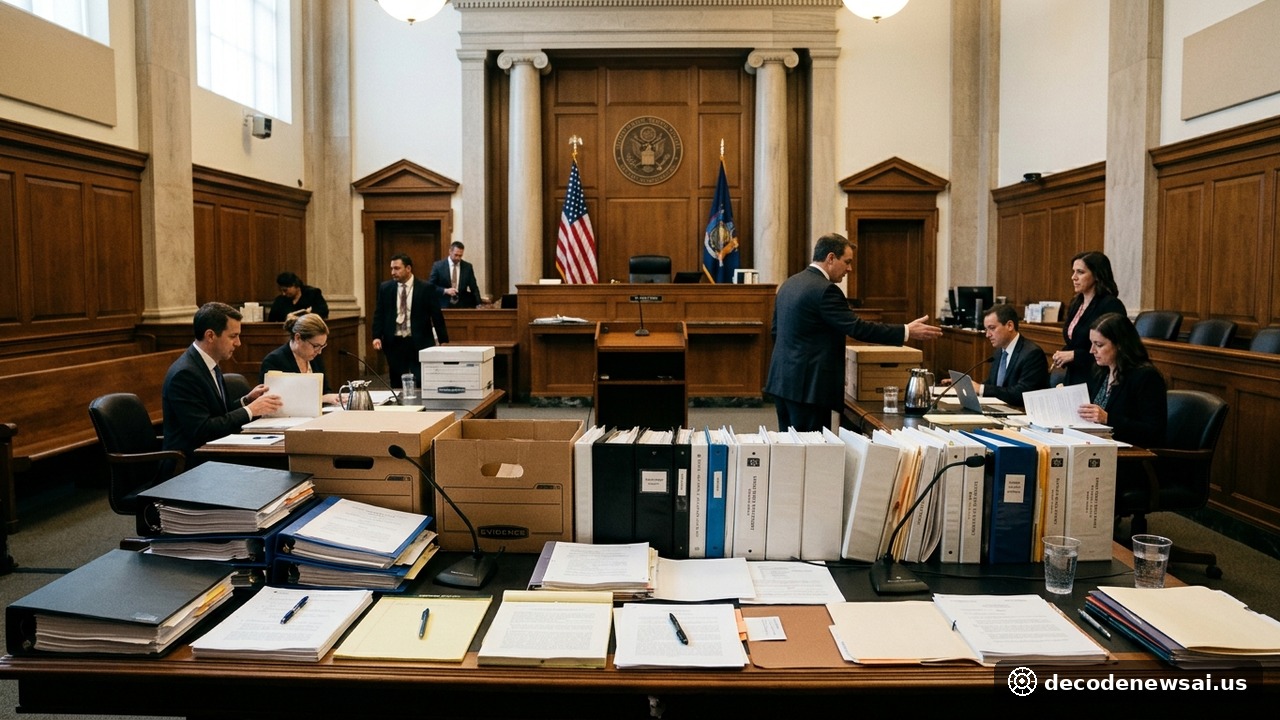
A federal criminal fraud trial commenced in the United States District Court for the Eastern District of New York in Brooklyn against Cleveland Guardians All-Star relief pitcher Emmanuel Clase and teammate Luis Ortiz. Federal prosecutors formally accused the Major League Baseball (MLB) pitchers of participating in an extensive criminal conspiracy to influence professional sporting contests by accepting bribes from an underground sports gambling syndicate to manipulate individual pitch velocities and ball-strike outcomes during regular season games.
During opening arguments before a federal jury, the assistant United States attorney characterized the professional athletes as cheaters who compromised the integrity of America’s national pastime for personal enrichment. According to prosecutors and unsealed trial filings, a central bettor identified in court proceedings placed more than 7,000 discrete sports wagers totaling at least $725,000 across digital sportsbooks and private bookmakers. In aggregate, conspirators utilizing non-public pitch data provided by the players accumulated at least $450,000 in net illicit gambling windfalls.
Trial testimony and forensic financial exhibits detailed an astonishing statistical correlation between Clase’s appearances and specific in-game proposition wagers. An associate tied to Clase placed more than 150 distinct micro-bets specifically wagering on the exact velocity of individual fastballs and cutters thrown by the reliever. The gambling ring prevailed on 98 of those 150 wagers—a 64.9% success rate that vastly exceeds standard probabilistic sports betting baselines—generating roughly $95,000 in direct profit on those specific pitches alone.
Encrypted Chicken Number 3 messages and defense rebuttal
Federal prosecutors introduced damaging digital communications recovered from seized mobile devices. In an encrypted exchange dated February 2026, Clase communicated with an associate using coded language referring to "Chicken Number 3." The message stated: "After I kill the first 2, play the 3. And if I can't kill it, don't play it. I have to kill the first 2." Prosecutors demonstrated to the jury that the phrasing represented operational code directing the bettor to place heavy wagers on a deliberate velocity reduction on the third pitch after throwing standard maximum-effort strikes on the first two pitches.
Defense attorneys vehemently contested the government's narrative, contending that the private communications referred innocently to Dominican cockfighting traditions rather than fraudulent pitch-fixing schemes, while simultaneously attacking the credibility of cooperating witnesses. Major League Baseball has placed both pitchers on indefinite administrative leave pending judicial resolution. Legal analysts emphasized that the high-profile prosecution signals aggressive federal enforcement against inside-information leakage within the rapidly expanding legal sports wagering ecosystem.
Sports law scholars and gaming regulatory analysts noted that the high-profile federal prosecution in Brooklyn signals an aggressive cross-agency crackdown against corruption in professional sports. As micro-betting markets proliferate across digital sportsbook applications, the temptation for professional athletes to monetize proprietary pitching metrics has intensified. The federal trial demonstrates that law enforcement agencies and sports league integrity monitoring units are deploying sophisticated forensic data analytics to identify anomalous pitching patterns, establishing that participants who exploit non-public operational data will face severe federal felony consequences.