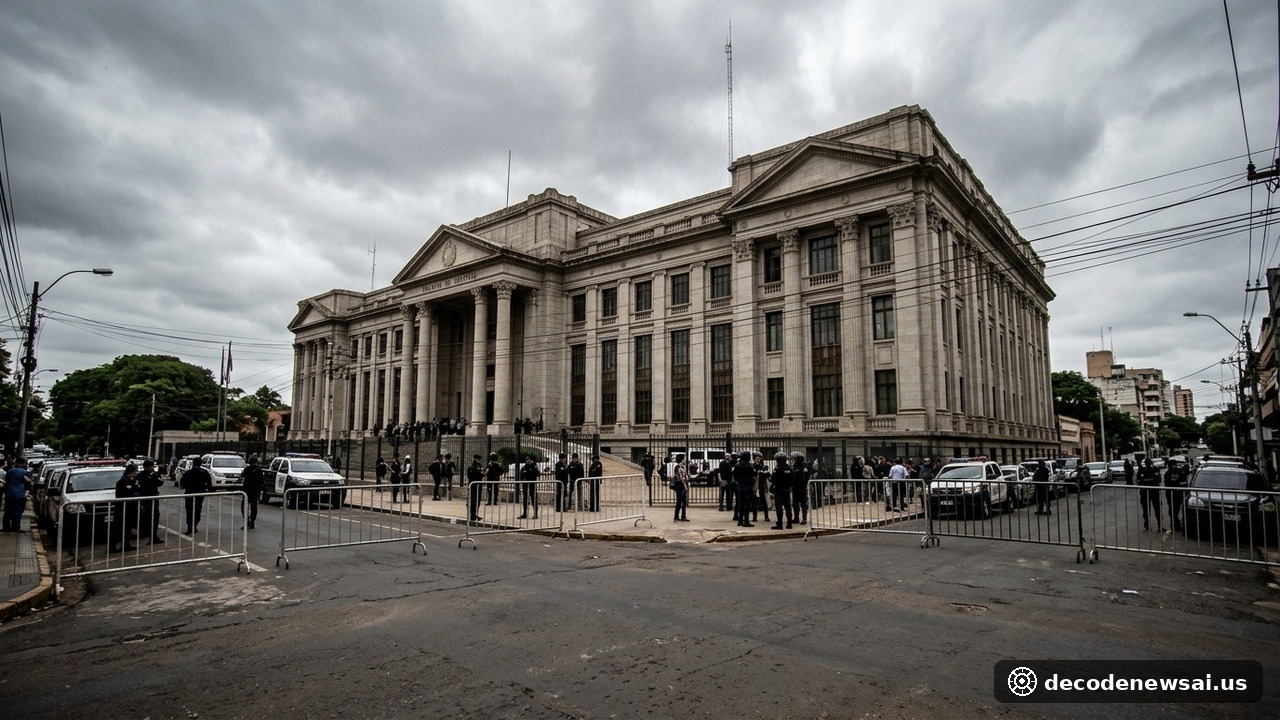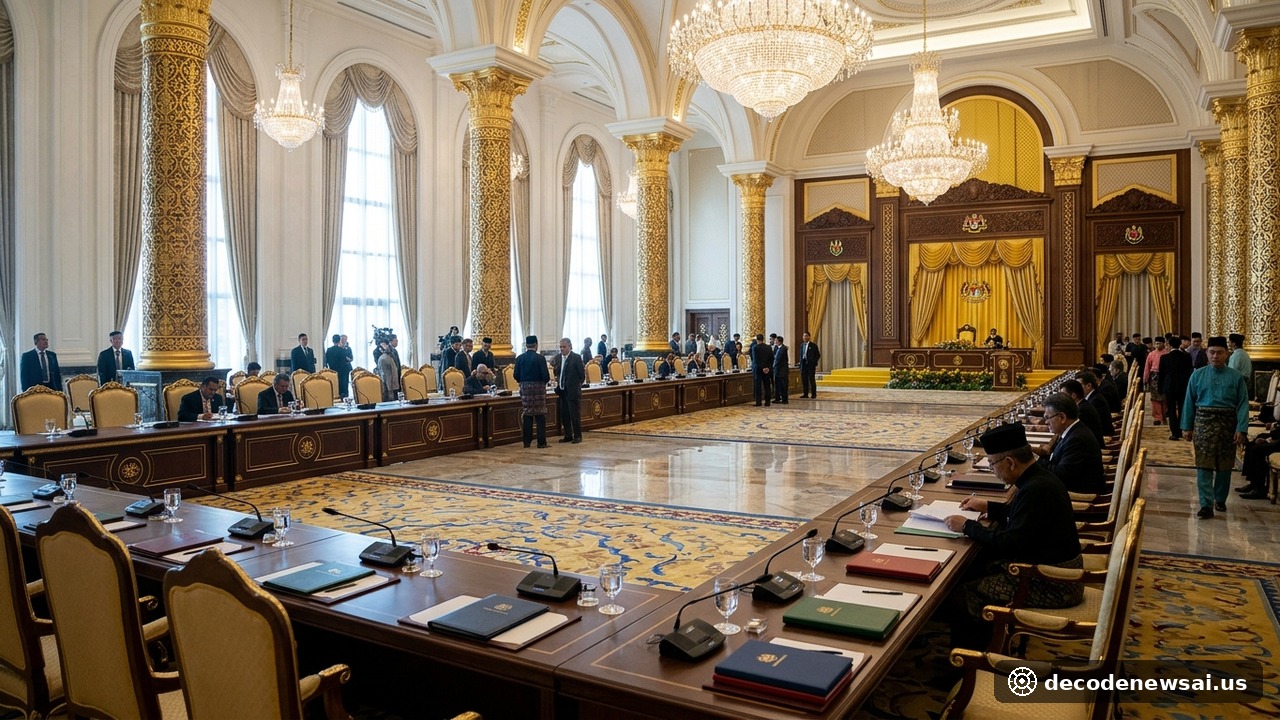
Malaysia's monarch Sultan Ibrahim issued an extraordinary public rebuke against Attorney-General Tan Sri Mohd Dusuki Mokhtar on November 7, 2026, condemning the legal office for delaying the implementation of a royal conditional pardon that granted former Prime Minister Najib Razak house arrest. The monarch declared that the Attorney-General's Chambers was challenging royal constitutional prerogatives after prosecutors halted Najib's transfer from Kajang Prison, despite his legal defense team paying the full 50 million ringgit outstanding criminal fine at the Kuala Lumpur High Court. Prime Minister Anwar Ibrahim immediately intervened, directing the chief prosecutor to seek an emergency royal audience.
Key Timeline and Operational Parameters of the Royal Pardon Dispute
- Remaining Commuted Sentence End Date: August 23, 2028 (halved under executive commutation)
- Total Misappropriated 1MDB Capital Under Scrutiny: Over $4.5 billion across sovereign financial conduits
- Statutory Quorum of Pardons Board Review: 5 statutory members presided over by the King
Why Did the Malaysian Monarch Publicly Denounce the Attorney-General?
The official communique delivered from Istana Negara on Saturday morning adopted unprecedentedly sharp diplomatic language, asserting that Sultan Ibrahim's determinations during the Federal Territories Pardons Board meetings carry unquestionable constitutional finality. The royal court stressed that the Attorney-General's Chambers possesses no legal standing to impose retroactive conditions or administrative bottlenecks on royal decrees. Under Article 42 of the Federal Constitution of Malaysia, the ruling monarch retains exclusive, unchallengeable authority to pardon, reprieve, or commute criminal sentences, rendering prosecutorial defiance an existential challenge to the country's sovereign structure.
What Core Jurisprudential Risks Are Cited by the Prosecution?
In a rapidly convened press conference on Saturday afternoon, the Attorney-General's Chambers defended its intervention, insisting that Dusuki was upholding systemic procedural integrity rather than defying royal sovereignty. Senior prosecutors highlighted that Najib remains on trial in three separate ongoing 1MDB criminal proceedings, encompassing 25 distinct charges of abuse of power and grand corruption involving 2.28 billion ringgit. The prosecution argued that transitioning a criminal defendant of high institutional stature into residential confinement creates significant complications regarding witness protection, courtroom transport logistics, and potential judicial interference.
Furthermore, the legal memorandum compiled by the Attorney-General argued that existing statutes under the Prison Act 1995 lack formal, codified standard operating procedures governing high-security residential detention for convicted political figures. The government's legal team asserted that without clear statutory guardrails defining electronic monitoring protocols and visitor access boundaries, executing the royal addendum prematurely could prejudice the integrity of the state's active trials. The Attorney-General urged patience while seeking an official audience with Sultan Ibrahim to clarify how the royal commutation interacts with pending statutory litigation.
How Does the Constitutional Clash Threaten Anwar Ibrahim's Governing Coalition?
The escalating crisis has placed Prime Minister Anwar Ibrahim in a precarious political bind, threatening the cohesion of his governing alliance. The United Malays National Organisation (UMNO), the largest partner within Anwar's unity government, still considers Najib its patron and spiritual leader. Throughout Saturday, senior UMNO ministers held crisis meetings at party headquarters, fiercely demanding Dusuki's immediate resignation and threatening to re-evaluate their legislative backing of the administration if the royal pardon order is not executed without delay.
Attempting to diffuse the standoff, Prime Minister Anwar announced on Saturday evening that he had instructed the Attorney-General to seek an immediate royal audience to explain the state's legal position directly to Sultan Ibrahim. This constitutional showdown underscores the delicate friction between feudal monarchical prerogatives and formal statutory prosecution in Malaysia's parliamentary democracy, placing intense stress on national governance, judicial independence, and investor confidence.