Flight Operations Benchmarks and Technical Architecture for USSF-432
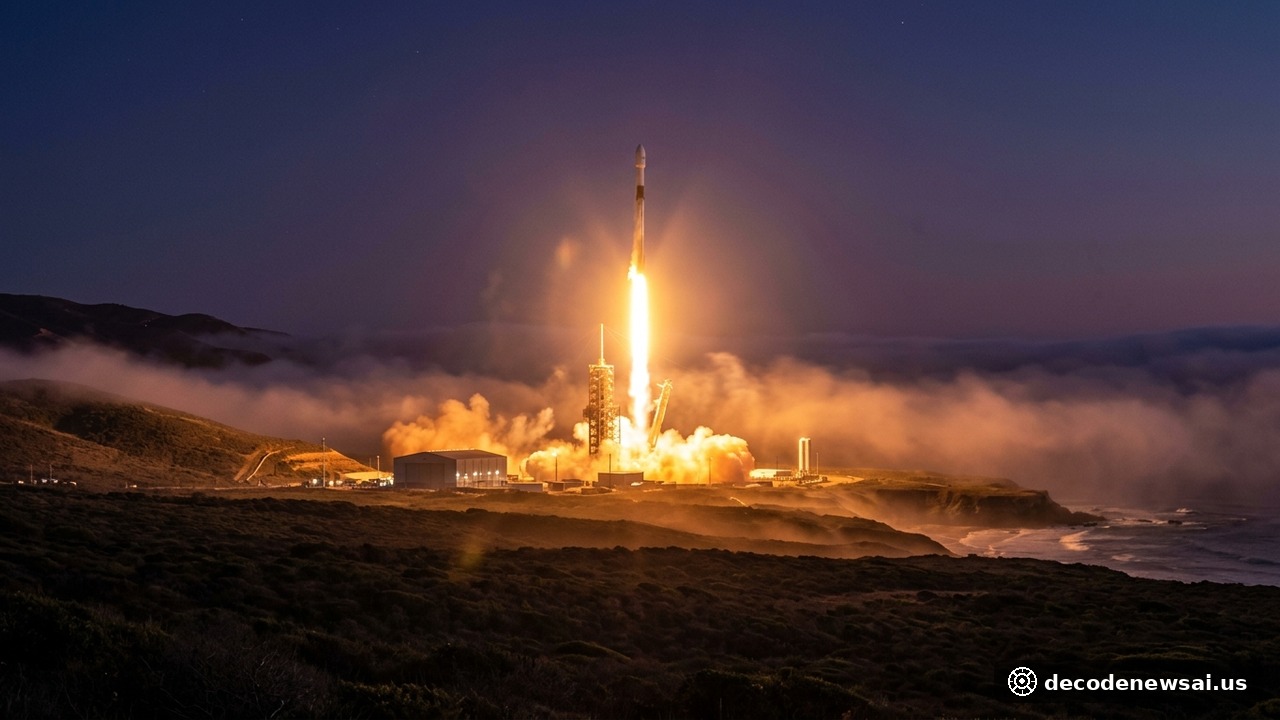
- Launch Service Provider & Launch Vehicle: SpaceX Falcon 9 (Full-Thrust Block 5)
- Launch Pad & Oceanic Recovery Platform: Vandenberg SLC-4E; Droneship OCISLY Landing
What Strategic Objectives Anchor the Classified USSF-432 Mission?
Classified under strict Department of Defense secrecy guidelines, mission operational specifics regarding payload mass, orbital inclination, and operational altitude remain undisclosed. Public webcast coverage terminated following second-stage separation, adhering to standard security protocols governing sensitive national security payloads.
Orbital trajectory modeling by independent aerospace analysts at NextSpaceflight indicates that the trajectory matches deployment profiles associated with military Starshield constellations. Defense experts infer that the payload supports the Space Force's Space Based Sensing and Targeting architecture, integrating synthetic aperture radar and space-based infrared sensors designed to provide continuous, all-weather tracking of naval movements and hypersonic strike systems across the Pacific theater.
How Does Airframe B1095 Exemplify Industrialized Rocket Reuse?
First-stage booster B1095 embodies the operational reliability of industrialized launch reusability. Prior to the USSF-432 national security profile, the booster successfully completed seven missions, including the deployment of the military GPS III-8 satellite alongside six high-volume Starlink commercial deployments.
Aerospace defense writers at Spaceflight Now emphasize that logging 119 Falcon 9 flights within a single calendar year cements an extraordinary launch cadence unmatched by global competitors.