Semiconductor manufacturer Advanced Micro Devices Inc. (NASDAQ: AMD) reported landmark operational performance on Sunday, confirming that third-quarter data center segment revenue reached an all-time record of $8.5 billion. The unit's top-line revenue expanded by 97% year-over-year, driven by voracious enterprise demand for high-performance EPYC server microprocessors and Instinct artificial intelligence accelerators. Furthermore, executive management issued a fourth-quarter revenue guidance midpoint of $17.0 billion, positioning AMD to surpass rival Intel Corporation in total quarterly commercial semiconductor revenue for the first time in corporate history.
EPYC and Instinct MI325X drive hyperscaler adoption
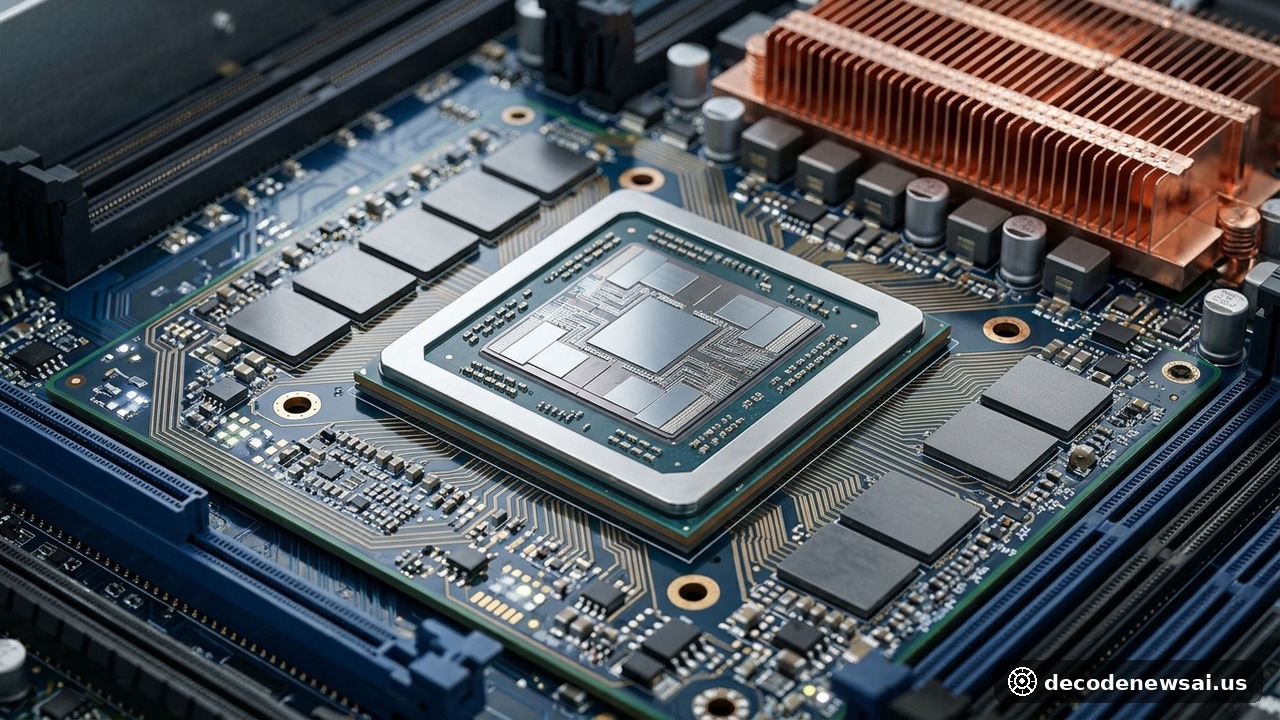
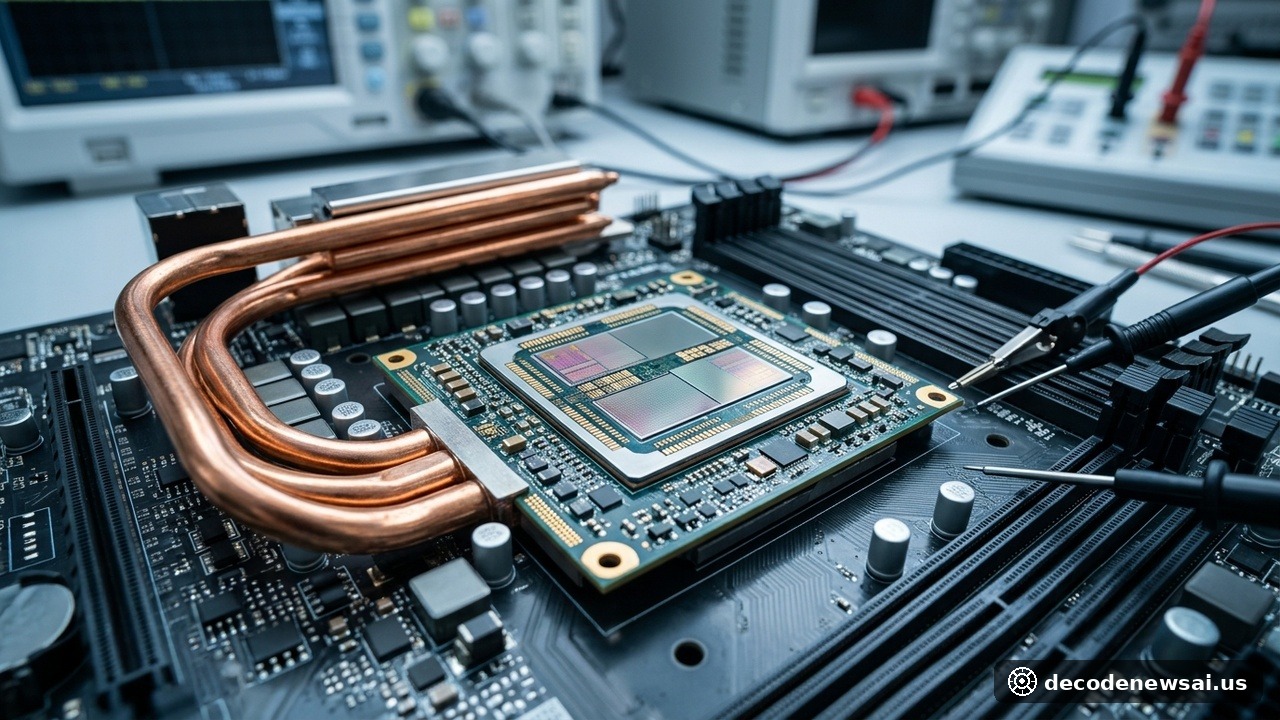
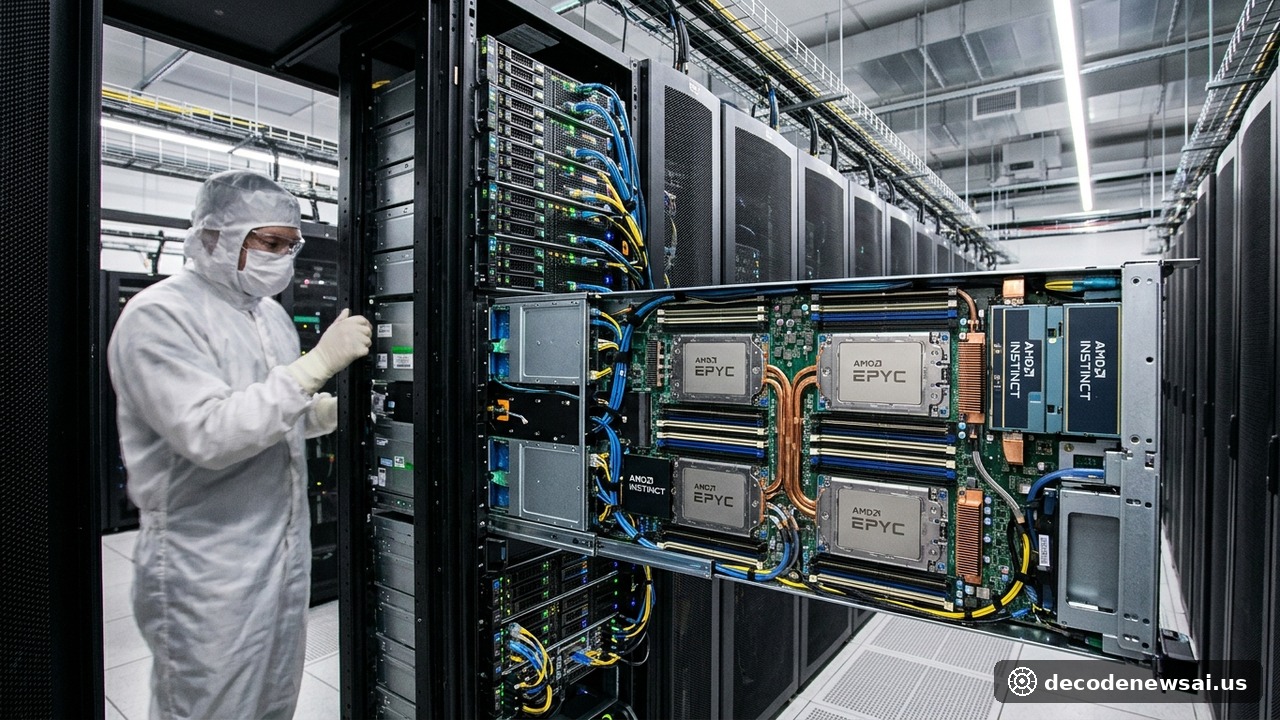
Data center operational momentum reflected broad adoption across hyperscale cloud infrastructure operators. Leading enterprise cloud platforms expanded capital expenditure commitments for AMD's fifth-generation EPYC server CPUs, codenamed Turin, which leverage advanced multi-chiplet packaging architectures. Hyperscalers increasingly deploy EPYC processors as primary server controllers to orchestrate dense GPU accelerated computing clusters, securing meaningful server CPU market share gains against legacy architectural alternatives.
In accelerated computing hardware, the Instinct MI325X GPU accelerator platform recorded accelerating order velocity across Tier-1 enterprise customers. Major commercial cloud providers, including Microsoft Azure and Oracle Cloud Infrastructure, scaled out commercial data center clusters powered by AMD's CDNA graphics accelerators. Financial leadership confirmed that aggregate annualized AI accelerator sales will comfortably eclipse $5.0 billion across fiscal 2026, substantially outperforming internal budget forecasts established at the beginning of the year.
AMD Chair and Chief Executive Officer Dr. Lisa Su articulated the company's long-term commercial focus during an official earnings conference: "Our structural transition toward a data-center-first architecture is delivering decisive market leadership. We are aggressively scaling our compute engines to satisfy global enterprise demand for high-efficiency AI infrastructure." Dr. Su reaffirmed an unyielding commitment to maintaining core client PC and gaming hardware operations.
AMD fourth-quarter guidance tops Intel by $2.2 billion
The operational trajectory contrasts sharply with ongoing restructuring pressures across Intel, which issued a fourth-quarter revenue guidance cap of $14.8 billion—trailing AMD's projected midpoint by more than $2.2 billion. Wall Street equity analysts at Bernstein and Tom's Hardware emphasized that structural server market shifts are cementing durable competitive advantages for AMD's fabless semiconductor manufacturing model.
Advanced packaging synergies with primary foundry partner Taiwan Semiconductor Manufacturing Company (TSMC) ensured stable 3-nanometer silicon allocations throughout the production ramp. The superior thermal performance and energy efficiency ratios of EPYC processors provide cloud data center operators with compelling total cost of ownership advantages amidst persistent electrical grid constraints. Engineering teams confirmed that qualification sampling for next-generation Zen 6 Venice server architectures remains fully on track for late 2027.
Semiconductor equity analysts at major Wall Street brokerage houses reiterated that AMD's disciplined multi-generation architectural execution has established a formidable structural moat in enterprise server silicon. Cloud hyperscalers are diversifying critical server infrastructure across dual chip architectures to prevent single-vendor dependency and mitigate supply chain bottlenecks, directly benefiting AMD's EPYC market expansion.
Instinct MI350 and chiplet designs sustain data center momentum
Corporate engineering leadership confirmed that next-generation Instinct MI350 series accelerators featuring advanced high-bandwidth memory (HBM3E) integration remain on track for commercial debut next year. Enhanced memory density and superior token throughput rates will optimize large language model inference workloads, reinforcing AMD's competitive positioning across global AI server clusters.
Semiconductor market researchers emphasized that AMD's sustained data center momentum validates the architectural competitiveness of its open-ecosystem chiplet designs and expansive ROCm software stack. Hyperscale cloud providers increasingly prioritize total cost of ownership, interconnect flexibility, and energy efficiency when designing next-generation computing clusters. By delivering leadership core density and superior floating-point performance per watt across both general-purpose server processors and dedicated accelerator silicon, AMD has successfully broken long-standing vendor lock-in across Tier-1 enterprise environments. Industry supply chain reports indicate that robust wafer allocations at leading foundries will ensure adequate capacity to meet surging server shipments throughout the coming fiscal year, further solidifying AMD's strategic market footprint.