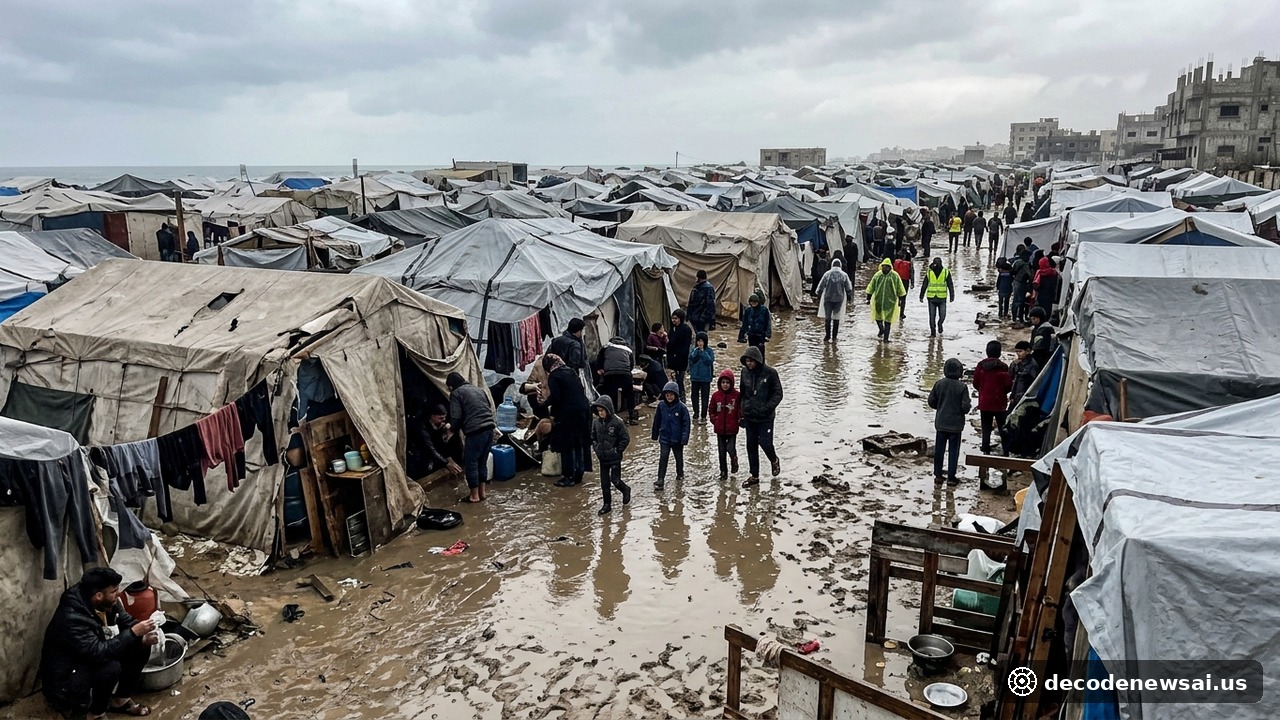
The initial winter storm of the season swept across the Gaza Strip on Sunday, causing catastrophic localized flooding across displaced civilian settlements. Torrential rainstorms flooded approximately 70,000 temporary humanitarian tents within a 12-hour window. Waterlogged encampments collapsed under torrential rains. More than 500,000 displaced children were left without dry shelter.
Save the Children and Gaza civil defense report 1,500 rescue calls
International humanitarian charity Save the Children released an urgent operational situation assessment from the territory. Heavy downpours transformed densely populated coastal sandy encampments into expansive stagnant pools of water. Improvised refugee settlements possess zero functional drainage or sewage runoff conduits. Effluent and muddy surface water inundated fragile canvas shelters. Humanitarian conditions deteriorated rapidly.
Municipal civil defense teams in Gaza confirmed receiving more than 1,500 emergency rescue calls within a 12-hour period. Humanitarian workers faced severe operational constraints due to chronic fuel shortages and damaged water evacuation pumps. Waterlogged residential masonry walls collapsed in several northern urban districts. Structural hazard risks multiplied across vulnerable camps.
Ahmad Nasser, country director for Save the Children in the Palestinian territory, issued a public declaration from Ramallah. Nasser declared to correspondents: "Winter downpours destroyed the fragile shelters of hundreds of thousands of civilians in hours, and restricting humanitarian shelter consignments creates an unmitigated humanitarian catastrophe." Relief agencies urged the immediate authorization of material supplies.
Displaced families labored through waist-deep mud trying to salvage damp bedding and infant clothing. Overnight ambient temperatures dropped below 10 degrees Celsius across the coastal Mediterranean corridor. Medical volunteers reported surges in acute pediatric respiratory infections and early hypothermia among poorly insulated infants. Field triage medical tents were inundated with pediatric patients. Critical medical supplies remain critically understocked.
The United Nations Relief and Works Agency reported ongoing efforts to distribute remaining inventories of reinforced tarpaulins. However, border crossing restrictions severely constrain incoming consignments of weatherized family tents and thermal blankets. Regional aid supply deficits exceed 70 percent of baseline civilian shelter requirements. Distribution pipelines face severe logistical hurdles.
Community food distribution kitchens in southern displacement hubs suspended meal preparation due to inundated fuel burners. Intermittent power outages compromised water purification equipment across multiple displacement centers. Epidemiologists warned of heightened outbreak risks for waterborne diarrheal illnesses and communicable skin conditions. Water treatment chemical tablets remain depleted. Public health risks escalated sharply.
Meteorologists project 48 hours of rain as donors meet in Geneva
Regional meteorological agencies projected that additional atmospheric low-pressure systems will deliver sustained precipitation over the coming 48 hours. Floodwaters across topographical depressions will rise further without heavy pumping equipment. Civilian coping mechanisms have been thoroughly exhausted. External humanitarian assistance corridors require immediate clearance.
International non-governmental funding consortia convened an emergency coordination meeting in Geneva to mobilize emergency relief allocations. Donor nations were urged to expedite humanitarian grant disbursements to replenish emergency stockpiles. Cross-border logistics convoys must receive unhindered administrative access. Multilateral diplomatic negotiations continued across regional capitals.
Local civil defense crews continue conducting rescue operations in inundated informal camps amidst ongoing rainfall. Civil society coalitions urged international diplomats to redouble mediation initiatives aimed at securing durable ceasefires. The worsening civilian plight attracts global humanitarian concern. Urgent emergency intervention remains paramount.
Agencies warn low fuel reserves worsen hypothermia and respiratory cases
International humanitarian agencies warned that fuel reserves required to operate emergency water pumping stations and wastewater treatment facilities remain dangerously low. Field hospitals operating in southern Gaza reported a sharp increase in cases of hypothermia and severe respiratory infections among infants exposed to persistent rainwater and freezing nighttime temperatures. Relief directors underscored that the total blockade on prefabricated shelter materials and waterproof canvas continues to exacerbate preventable human suffering. Civic coordinators called upon donor governments to immediately prioritize safe humanitarian corridors and unhindered logistical access before additional winter storms hit the besieged coastline.