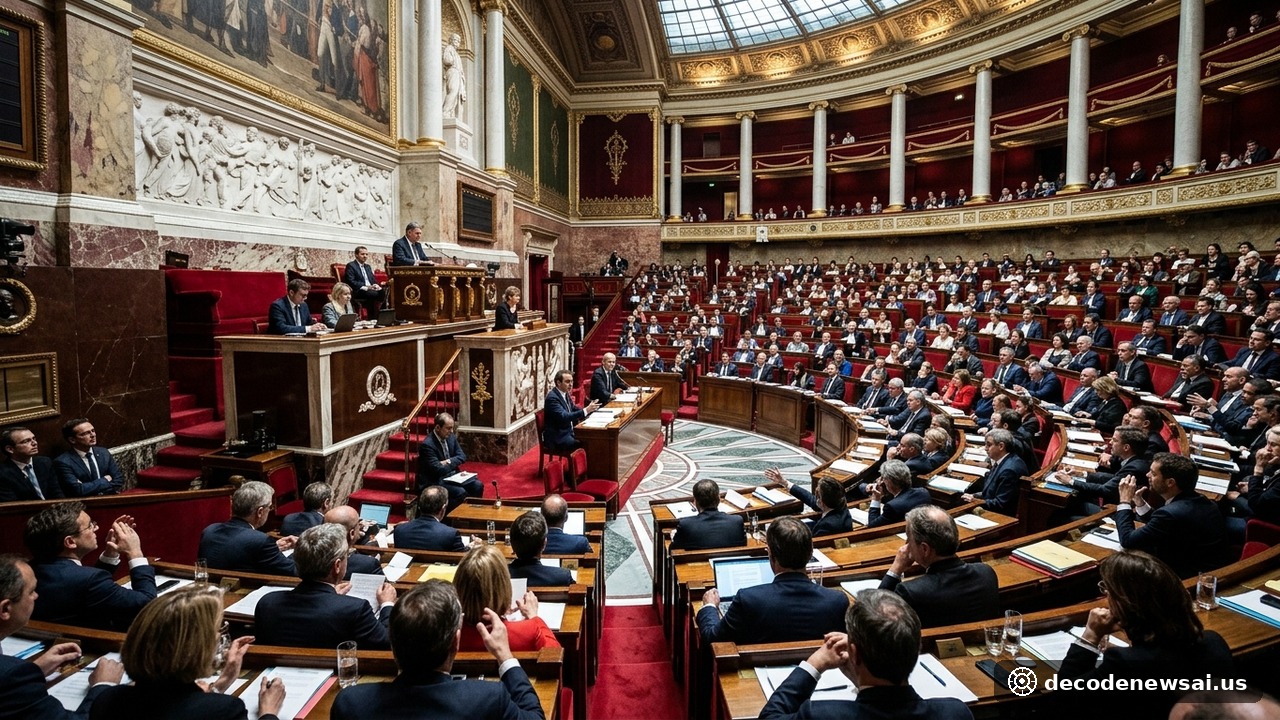
The French National Assembly engaged in contentious plenary debate on Sunday over the contentious 2026 state austerity budget. The comprehensive draft fiscal legislation proposes spending reductions totaling over 40 billion euros across public services. Prime Minister Sébastien Lecornu has led his fragile minority government for barely two months. Parliamentary factions remain deeply fractured. The governing administration faces immediate threats of legislative collapse.
Opposition Alliance and Lecornu Defend Fiscal Strategy
Opposition lawmakers from opposite ends of the political spectrum forged a tactical alliance inside the parliamentary chamber. The left-wing France Unbowed alliance and the right-wing National Rally united in opposition to fiscal retrenchment. Opposition floor leaders argued that sweeping social expenditure cuts would severely burden working-class families. Legislative business ground to an abrupt legislative stalemate. Parliamentary gridlock worsened steadily.
The proposed fiscal package introduces extensive expenditure cuts alongside selective corporate tax increases. The statutory draft proposes freezing public healthcare cost-of-living indexation adjustments throughout the upcoming calendar year. National pension benefit increases for retired workers will be curtailed significantly under the reform package. The finance ministry also proposed temporary windfall taxes on multinational energy operators. Public debate erupted nationwide.
Prime Minister Lecornu defended his government's fiscal strategy during opening parliamentary remarks in Paris. The prime minister declared to lawmakers: "France cannot ignore its mounting public deficit any longer, and allowing national debt to compound unchecked will erode our national sovereign credit." Political friction intensified rapidly.
Article 49.3 Maneuvers and Nationwide Strike Plans
Parliamentary caucuses are locked in tense maneuvers over the potential invocation of Article 49.3 of the French Constitution. The constitutional provision empowers prime ministers to enact budget legislation without formal parliamentary votes. Opposition party whips drafted two competing motions of no confidence in response. If an absolute majority of lawmakers votes in favor, the entire cabinet must resign. The republic faces political uncertainty.
Major French labor federations confirmed comprehensive nationwide transport strikes scheduled to commence early next week. Regional rail operators and urban commuter networks anticipate canceling approximately half of scheduled runs. Public school teacher syndicates and sanitation worker unions approved joint strike mobilization declarations. Protest gatherings began assembling across downtown Paris. Civilian apprehension grew visibly.
European sovereign bond markets responded with caution to escalating governance friction inside Paris. The yield spread between French 10-year government bonds and German benchmark Bunds widened to 85 basis points. International rating agencies Fitch and S&P placed France's sovereign debt rating on negative credit watch status. Borrowing yields remain uncomfortably elevated. Fiscal consolidation faces severe resistance.
Macron Consults Coalition as Fiscal Impasse Persists
President Emmanuel Macron convened emergency consultations with governing coalition leaders inside the Élysée Palace. Presidential aides reiterated that the executive has ruled out dissolving parliament for snap elections. The presidency called upon moderate parliamentary factions to demonstrate legislative compromise. Partisan divisions remained entrenched. Opportunities for political consensus appear narrow.
Political analysts observed that the ongoing fiscal impasse reflects structural fragmentation following snap parliamentary contests. No political alliance holds an operational working majority inside the 577-seat chamber. Frequent cabinet dismissals have diminished French leadership influence across European Union policy councils. European partners expressed concern regarding continental economic coordination. Systemic governance challenges persist.
The National Assembly is scheduled to conduct procedural votes on initial spending amendments on Monday evening. The legislative outcome will determine whether the austerity framework advances to the Senate for review. France is navigating one of the most volatile political crises in Fifth Republic history. Executive officials brace for decisive votes.
EU Monitors Track Paris Budget Proceedings
European Union institutional monitors are tracking parliamentary budget proceedings in Paris with heightened attention. Persistent budgetary deficits across euro area member states undermine collective sovereign currency stability. The European Central Bank reiterated that fiscal consolidation remains critical to sustaining regional monetary stability. French civil society organizations prepared additional emergency assemblies in regional prefectures. Civic polarization across regional districts is complicating governance compromise.