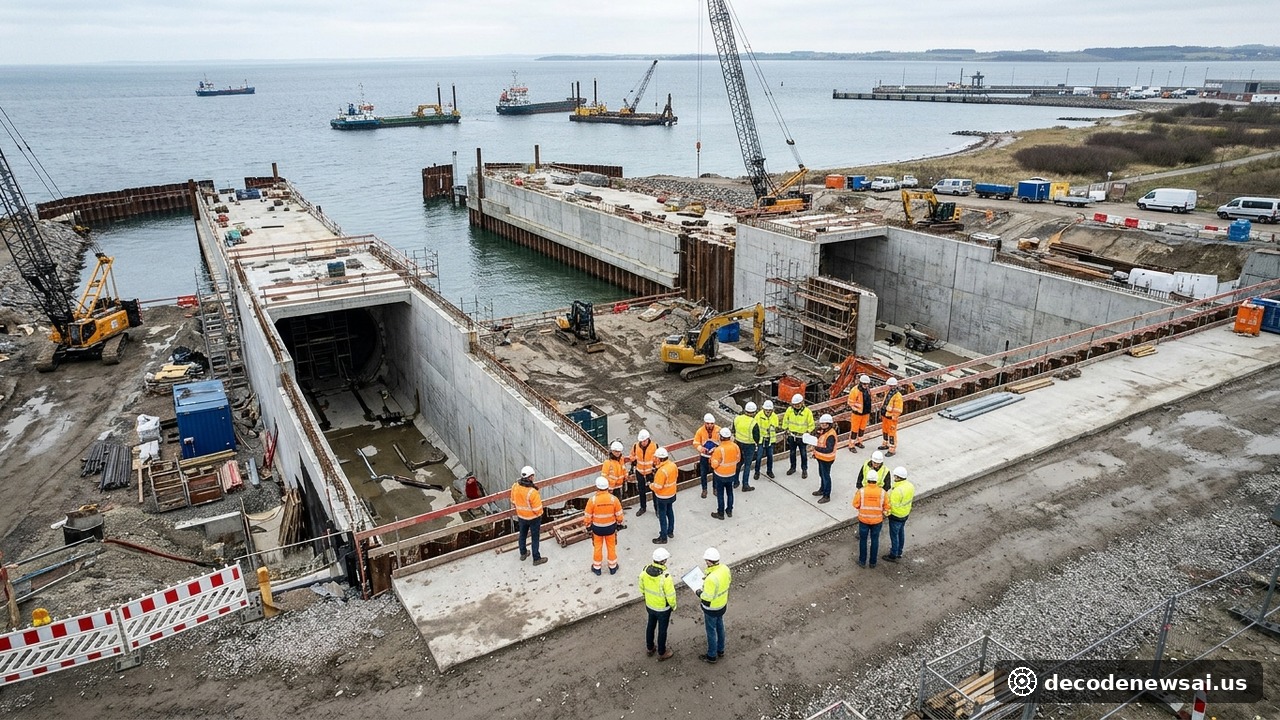
Construction on the landmark Fehmarnbelt Tunnel connecting Denmark and Germany achieved a major structural milestone on Sunday. Femern A/S confirmed that structural concrete works at the German tunnel portal in Puttgarden are now substantially complete. The 18-kilometer cross-strait fixed link represents the longest combined road and rail immersed tunnel in the world. Marine engineering crews have now installed nearly 900 meters of prefabricated immersed tunnel elements directly onto the Baltic seabed.
Fourth 73,000-tonne element lowered off Lolland
The multi-billion-euro infrastructure endeavor carries an approved overall financial framework exceeding 7.4 billion euros backed by Danish state-guaranteed financing. Upon operational opening, the tunnel will integrate a four-lane motorway with a dual-track electrified railway line. Regional transportation planners note that travel time between Lolland in Denmark and the German island of Fehmarn will drop from a 45-minute ferry journey to just seven minutes by direct rail.
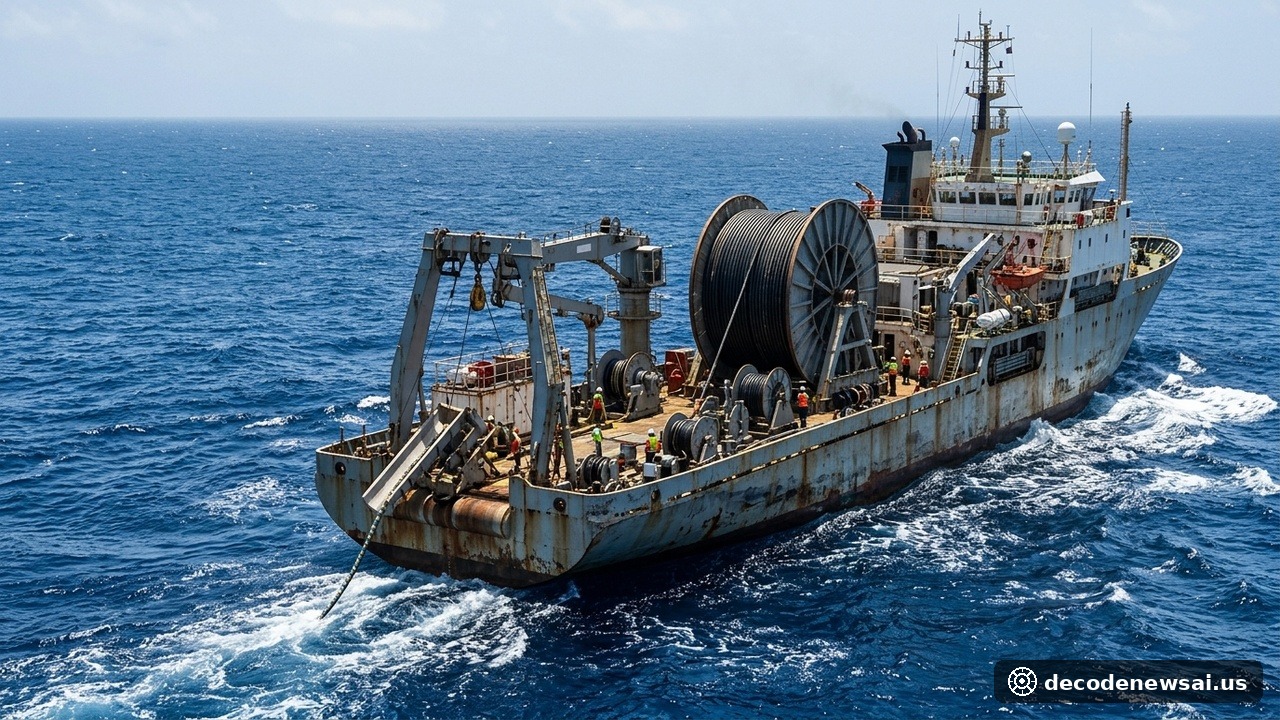
Offshore operations off Lolland successfully lowered and secured the fourth massive concrete tunnel element into the excavated seabed trench. Each standard concrete element spans 217 meters in length and weighs approximately 73,000 tonnes. Specialized immersion pontoons and technical spreader vessels carried out millimeter-accurate marine placement under strict tidal windows. The first four elements now form an unbroken 868-meter subterranean corridor extending seaward.
Femern Technical Director Jens Ole Kaspersen addressed engineering delegates at the German construction hub, stating: "Completing primary structural works at the Puttgarden portal removes a decisive logistical bottleneck and clears the path for continuous seabed immersion according to our operational schedule." Engineering directors reiterated absolute confidence in meeting scheduled civil milestones.
standard elements and acoustic bubble curtains
The permanent tunnel design requires 79 standard elements alongside 10 special technical elements built with sub-level operational basements. Marine contractors utilized the purpose-built Rødbyhavn casting facility, the largest modular concrete production facility ever constructed in northern Europe. Continuous climate-controlled concrete curing ensures superior structural resilience against long-term underwater pressure.
Environmental monitoring stations deployed comprehensive acoustic bubble curtains across dredging perimeters to shield Baltic marine mammals from acoustic interference. Real-time water quality sensors validated that localized sediment displacement remained well beneath regulatory thresholds. Marine biologists confirmed that local migratory corridors remained protected throughout intensive seabed installation phases.
European transport ministers emphasized that modernizing the Scandinavian-Mediterranean TEN-T core network corridor provides vital economic connectivity across northern Europe. Rail transit between Hamburg and Copenhagen will be reduced by approximately two hours, unlocking substantial freight capacity across continental logistics corridors. Cross-border logistics operators confirmed that freight rail operators will significantly bypass congested central transit loops. Commercial commissioning remains firmly on track for late 2029.
Rail cargo to rise over 30% on fixed link
Baltic maritime port authorities and intermodal freight transport federations issued a joint statement underscoring the revolutionary economic impact of the fixed link across northern Europe. Rail logistics analysts calculate that containerized rail cargo throughput between Central Europe and Scandinavia will increase by more than 30% during initial operational years. Direct rail routing avoids circuitous land transit loops through Jutland, significantly reducing continental carbon emissions. Cross-border commercial logistics networks anticipate dramatic efficiency gains.
Bilateral government delegations from Denmark and Germany are scheduled to convene in Hamburg next month to finalize international rail network scheduling and safety protocols. Transportation ministers will review operational concession agreements, border inspection modernization plans, and synchronized electrical traction standards for passenger and freight rolling stock. The international project establishes a durable benchmark for European sustainable transit infrastructure.
Regional economic think tanks project that the fixed link will stimulate cross-border commerce across northern Germany and eastern Denmark. Municipal planners in Schleswig-Holstein and Region Zealand are already coordinating joint economic development zones and renewable energy clusters around the approaching corridor. Enhanced intermodal transport capacity is expected to attract high-value industrial manufacturing and green logistics operators across the integrated Nordic transport network.