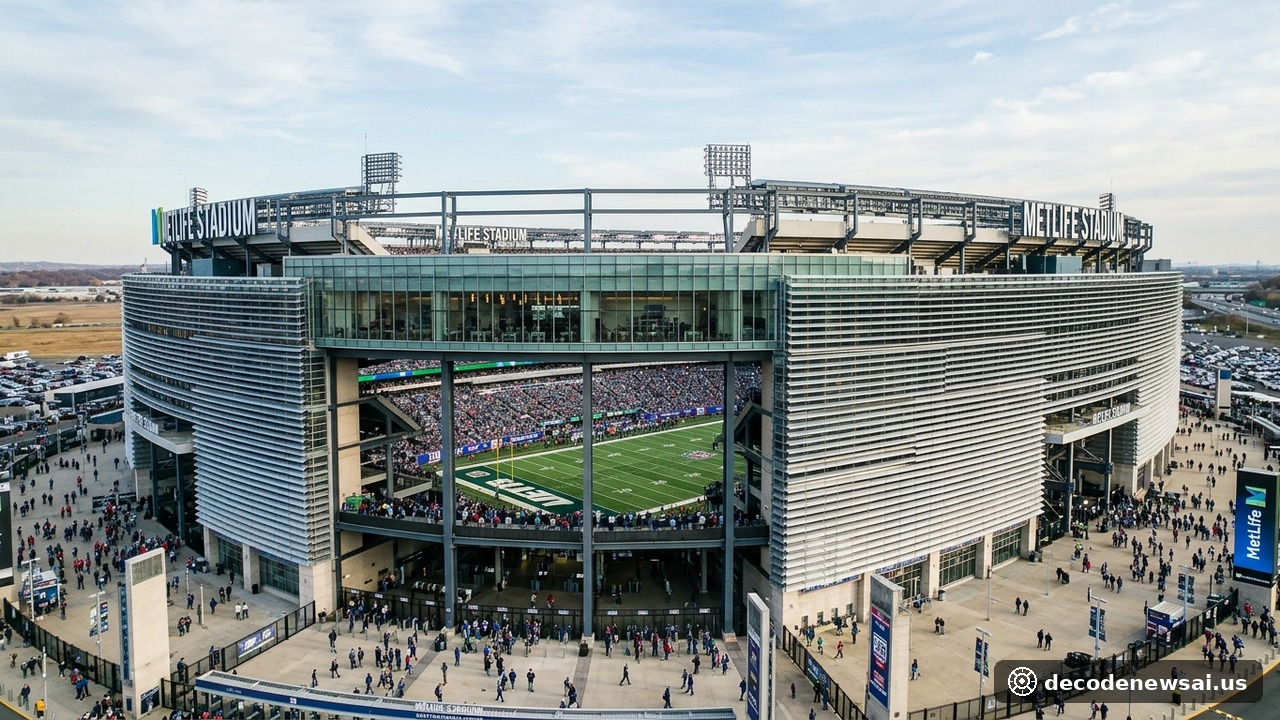
Japanese aircraft manufacturer ShinMaywa Industries has secured preferred negotiating rights for industrial land on Kobe Airport Island. The company plans to invest several billion yen in a new manufacturing facility. The plant will assemble four-engine US-2 amphibious aircraft and produce carbon-fiber-reinforced aerospace structures. Kobe municipal authorities announced the selection results for the industrial parcel in the northwestern sector of the artificial island hosting Kobe Airport.
ShinMaywa proposed leasing approximately 17,500 square meters out of a 24,000-square-meter site. The lease runs under a 50-year fixed-term contract. The company aims to commence commercial operations at the new site in 2029. The site will establish industrial throughput for maritime search-and-rescue aviation.
工业用地分配与先进材料整合
The port and harbor authorities of the Kobe municipal government conducted a competitive proposal review for the airport island parcel. An expert evaluation committee evaluated business continuity, financial viability, and regional economic contributions. ShinMaywa received 138 points out of 200. The score secured exclusive negotiating status for the site.
Under the municipal tender guidelines, the designated lease rate is set at 550 yen per square meter per month. That represents a recurring monthly rental commitment of approximately 9.625 million yen. The figure applies across the 17,500-square-meter footprint.
The upcoming facility will integrate airframe assembly lines alongside specialized composite manufacturing bays. Beyond final assembly of US-2 amphibious airframes, ShinMaywa plans to manufacture and assemble aerospace components made from carbon-fiber-reinforced plastic (CFRP). CFRP is a high-strength material widely utilized across modern commercial aviation and aerospace programs. The new plant will operate in close coordination with ShinMaywa's established Konan Plant in Higashinada Ward, Kobe City.
Municipal planners highlighted the strategic importance of clustering aerospace manufacturing assets around Kobe Airport. The aim is to cultivate a regional industrial ecosystem for advanced aviation technologies.
极端海况作业与边界层控制
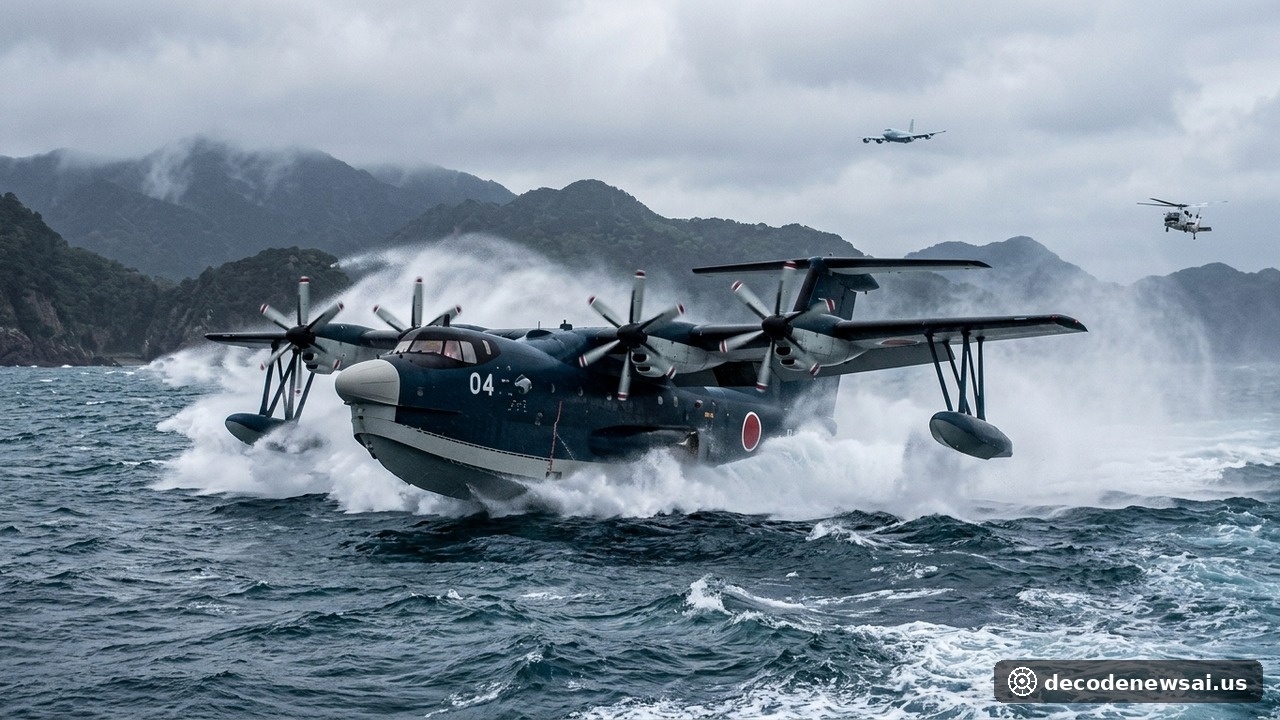
The US-2 is a specialized short takeoff and landing (STOL) amphibious aircraft developed by ShinMaywa for the Japan Maritime Self-Defense Force. The platform operates from conventional airfield runways and open ocean waters. It performs long-range maritime rescue missions and humanitarian medical evacuations from remote islands lacking runway infrastructure. The airframe measures 33.3 meters in length with a wingspan of 33.2 meters.
The aircraft accommodates a standard flight crew of 11 personnel. Taking off from conventional runways, it possesses a maximum takeoff weight of 47.7 metric tons. Power is supplied by four Rolls-Royce AE2100J turboprop engines generating approximately 4,590 horsepower each. The engines enable a maximum speed of roughly 580 kilometers per hour, a cruising speed of 480 kilometers per hour, and an operational range exceeding 4,700 kilometers.
The aircraft's tactical capabilities are underpinned by an advanced boundary layer control (BLC) system. An auxiliary gas turbine engine drives an onboard compressor. The BLC system directs high-pressure bleed air over the wing flaps and control surfaces. This prevents aerodynamic airflow separation during low-speed maneuvers.
This system allows the massive amphibious craft to maintain aerodynamic lift and responsive flight control at speeds as low as approximately 90 kilometers per hour. A specialized wave-suppression hull structure pairs with this low landing velocity. Together they allow the US-2 to conduct open-ocean landings in rough sea swells with wave heights of up to three meters. In terms of short-field performance, the aircraft requires a water takeoff run of approximately 280 meters, a water landing run of roughly 330 meters, and a conventional runway takeoff distance of around 490 meters.
工业产能扩张与国防预算顺风
The global manufacturing landscape for heavy amphibious aircraft remains concentrated between two aerospace corporations worldwide: ShinMaywa Industries in Japan and the Aviation Industry Corporation of China (AVIC). Owing to historical defense procurement constraints, ShinMaywa has produced the US-2 in limited batches relying on labor-intensive assembly processes. Since initial procurement commenced in 2003, the company has completed only nine production aircraft. It holds an active backlog order for just one additional airframe.
Japan's expanding national defense outlays provide renewed industrial momentum for specialized aerospace manufacturing. Following the escalation of international security risks after 2022, Tokyo has accelerated military expenditures. The Japan Ministry of Defense requested a record 8.9 trillion yen ($60.1 billion) for its 2027 fiscal cycle. In parallel with regulatory shifts in Japan's defense export frameworks, international partners have evaluated the US-2 platform for specialized maritime patrol and rescue roles. The Indian Navy previously conducted protracted bilateral consultations regarding the potential acquisition of 12 US-2i aircraft.
ShinMaywa executive leadership confirmed that expanded production infrastructure directly supports long-term commercial and defense diversification. Outlining the corporate vision during an earnings presentation, ShinMaywa President Takashi Kunugihara stated, “By establishing a new production base, we aim to expand the range of orders in the defense sector, civil aviation and other fields, and ensure business growth.”
In its latest consolidated financial forecast for the fiscal year ending March 2027, ShinMaywa projected full-year net sales to increase by 9 percent to 312 billion yen. Operating profit is forecast to rise by 7 percent to 17.5 billion yen. Net income is forecast at 10.5 billion yen. The operational launch of the Kobe Airport Island facility in 2029 will provide the manufacturing infrastructure required to fulfill domestic search-and-rescue readiness and prospective international defense supply commitments.